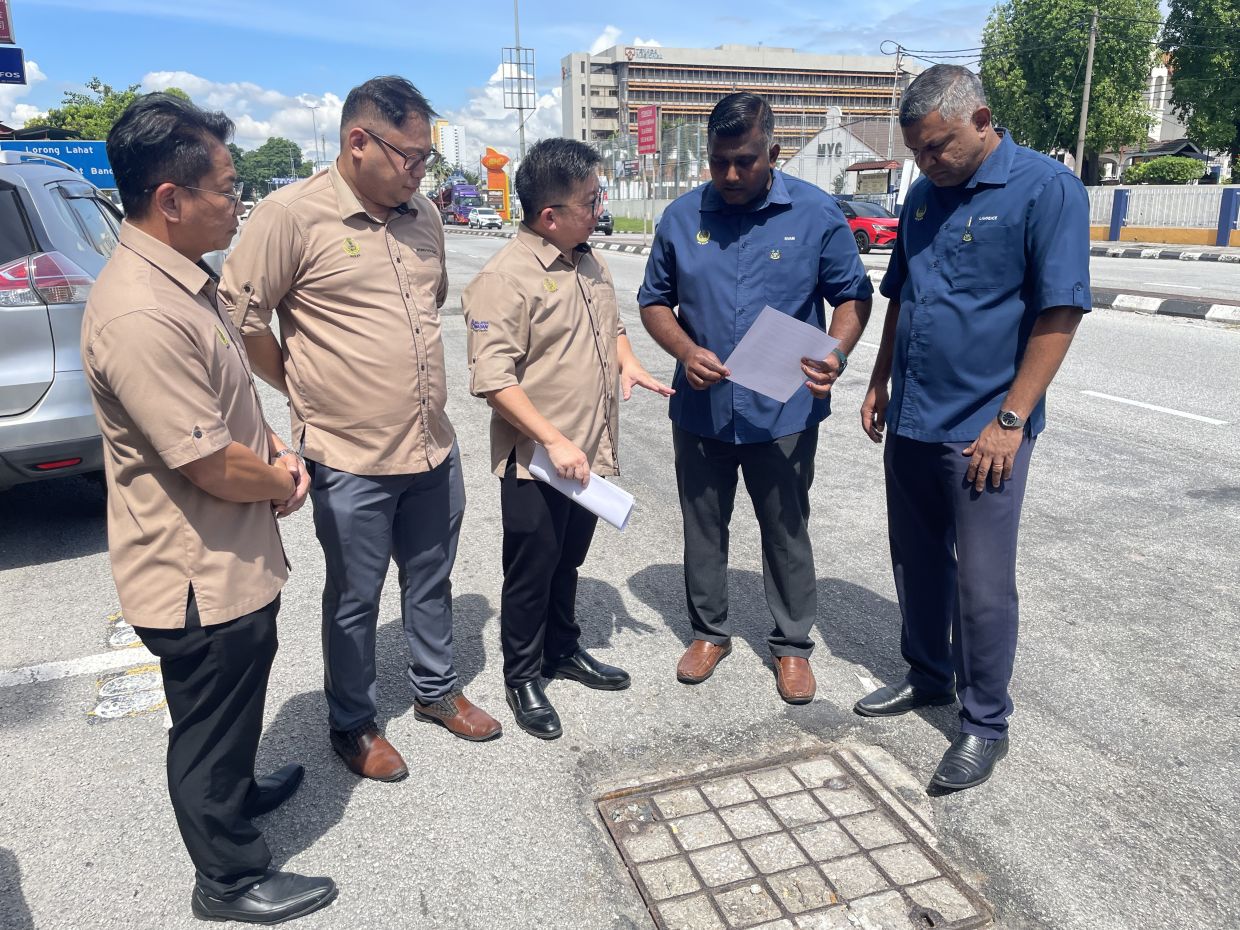
Ipoh's persistently deteriorating Jalan Lahat is finally receiving the major intervention it desperately needs, with a RM2.6mil resurfacing initiative set to commence in July. The substantial upgrade will target the most critically damaged stretch of the 10-11km thoroughfare, which has accumulated a notorious reputation among commuters for its treacherous surface conditions and deep potholes. Described as essential infrastructure connecting the state constituencies of Buntong, Tebing Tinggi and Menglembu, the road serves as a vital artery for residents, schoolchildren and commercial traffic flowing through central Perak.
Menglembu assemblyman Chaw Kam Foon announced that the Malaysian Road Records Information System (Marris) has funded this long-awaited improvement scheme, which will encompass resurfacing work along both directions of Jalan Lahat between the Falim traffic lights and the junction with Jalan Leong Boon Swee near Little India. While the entire road stretches considerably longer, planners have strategically concentrated resources on the worst-performing sections, allocating resources to approximately 1.9km in each direction totalling nearly 4km of intensive restoration work. The decision to focus on this specific corridor reflects a pragmatic acknowledgement that budget constraints require prioritisation of the most accident-prone and heavily trafficked portions.
The urgency of this project became impossible to ignore after social media users documented the deteriorating conditions with particular attention to a dramatic pothole on the flyover section that posed genuine safety hazards to unsuspecting motorists. The viral video circulation catalysed official response, resulting in rapid temporary patching of the most visible defect. However, such band-aid solutions have proved wholly inadequate given the underlying structural problems. Councillor K. Sivam revealed a sobering statistic: approximately twenty vehicles experienced tyre punctures during June alone after encountering potholes on the affected stretch, translating to genuine economic losses for commuters and accumulating safety risks.
The genesis of this resurfacing allocation extends back further than many realise. Sivam disclosed that multiple requests for proper restoration have been submitted since 2024, with local authorities repeatedly advocating for comprehensive intervention rather than perpetual temporary repairs. The tedious approval process has finally yielded results this financial year, with the tender exercise currently progressing and construction crews expected to mobilise in July. Council officials project that the intensive resurfacing work will reach completion within approximately three weeks, assuming weather conditions remain cooperative and supply chain disruptions do not materialise.
Underlying the road's accelerated deterioration are multiple contributing factors beyond simple age and traffic wear. The thoroughfare shoulders substantial operational demands, carrying dense flows of heavy vehicles, lorries and commercial traffic serving the broader Ipoh commercial and residential zones. Educational institutions and shopping precincts depend on its connectivity, meaning traffic volumes remain consistently high regardless of time of day. Previous attempts at piecemeal patching repairs have consistently failed to produce durable outcomes, with weather exposure and relentless heavy vehicle impact negating the effectiveness of temporary asphalt applications within remarkably brief timeframes.
Crucially, Sivam identified historical utility excavation projects as significant contributors to the road's premature degradation. Sewerage pipeline installation and other underground infrastructure work created disruptions to the road surface, but the subsequent reinstatement and restoration efforts fell markedly short of satisfactory standards. Rather than restoring the pavement to its original specifications and structural integrity, utility contractors frequently completed hasty, substandard repairs that quickly succumbed to traffic pressures. This pattern of inadequate remediation after utility work represents a systemic weakness in accountability that has plagued Malaysian infrastructure maintenance for years.
The resurfacing programme encompasses more than simple asphalt replacement. The specification includes levelling of manhole covers that protrude above surrounding pavement, elimination of road surface undulations that contribute to premature tyre wear and vehicle damage, and comprehensive repainting of lane markings to restore safe traffic flow demarcation. These comprehensive measures address both the visible defects and the underlying structural irregularities that have characterised Jalan Lahat's deterioration. The holistic approach acknowledges that surface resurfacing alone would prove insufficient without simultaneously correcting the underlying geometric and functional defects.
Moving forward, governance arrangements have been substantially strengthened to prevent future recurrence of the neglect that characterised previous decades. The Corridor Utiliti Darul Ridzuan (KUDR) has been empowered with explicit authority to supervise and monitor all future utility excavation activities along the corridor. This institutional mechanism establishes enforceable responsibility for contractors and utility operators, establishing financial and legal consequences for substandard restoration work. Companies failing to properly reinstate roads following utility work now face meaningful deterrents in the form of fines, compounding penalties and mandatory orders to execute repairs anew.
For Malaysian readers and Southeast Asian observers, the Jalan Lahat project offers instructive insights into persistent infrastructure maintenance challenges across the region. The pattern of deterioration, delayed intervention, temporary patch solutions and eventual major rehabilitation represents a cycle familiar to transportation authorities throughout the subcontinent. The project demonstrates both the accumulating costs of deferred maintenance and the potential for systematic improvement through enforced accountability mechanisms. As Ipoh experiences this substantial upgrade, the framework established through KUDR's enhanced oversight provides a template that other Malaysian municipalities and state authorities might consider emulating to prevent similar deterioration across their road networks.
The July commencement represents a meaningful commitment to addressing years of accumulated complaints from frustrated commuters. While the three-week completion timeline depends on favourable conditions, this investment addresses a genuine quality-of-life issue affecting thousands of daily road users across Ipoh's central districts. Beyond the immediate surface improvements, the project signals official recognition that proper infrastructure maintenance requires sustained resource commitment and that temporary solutions ultimately prove more expensive than comprehensive restoration executed timeously.

