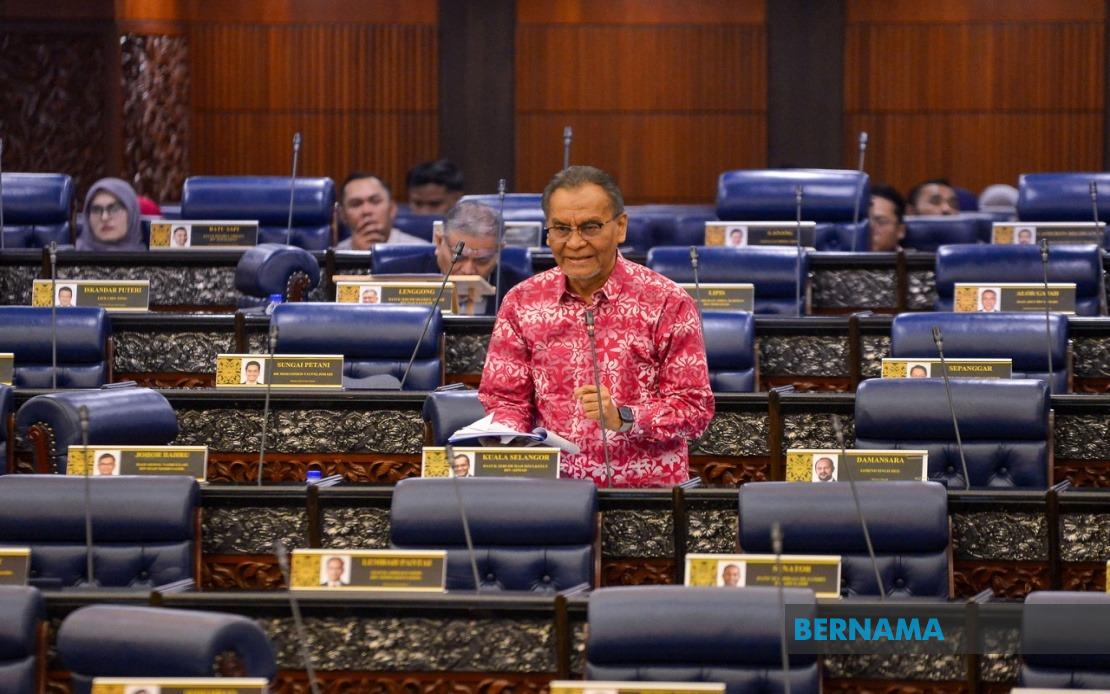
The Ministry of Health's RM500 million budget adjustment announced by the Finance Ministry in early June represents a prudent fiscal measure rather than an operational constraint that will hamper healthcare delivery, according to Health Minister Datuk Seri Dr Dzulkefly Ahmad. Speaking in Parliament, the minister characterised the restriction as a technical reallocation stemming from the ministry's inability to fill approved vacancies, allowing the government to redirect unused funds without compromising patient care or service expansion.
The RM500 million figure constitutes approximately 1.07 per cent of the MOH's total annual allocation of nearly RM46.52 billion, a relatively modest proportion that underscores the minister's contention that core operations remain insulated from the adjustment. Dzulkefly emphasised that the restriction warrant did not touch allocations designated for routine operations, infrastructure development, staff remuneration, professional training initiatives, or the acquisition of medical equipment and technology. Instead, the ministry achieved savings through strategic financial reallocation that prioritised careful resource management across existing commitments.
At the heart of the adjustment lies a fundamental staffing challenge facing Malaysia's health sector. Despite the Public Service Department approving 18,641 positions for the MOH during the current financial year, the ministry has struggled to recruit qualified personnel to fill these roles. This persistent vacancy gap creates a surplus allocation that, while earmarked for human resources expansion, cannot be deployed without candidates to occupy those positions. Dzulkefly's explanation suggests that this structural constraint—not budgetary mismanagement—enabled the identification of RM500 million in surplus expenditure that could be redirected elsewhere in the government's fiscal framework.
Concerns raised in Parliament centred on whether the budget adjustment might compromise healthcare delivery standards, particularly in rural and underserved regions where health infrastructure already faces capacity constraints. Legislators questioned whether the restriction could impede the development of public health facilities or the maintenance of essential services at hospitals nationwide. These anxieties reflect genuine apprehension about the adequacy of health sector funding in a country grappling with an aging population, rising chronic disease prevalence, and growing demand for specialised medical services.
The minister's response directly addressed these anxieties by separating the technical adjustment from operational reality. He stressed that all fundamental healthcare services would continue uninterrupted and that approved health development projects would proceed as scheduled. By clearly delineating that the RM500 million reduction targeted exclusively the budgetary surplus arising from unfilled positions, Dzulkefly sought to reassure both parliamentarians and the public that the adjustment did not represent a genuine contraction in service capacity or developmental ambition. The distinction matters substantially for public confidence in the health system's stability.
Beyond addressing immediate budget concerns, Dzulkefly unveiled several initiatives designed to reshape Malaysia's healthcare landscape, particularly in addressing escalating private sector medical costs. The Joint Committee on Private Healthcare Costs (GBMKKS) is preparing to introduce a Base Medical and Health Insurance/Takaful (MHIT) scheme, beginning with pilot implementation at selected hospitals during July before the nationwide launch in January 2027. This basic health protection plan targets affordability and accessibility, offering consumers simplified coverage that shields them from catastrophic medical expenses while reducing reliance on expensive private insurance products.
The MHIT scheme represents a strategic response to Malaysia's healthcare affordability crisis, where private treatment costs have increasingly become prohibitive for middle and lower-income households. As private hospitals expand their market presence and insurance premiums climb, a substantial segment of the population faces difficult choices between seeking private care and exhausting savings or avoiding treatment altogether. By introducing a standardised basic health coverage product, the government aims to create an intermediate market tier that bridges the gap between public healthcare and premium private services, ensuring broader population access to quality medical care regardless of income level.
Complementing the insurance initiative, authorities are implementing a Diagnosis Related Groups (DRG) payment system across public, private, university, and military hospitals nationwide. This standardised approach to hospital charges and payment methodologies will establish transparent, evidence-based benchmarks for medical services, reducing price variability across institutions and enhancing cost predictability for patients and insurers alike. The DRG framework, already established in many developed healthcare systems, represents a modernisation effort aimed at bringing Malaysian healthcare financing into alignment with international best practices while fostering competition based on quality rather than pricing opacity.
Together, these developments suggest a holistic approach to healthcare system reform that extends beyond simple budget management. The RM500 million adjustment, while framed as technical, occurs within a broader context of structural healthcare transformation. The government's simultaneous introduction of standardised insurance products and payment methodologies indicates recognition that Malaysia's health sector requires fundamental restructuring to address affordability, quality, and equity concerns that have intensified following the pandemic.
For Malaysian healthcare stakeholders—from patients navigating treatment options to administrators managing institutional budgets—these announcements carry significant implications. The budget adjustment's characterisation as purely technical rests on the assumption that staffing vacancies will persist at current levels, an expectation that may warrant scrutiny given the health sector's acknowledged workforce shortages. Meanwhile, the new insurance and payment initiatives promise greater cost transparency and accessibility but will require substantial implementation coordination across disparate institutional types and funding models.
The minister's parliamentary responses reflect an attempt to balance fiscal responsibility with sector sustainability, acknowledging budget constraints while simultaneously advancing initiatives to expand and improve healthcare access. Whether the RM500 million adjustment proves truly inconsequential or presages deeper cuts will depend largely on whether these concurrent reforms successfully lower overall system costs, improve efficiency, and generate savings that offset the current reduction. The coming months will prove crucial in demonstrating whether technical adjustments and structural reforms can coexist without degrading the quality and reach of Malaysian healthcare services.

