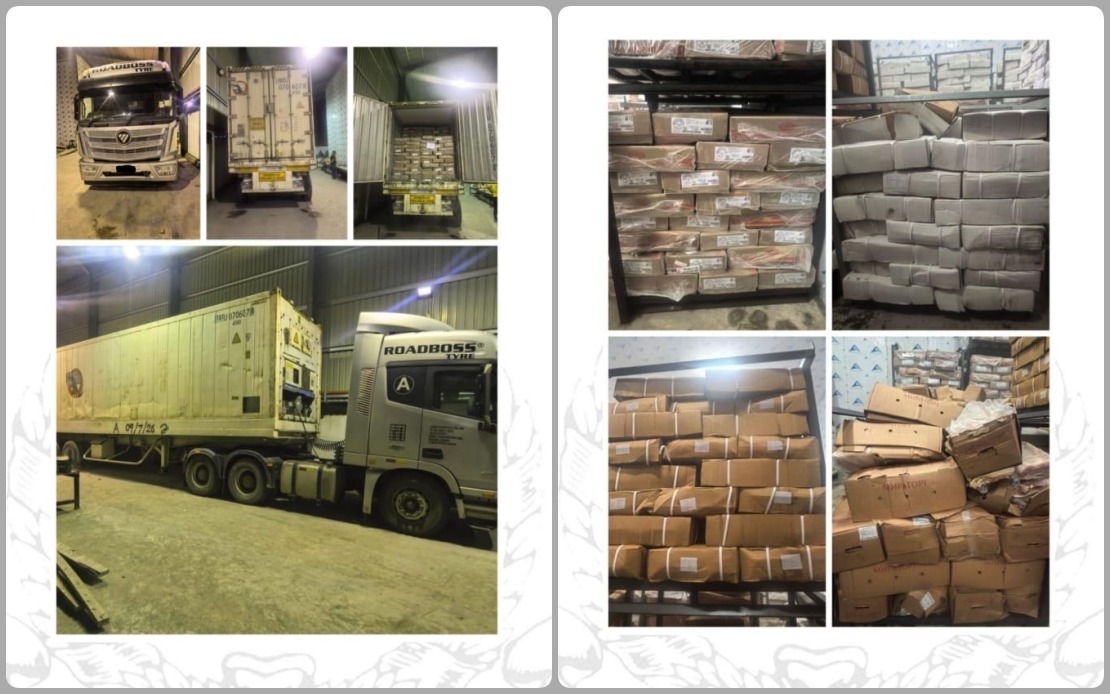
A substantial cache of undocumented frozen pork products valued at RM6.19 million has been uncovered during a coordinated enforcement operation in Miri, Sarawak, marking another significant blow against illegal food imports in the country. Police arrested a 26-year-old local resident at the warehouse facility on the evening of July 9, acting under Operation Taring Chiller, a targeted initiative aimed at disrupting the flow of suspicious food commodities through Malaysia's supply chains. The discovery underscores the persistent challenge authorities face in combating the importation and distribution of food items that circumvent regulatory oversight and raise questions about consumer safety and halal compliance.
The scale of the seizure itself demonstrates the sophistication of networks engaged in moving frozen food products outside formal channels. Officers catalogued extensive quantities including 30,000 kilogrammes of cooked frozen pork large intestines, 18,000 kilogrammes of pork loin distributed across 15 pallets, and various cuts of bone-in pork bellies alongside frozen pork shoulder. The sheer tonnage involved suggests this was not a small-scale operation but rather a systematic effort to warehouse and presumably distribute frozen pork to buyers throughout the region. Such volume points to organised commercial activity rather than isolated smuggling, raising questions about the downstream markets and supply chain vulnerabilities that permitted such a large inventory to accumulate.
According to Datuk Seri Mohd Yusri Hassan Basri, director of the Internal Security and Public Order Department, the operation reflects police commitment to tackling a dual concern: controlling the movement of food products with undetermined halal status and preventing illegal circulation of provisions throughout Malaysian markets. This framing highlights the particular sensitivity of pork imports in a Muslim-majority nation where halal certification carries both religious and legal weight. When products enter the supply chain without documentation, they risk contaminating the distribution network and potentially reaching consumers who expect compliance with halal standards, creating a breach of consumer trust and regulatory integrity.
The enforcement action involved multiple agencies working in coordination, including the Wildlife Crime Bureau and Special Investigation Intelligence unit alongside local Miri district police and the Sarawak Veterinary Services Department. Such interagency collaboration reflects an evolving approach to food security crimes, treating them not merely as commercial violations but as threats requiring sophisticated investigation. The involvement of wildlife crime units alongside veterinary authorities suggests recognition that food smuggling often intersects with broader contraband networks and requires specialized investigative capabilities.
Investigators proceeded under the Veterinary Public Health Ordinance 1999, a regulatory framework designed to ensure imported food products meet sanitary and safety standards. Beyond the arrest, authorities issued a RM25,000 compound notice, signalling that penalties extend beyond criminal proceedings to include administrative fines that raise the cost of non-compliance. This dual approach—combining criminal prosecution with financial penalties—aims to deter participation in smuggling operations while recovering some costs of enforcement activities.
The Miri operation sits within a much larger enforcement campaign. Between January 1 and July 10, the Wildlife Crime Bureau and Special Investigation Intelligence division conducted 201 raids nationwide, resulting in 375 arrests across multiple categories of smuggling activity. These operations generated seizures valued at RM264.86 million, encompassing non-duty-paid goods, diverted subsidised commodities, frozen food products, wildlife contraband, and electronic waste. This statistical context reveals that food smuggling represents merely one component of a broader ecosystem of illegal trade that continues to drain government revenue and undermine regulated commerce.
For Malaysian consumers and policymakers, the implications of such operations extend beyond simple numbers. The existence of substantial underground networks distributing frozen pork without documentation raises questions about transparency throughout the cold chain, from ports of entry through warehousing and distribution to retail outlets. If such large quantities can be stockpiled undetected, concerns arise about how much smaller-scale smuggling occurs below the enforcement radar and what other food categories might be similarly vulnerable to illicit trade.
The geographic focus on Miri is particularly significant given Sarawak's position as a major entry point for regional trade. The state's ports and land borders create natural conduits for smuggled goods flowing from neighbouring jurisdictions. Enforcement successes in Miri therefore carry implications for the broader corridor linking Malaysia to regional suppliers and distributors, potentially disrupting networks that span multiple countries and supply chains across Southeast Asia.
Police statements emphasise continued commitment to intensified intelligence gathering and integrated enforcement operations, suggesting that the Miri seizure represents part of sustained, rather than episodic, action against smuggling networks. The investment in specialized units and inter-agency coordination indicates that authorities view food smuggling as a priority concern warranting dedicated resources. Yet the continued discovery of large quantities of undocumented products suggests that enforcement capacity, while improving, remains challenged by the scale and sophistication of smuggling operations that generate substantial profits by circumventing regulatory costs and import duties.
For businesses operating legitimately within Malaysia's food import and distribution sectors, these enforcement actions create both challenges and opportunities. Legitimate importers face increased scrutiny and administrative requirements, yet they also gain competitive advantage over smugglers who undercut prices through regulatory evasion. The long-term sustainability of legal food trade depends on enforcement that prevents illicit competitors from distorting market prices and quality standards.
The arrest and seizure also highlight vulnerabilities in document verification at points of entry and storage. If warehouses can accumulate millions of ringgit in frozen products without valid permits, questions arise about whether customs procedures, port inspections, and storage facility monitoring function with adequate rigour. Strengthening these checkpoints upstream could prevent larger volumes from reaching distribution points, potentially making enforcement more efficient and reducing the scale of operations that subsequently require costly raids.

