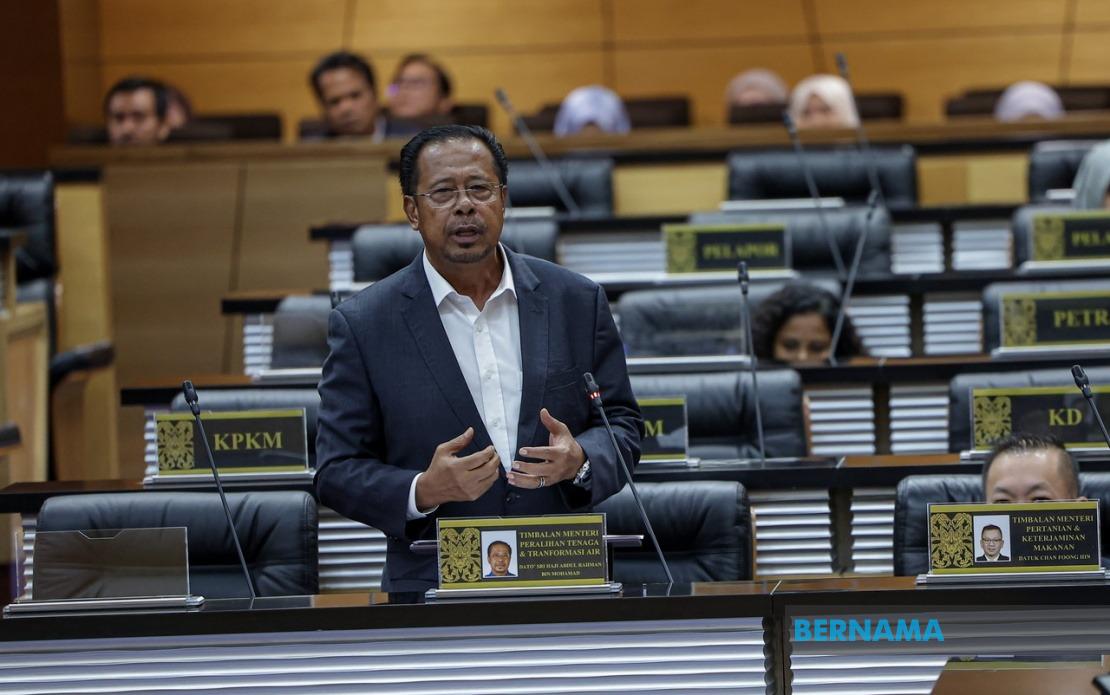
A major infrastructure initiative in Johor designed to combat persistent flooding while revitalising a critical waterway has entered its planning phase, parliamentary officials confirmed this week. The RM99.8 million Integrated River Basin Development (PLSB) project centring on Sungai Skudai is projected to provide flood protection benefits to around 15,000 residents and address inundation challenges across approximately 50 hectares of the region once fully operational. Deputy Minister of Energy Transition and Water Transformation Datuk Seri Abdul Rahman Mohamad outlined the initiative's scope and timeline during a Dewan Rakyat sitting, emphasising its role as a cornerstone infrastructure undertaking under the 12th Malaysia Plan.
The project remains in its preparatory stage, a critical phase where consultants conduct comprehensive planning and geotechnical assessments to establish a robust technical foundation before excavation and construction commence. A specialist consultant tasked with detailed design work and site investigation was engaged in May 2025 and is currently developing the scheme's foundational concept report. This methodical approach reflects best practice for major water infrastructure projects, particularly those involving ecological restoration and complex hydraulic engineering across populated areas.
Fieldwork underpinning the project's design has already begun, with surveying activities initiated in November 2025 now expected to conclude by May 2027. Concurrently, the land acquisition process, which commenced in June 2026, is scheduled for completion by August this year. These dual workstreams—technical assessment and property procurement—must advance in parallel to maintain momentum toward the construction phase. The government intends to launch contractor procurement and appointment proceedings once all technical specifications have been satisfied, positioning physical construction to commence in the middle of 2027.
Suhaizan Kaiat, the Pulai MP representing Pakatan Harapan, raised the question in parliament regarding the project's anticipated effects on communities over multiple timeframes, specifically regarding flood mitigation, riverine ecosystem recovery, fishing community operations, and maritime enforcement activities. The Sungai Skudai basin frequently experiences inundation events that disrupt livelihoods and damage infrastructure, making targeted intervention essential for regional stability. Abdul Rahman's response underscored how the integrated approach addresses multiple policy objectives simultaneously rather than narrowly targeting flood prevention alone.
The 46-kilometre waterway will undergo substantial physical modifications to enhance its capacity to manage stormwater and seasonal discharge. Bank reinforcement work will be undertaken systematically along the river's length, whilst selected reaches will be widened to approximately 15 metres to increase water conveyance capability during peak flow periods. These engineering interventions reflect hydrological analysis identifying where the existing channel dimensions prove insufficient for contemporary rainfall patterns and development patterns across the catchment.
Beyond structural improvements, the initiative explicitly aims to restore ecological function within Sungai Skudai, a dimension increasingly recognised as integral to sustainable water resource management. Enhanced navigability for local communities, particularly those dependent on the waterway for livelihood activities including fishing and traditional practices, forms another project objective. Furthermore, the works will strengthen operational effectiveness for maritime security agencies and emergency management organisations requiring river access for surveillance and disaster response operations.
Whilst the comprehensive project advances through planning stages, the ministry has identified 50 distinct flood hotspots along Sungai Skudai requiring urgent intervention. Five of these concentrated problem areas lie within the Kulai district, where recurrent inundation has compounded infrastructure strain and property damage. To address these interim needs before the full project implementation, the ministry is simultaneously deploying six smaller-scale corrective measures representing approximately RM700,000 in investment. This parallel strategy demonstrates pragmatic recognition that the main project's mid-2027 construction start date leaves a two-year window during which vulnerable communities require relief from existing flood exposure.
The success of these interim measures and the larger project hinges substantially on effective resolution of the identified hotspots. Officials have signalled confidence that concentrated technical work addressing these critical zones can meaningfully reduce flooding incidence across the broader basin. The government has publicly committed to maintaining the project schedule and achieving transition to active construction phase as presently planned, a notable commitment given the numerous variables that can delay large infrastructure undertakings in Malaysia.
In related developments affecting the broader Johor infrastructure landscape, the Ministry of Works simultaneously announced clarity regarding a separate RM174.53 million highway upgrading initiative. The Phase Three enhancement of Pasir Gudang Highway (FT17) will not require acquisition of land owned by Keretapi Tanah Melayu Berhad (KTMB), a clarification that removes potential obstacles to project progression. Minister Datuk Seri Alexander Nanta Linggi confirmed that construction activities near railway corridors will proceed through work permit and right-of-way approval mechanisms rather than formal land acquisition, a procedural distinction that materially reduces timeline risk and stakeholder coordination complexity.
Works in proximity to KTMB railway infrastructure are scheduled between February 2027 and December 2028, creating a defined implementation window that the contractor must observe. This arrangement demonstrates how coordinated inter-agency approaches can circumvent typical delays that emerge when multiple land ownership entities must negotiate property transfers. The Pasir Gudang Highway upgrade serves the broader southeastern Johor region, and highway capacity improvements complement the Sungai Skudai flood mitigation initiative in supporting regional economic development and livability.
For Malaysian stakeholders tracking infrastructure investment, these parallel projects signal sustained government commitment to addressing Johor's long-standing hydraulic and transportation challenges. The RM99.8 million Sungai Skudai expenditure, combined with the RM174.53 million highway investment and interim flood management measures, represents substantial capital deployment targeting quality-of-life improvements across one of Malaysia's most industrialised states. Successful execution of both initiatives within declared timeframes would establish meaningful precedent for coordinated multi-ministry infrastructure delivery, an increasingly important consideration as climate variability intensifies hydrological stress across Southeast Asia.

