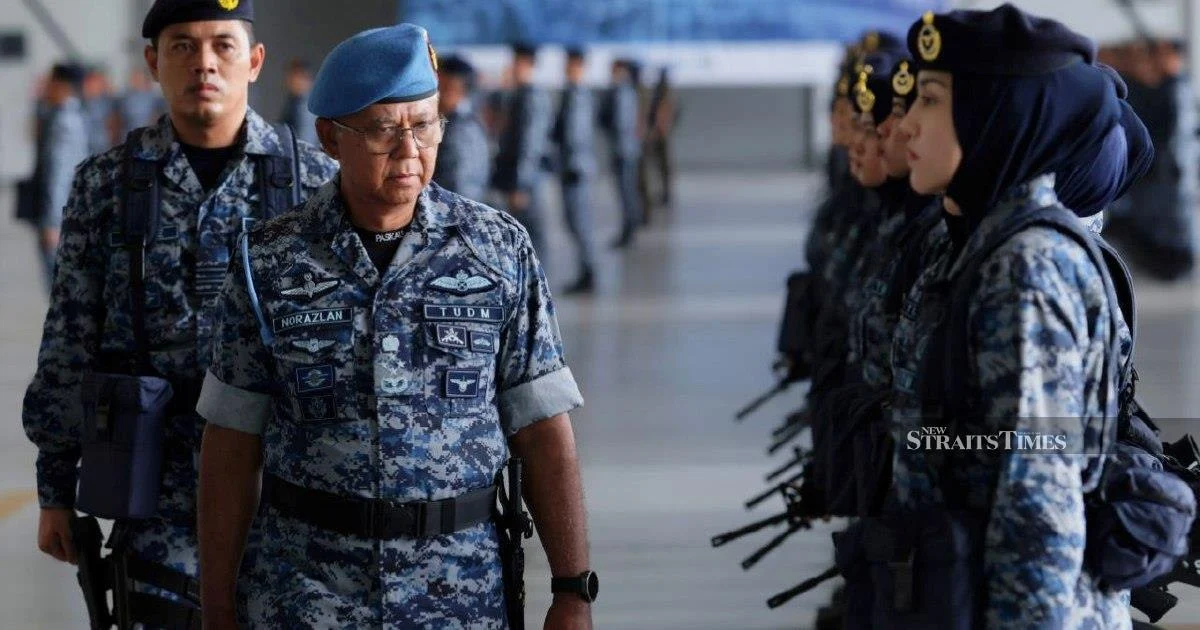
The Royal Malaysian Air Force is embarking on a significant modernisation programme that will reshape how the nation monitors and secures its airspace. The service branch has committed to deploying the Anka-S unmanned aircraft system alongside the P-72M maritime patrol aircraft, marking a strategic shift towards advanced autonomous and long-endurance surveillance capabilities across several critical regions within Malaysia's vast territory.
This procurement decision reflects a broader regional trend among Southeast Asian nations to upgrade their air defence infrastructure in response to evolving security threats and the growing sophistication of monitoring requirements. The integration of unmanned systems into operational squadrons allows air forces to extend their surveillance reach without proportionally increasing pilot requirements or operational costs. For Malaysia, which oversees one of the world's busiest shipping corridors and shares maritime boundaries with multiple neighbouring states, enhanced airspace awareness has become increasingly paramount.
The Anka-S represents a particularly significant acquisition for the RMAF. Developed with advanced sensor packages, this unmanned platform is designed to conduct extended surveillance missions over land and sea, gathering intelligence that would traditionally require manned aircraft operations. The system's extended endurance means it can maintain continuous watch over designated zones for considerably longer periods than conventional patrol aircraft, providing a persistent intelligence-gathering capability that enhances situational awareness across Malaysia's airspace. This persistent surveillance dimension addresses a longstanding operational challenge for air forces managing vast territorial responsibilities with finite resources.
Complementing the unmanned systems, the P-72M maritime patrol aircraft represents the latest iteration in specialised maritime reconnaissance technology. Built upon proven platforms, the P-72M incorporates modern avionics, communications systems, and sensor suites specifically calibrated for coastal and offshore monitoring operations. This aircraft fills a critical operational role in policing Malaysia's exclusive economic zone and territorial waters, where challenges ranging from maritime piracy to illegal fishing and trafficking require sustained airborne presence and the ability to respond rapidly to developing situations. The dual focus on both aerial and maritime domains acknowledges that many contemporary security challenges do not respect traditional service boundaries.
The deployment of these systems across several key operational areas suggests a carefully calculated approach to resource allocation. Rather than dispersing assets thinly across the entire nation, the RMAF appears to be prioritising regions facing the most acute security monitoring demands. This targeted strategy reflects sophisticated defence planning that concentrates advanced surveillance capabilities where they can deliver maximum strategic benefit. For regions such as the Strait of Malacca, the waters surrounding strategic islands, and major urban airspace corridors, the enhanced surveillance infrastructure will provide real-time intelligence crucial for interdicting threats before they materialise.
From a technological standpoint, the transition towards unmanned systems represents a fundamental evolution in air force doctrine. Unlike previous generations of aircraft, unmanned platforms reduce risks to personnel while enabling operations in environments that might pose unacceptable hazards to human crews. They also allow commanders to conduct multiple simultaneous surveillance operations without necessarily deploying additional manned aircraft, creating significant force multiplication effects. The data collected by these systems feeds into integrated intelligence networks that provide comprehensive pictures of airspace activity to decision-makers at all command levels.
The P-72M component of this modernisation strategy underscores the enduring importance of manned maritime patrol aircraft. Despite advances in unmanned technology, the speed, flexibility, and autonomous decision-making capabilities of crewed aircraft remain invaluable for maritime enforcement operations. The combination of unmanned and manned platforms creates a complementary ecosystem where each system compensates for the limitations of the other. Extended-endurance unmanned systems can detect anomalies and maintain watch across vast areas, while crewed aircraft can respond quickly, conduct closer investigations, and take decisive action when situations require human judgment and rapid reaction.
For Malaysian defence planners, this acquisition cycle carries significant implications for regional power dynamics. Enhanced airspace and maritime surveillance capabilities strengthen Malaysia's capacity to assert sovereign authority across its territory and surrounding waters. In a region where multiple nations are modernising their militaries and where unresolved maritime boundaries create potential friction points, improved surveillance infrastructure serves both defensive purposes and confidence-building functions. The ability to monitor activities within Malaysian airspace with greater precision reduces ambiguity in security situations and provides the intelligence foundation for effective diplomatic engagement.
The operational integration of these new systems will require substantial investment in training, maintenance infrastructure, and support personnel. The RMAF must develop expertise in operating and maintaining Anka-S platforms while simultaneously managing the P-72M fleets. This training dimension often receives less attention than the procurement itself, yet represents a critical determinant of whether these advanced systems deliver their intended operational benefits. The service will need to cultivate personnel with specialised skills, develop effective maintenance protocols, and establish supply chains for spare parts and technical support, particularly given that some components may require international sourcing.
Looking forward, the success of this modernisation initiative will depend on sustained commitment to incorporating lessons learned into doctrine development and operational procedures. As the RMAF gains experience with Anka-S and P-72M operations, institutional knowledge accumulated through practical deployment will inform how the service maximises the capabilities these platforms offer. The competitive pressures driving defence modernisation across Southeast Asia suggest that Malaysia's investment in advanced surveillance systems positions the air force to maintain credible security capabilities in an increasingly complex regional security environment.

