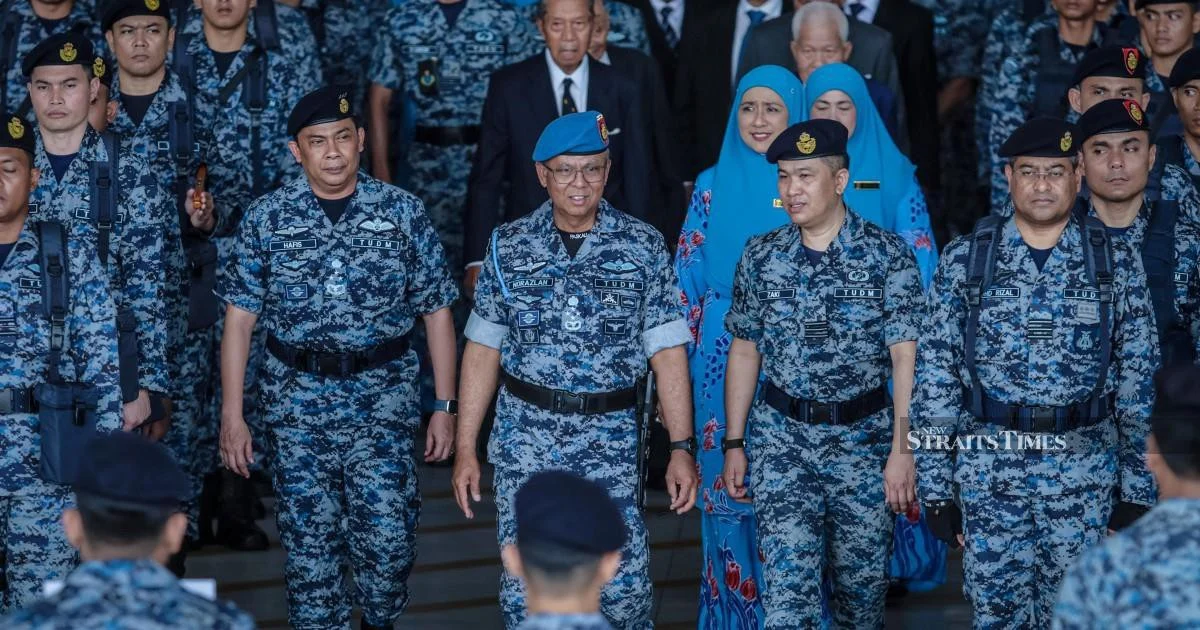
Malaysia's ability to defend its vital maritime corridors rests increasingly on the strength of its air force, according to General Tan Sri Muhamad Norazlan Aris, who heads the Royal Malaysian Air Force. Speaking at Subang, the commander highlighted the strategic importance of air-based maritime patrol and surveillance in an era of rising regional instability. The remarks underscore growing concern within Malaysia's military establishment about external pressures on the shipping routes that form the economic lifeblood of the nation's international commerce.
The Malaysian maritime domain remains among the world's busiest and most economically consequential. The country straddles major sea lanes connecting the Indian Ocean to the South China Sea, positioning it at the intersection of global trade networks. Protecting these routes from both conventional threats and asymmetric risks has become a defining challenge for Malaysian defence planners. The RMAF chief's emphasis on air power reflects a broader shift in military thinking away from purely surface-based defences toward integrated systems that combine aerial surveillance, reconnaissance, and rapid-response capabilities across vast oceanic expanses.
Regional geopolitical dynamics have grown markedly more complex in recent years. The strategic rivalry between major powers, competing territorial claims in the South China Sea, and the emergence of new security challenges from non-state actors have all intensified the operational environment that Malaysia navigates. The RMAF must operate within this context while managing budgetary constraints and the technical demands of maintaining advanced aerial platforms. The chief's statement suggests the force is making a compelling case to national leadership and fiscal authorities that maritime air defence deserves enhanced priority and resource allocation.
Air-based maritime patrol operations offer distinct advantages over surface vessels alone. Modern surveillance aircraft can monitor vast areas with minimal operational cost compared to deploying multiple ships, and they provide early warning capabilities essential for rapid response to emerging threats. Long-range maritime patrol aircraft, reconnaissance drones, and fighter jets equipped with anti-ship capabilities form a layered defence posture that would substantially strengthen Malaysia's ability to project authority across its maritime zones. However, acquiring and maintaining such assets demands sustained investment and technical expertise that present significant challenges for the Malaysian defence budget.
The statement arrives at a moment when Malaysia seeks to modernise its military capabilities across multiple domains. The RMAF has pursued acquisition programmes for new fighter jets and transport aircraft in recent years, yet these efforts have faced delays and budgetary pressures. The chief's public emphasis on maritime air defence priorities signals internal military consensus that this particular capability gap poses the most pressing strategic risk. By articulating the case at a senior level, military leadership is building political support for future procurement decisions and operational funding increases.
Malaysia's geographic position creates unique maritime security demands. The nation claims extensive maritime zones under international law, yet lacks the surface fleet capacity to maintain constant surveillance across all these areas. This capability gap has become more acute as various actors conduct operations within Malaysian waters, including unauthorised fishing, smuggling, and other illicit maritime activities. Enhancing air-based surveillance and response capabilities would provide more effective maritime domain awareness and the ability to enforce Malaysian sovereignty more comprehensively.
The regional security landscape compounds these challenges. Tensions in the South China Sea have occasionally edged toward confrontation, with various claimant nations conducting increasingly assertive operations. While Malaysia has maintained a relatively pragmatic and non-confrontational approach to these disputes, the military must nonetheless prepare for scenarios requiring credible deterrence and swift response capabilities. Air power offers the flexibility to respond to emerging situations without the political complications that might accompany more visible surface-based military deployments.
Investment in maritime air capabilities also has implications for regional stability. A more capable RMAF could better enforce international maritime law, suppress piracy and smuggling, and contribute more effectively to regional maritime security cooperation. These contributions would benefit not only Malaysia but neighbouring countries and the broader international community dependent on freedom of navigation through Southeast Asian waters. The strategic value of such investments extends beyond national defence into the realm of regional stability and international commerce.
Technological advancement presents both opportunities and challenges for Malaysian maritime air defence. Modern surveillance systems, long-endurance unmanned aircraft, and advanced data-sharing networks offer powerful tools for monitoring vast maritime spaces. Yet these capabilities demand significant capital investment and technical expertise to operate and maintain effectively. The RMAF must balance ambitions for advanced technology with realistic assessments of procurement budgets and operational sustainability.
The chief's remarks reflect an honest assessment that Malaysia's current air capabilities, while respectable, face constraints when tasked with comprehensive maritime defence across the nation's extensive maritime zones. Addressing this gap requires strategic patience, sustained political commitment, and realistic budgetary prioritisation. The RMAF's public articulation of these needs suggests military leadership is engaged in an ongoing dialogue with civilian authorities about defence spending and strategic priorities, seeking consensus on how best to protect one of the world's most economically vital maritime regions.

