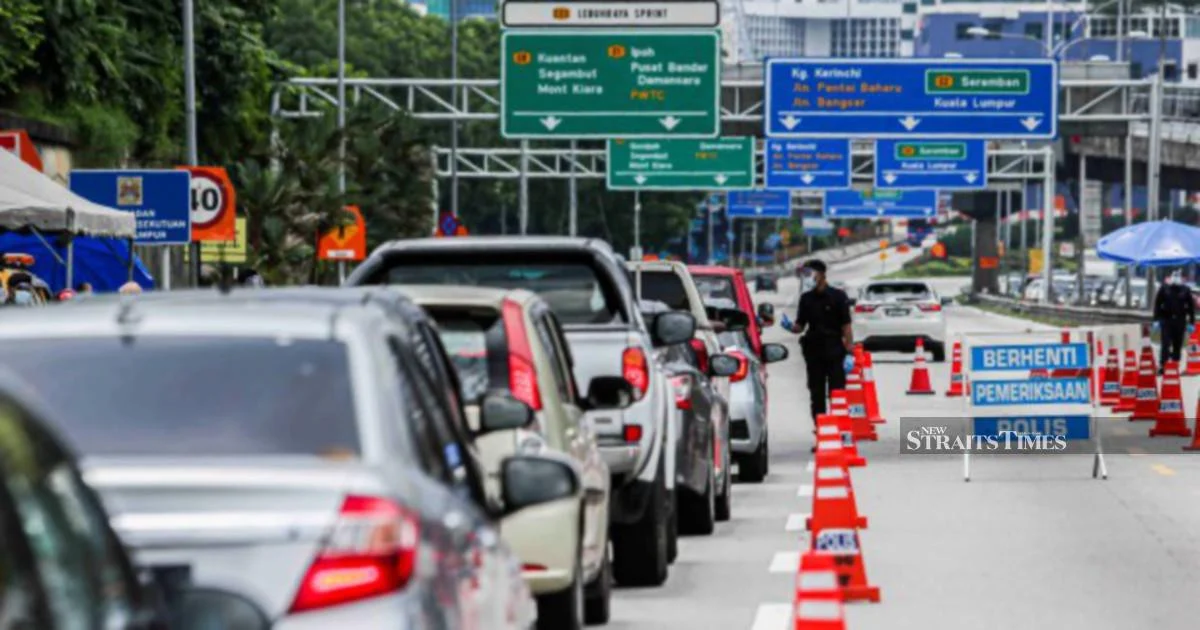
Malaysian motorists face substantially steeper penalties for traffic violations if amendments to the Road Transport Act 1987 gain parliamentary approval, with maximum compound rates rising to RM500 for more than 700 categories of road offences. The proposed changes represent a significant escalation in enforcement costs and reflect a growing policy push toward stricter compliance and enhanced road safety measures across the country.
The Road Transport Act 1987, which forms the legislative backbone of Malaysia's traffic enforcement system, has remained largely unchanged in its penalty structure for many years. The current framework allows enforcement officers discretion in setting compound amounts within prescribed limits for various violations, from minor infractions such as improper parking to more serious breaches including dangerous driving behaviours. The decision to revise these penalty thresholds signals an attempt by policymakers to modernise deterrence mechanisms and adjust for inflation and changing economic circumstances that have altered since the act's original enactment.
Raising compounds to RM500 would place Malaysia among the region's stricter jurisdictions for traffic enforcement. For context, neighbouring countries employ varying approaches—some rely on tiered penalty systems with escalating fines for repeat offenders, whilst others maintain lower baseline compounds but employ vehicle impoundment or licence suspension as supplementary penalties. The RM500 ceiling would apply across multiple violation categories, potentially affecting everyday driving behaviours that currently incur lighter penalties, such as lane violations, expired insurance, or lighting defects.
The scope of the amendments is notably broad, touching more than 700 separate offence classifications. This comprehensiveness suggests the legislative overhaul addresses not merely serious traffic crimes but routine violations that law enforcement encounters daily. Malaysian drivers frequently encounter these regulations—vehicle documentation checks, load restrictions, equipment standards, and speed limit breaches constitute the bulk of road enforcement activity. Broadening the RM500 compound to such extensive categories means fines could accumulate rapidly for motorists receiving multiple citations.
From a regulatory standpoint, higher compounds serve dual purposes within traffic management policy. First, they act as a deterrent mechanism, theoretically discouraging dangerous or careless driving through increased financial consequences. Second, they represent a revenue source for government agencies and fund allocation towards road infrastructure, maintenance, and safety programmes. However, the effectiveness of this approach depends heavily on consistency of enforcement and public perception of fairness—disparities between urban and rural enforcement, or between different demographic groups, could undermine compliance and generate resentment.
Professional drivers and commercial transport operators would face particular scrutiny under elevated penalties. Taxi drivers, lorry operators, and delivery services navigate more intensive enforcement environments due to extended road time and higher-volume interactions with traffic police. For already-thin profit margins in these sectors, compound increases could meaningfully affect operational costs and pricing structures. Passengers might eventually bear these costs through increased fares, creating downstream effects across consumer pricing for transport-dependent services.
The legislative process for these amendments involves parliamentary scrutiny, where stakeholders have opportunity to present concerns. Motoring associations, commercial transport bodies, and consumer groups typically petition against blanket penalty increases, arguing that fines should differentiate between intentional violations and technical breaches. Some advocate for graduated penalty structures reflecting violation severity, rather than uniform maximums across diverse infraction categories. These debates shape final legislation significantly—amendments passed often include carve-outs or adjusted rates addressing specific constituency concerns.
Public compliance with traffic regulations depends substantially on penalty perception relative to enforcement probability. If motorists believe enforcement remains sporadic or inconsistent, higher compounds alone may produce limited behaviour change. Conversely, when combined with visible, regular enforcement activity, elevated penalties can shift driving patterns measurably. Malaysian authorities have periodically intensified enforcement operations around major holidays and peak traffic periods, using targeted campaigns to demonstrate penalty application credibility. Success of the new regime likely hinges on maintaining this enforcement visibility.
The broader Southeast Asian context shows increasing regulatory convergence around road safety. Regional traffic fatality rates remain concerningly high, with Malaysia recording thousands of deaths annually according to World Health Organization data. Policy responses increasingly emphasise stricter penalties alongside infrastructure improvements and driver education initiatives. The proposed RM500 compound reflects this regional trend toward enforcement-heavy road safety strategies, though evidence on optimal penalty levels varies across academic and policy communities.
Implementation challenges will emerge alongside legislative passage. Traffic enforcement personnel require training on updated penalty schedules and discretion guidelines. Administrative systems managing compound collection and revenue tracking may require technological upgrades. Public awareness campaigns become essential—motorists must understand new penalty structures to adjust behaviour accordingly. Additionally, grace periods or phase-in approaches sometimes accompany major penalty increases, allowing drivers adjustment time whilst demonstrating good-faith regulatory transition management.
For Malaysian motorists, the practical implication involves reassessing driving habits and cost calculations. A single incident previously resulting in RM100–RM200 compounds could escalate substantially, making defensive driving practices increasingly economically rational. Insurance premiums correlate with traffic violation records, so compounded penalties create secondary cost pressures through elevated insurance rates. These cumulative financial effects may influence vehicle usage patterns, particularly among price-sensitive segments of the population.
The amendments also invite discussion regarding alternative enforcement approaches. Some jurisdictions employ demerit point systems where penalties accumulate toward licence suspension rather than primarily through financial compounds, whilst others emphasise awareness and education over punitive measures for minor infractions. Malaysia's previous traffic policy discussions occasionally referenced such alternatives, though the current direction emphasises strengthened financial deterrence.
Parliamentary approval remains pending, but the proposal's trajectory suggests substantial likelihood of passage given government road safety priorities. Once enacted, the amendments would reshape Malaysia's traffic enforcement landscape significantly, affecting millions of drivers monthly and generating meaningful additional revenue streams. Whether this approach successfully improves road safety and compliance will become measurable within subsequent years through accident rates, fatality statistics, and behavioural compliance studies.

