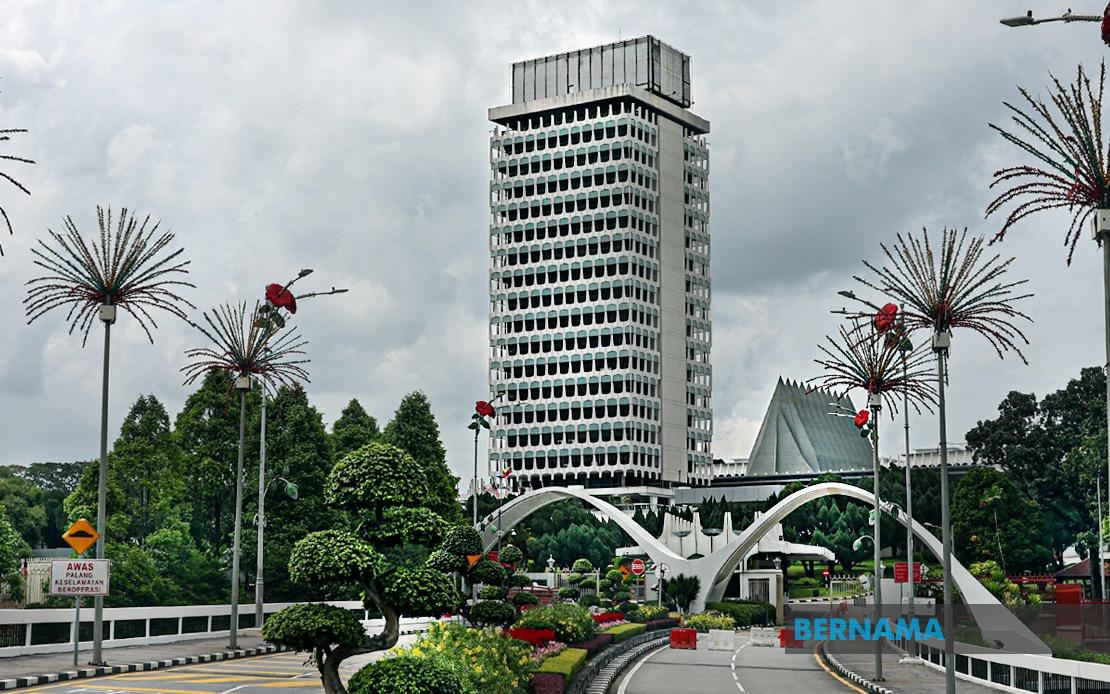
The Road Transport (Amendment) Bill 2026 emerged as the sole legislative achievement during the first week of parliamentary proceedings that commenced on June 22, underscoring a measured legislative pace as Malaysia's lawmakers balanced competing pressures from economic distress and security concerns. Transport Minister Anthony Loke stewarded the measure through passage, introducing enforcement mechanisms previously absent from statutes governing unlawful street racing activities. The amendment's significance lies in its closure of a critical enforcement gap that has hampered authorities' capacity to intervene before harm occurs, fundamentally reshaping the legal framework's approach to dangerous driving behaviour.
Section 42A of the revised Act permits action against illegal racing without requiring authorities to first establish evidence of actual injury, fatality, or imminent peril—a threshold that previously left enforcement officers frustrated and constrained. The loophole reflected a gap between legislative intent and practical enforcement capability that had persisted for years, allowing dangerous street racing to flourish in urban corridors where enforcement ambiguity created opportunities for evasion. Loke indicated the ministry intends to pursue supplementary amendments to the Act later in the year, introducing a compensation mechanism for victims of alcohol or drug-impaired drivers alongside existing criminal penalties, addressing long-standing calls from accident survivors and victims' families.
The Prison (Amendment) Bill 2026, which encompassed provisions for electronic monitoring systems and prisoner rehabilitation volunteer programmes, faced parliamentary remand to a select committee for deeper examination, signalling that even routine reform measures encounter scrutiny within the chamber. Four additional bills received formal introduction for preliminary reading: the Sexual Offences Against Children (Amendment) Act 2026, two Competition-related amendments, and the Cybercrime Act 2026, which would supersede the Computer Crimes Act 1997 in response to evolving digital threats.
Parallel to legislative business, Dewan Rakyat Speaker Tan Sri Johari Abdul confirmed the reinstatement of Larut MP Datuk Seri Hamzah Zainudin as opposition leader effective June 18, formally restoring structural leadership within the parliamentary opposition. The speaker also acknowledged two vacancies arising from the May 18 resignations of Datuk Seri Rafizi Ramli and Nik Nazmi Nik Ahmad representing Pandan and Setiawangsa constituencies respectively, with the Election Commission formally notified to commence by-election procedures as constitutionally mandated.
Unemployment emerged as a dominant theme overshadowing the week's proceedings, with Human Resources Minister Datuk Seri R. Ramanan disclosing that 42,807 workers faced retrenchment between January and June 12, primarily driven by enterprise closures and workforce downsizing. The figure conveyed mounting labour market stress that extends beyond cyclical fluctuations, reflecting structural challenges within Malaysia's post-pandemic economic recovery. Economy Minister Akmal Nasurullah Mohd Nasir countered with more optimistic metrics, noting that June retrenchments declined 20 percent from May's level while the labour force participation rate remained steady at 70.9 percent, suggesting stabilisation rather than deterioration despite the substantial jobless numbers.
Security considerations dominated secondary parliamentary themes, with Home Minister Datuk Seri Saifuddin Nasution Ismail announcing government approval of RM22 million in equipment funding for the Malaysia Border Control and Protection Agency, targeting firearms procurement and operational capabilities. The investment reflects escalating governmental investment in border infrastructure amid persistent cross-frontier challenges and irregular movement concerns affecting Malaysia's international boundaries.
Energy transition discussions intersected with supply chain disruptions as the Ministry of Plantation and Commodities signalled cautious evaluation of B50 biodiesel deployment across Malaysia's fuel network, acknowledging that existing infrastructure would require substantial capital upgrades rendering broader rollout economically questionable in the current global climate. The assessment highlights tensions between sustainability objectives and implementation realities facing policymakers navigating energy transition amid constrained fiscal capacity.
Digital regulation featured prominently through Communications Minister Datuk Fahmi Fadzil's emphasis on the Child Protection Code and Risk Mitigation Code effective June 1, mandating social media platforms implement age-verification systems protecting minors from unsuitable online content. Non-compliance exposure reaches RM10 million in penalties under the Online Safety Act 2025, establishing substantial financial incentives for platform adherence across Malaysia's competitive digital marketplace where international giants dominate user engagement.
Prime Minister Datuk Seri Anwar Ibrahim's absence from scheduled Minister's Question Time sessions, delegated to relevant portfolio ministers managing their respective domains, reflected competing executive demands on his schedule amid multiple crises requiring concurrent governmental attention. The arrangement preserved parliamentary accountability mechanisms while acknowledging reality of concentrated executive responsibilities.
Parliamentary Select Committees received dedicated floor time presenting and defending reports, reinforcing institutional commitment to strengthening committee functions within Malaysia's legislature and expanding deliberative capacity beyond government-initiated measures. The 16-day sitting extending through July 16 promised continued engagement with outstanding legislative agenda items, though the opening week's solitary passage suggested that contentious measures and technical complexities would discipline the legislative calendar.

