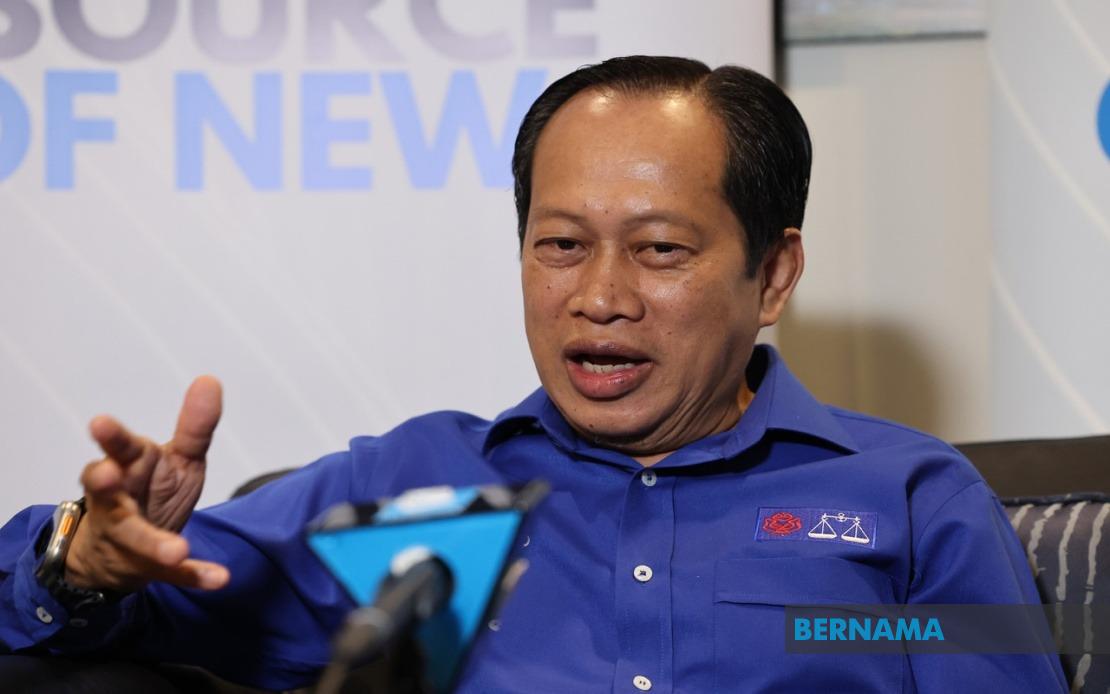
Effective road maintenance across Malaysia hinges on coordinated efforts between elected officials, government agencies, and local authorities, according to Deputy Works Minister Datuk Seri Dr Ahmad Maslan. Speaking in Johor Bahru, Ahmad emphasised that the challenge of keeping the nation's roads in good condition cannot rest solely on the Public Works Department (JKR), but requires active participation from all stakeholders invested in road safety and infrastructure quality.
Ahmad has directed the JKR to prioritise expedited repairs on roads showing signs of deterioration, underlining the ministry's commitment to addressing infrastructure concerns more swiftly. However, he made clear that the responsibility extends beyond federal agencies. State assemblymen and Members of Parliament must similarly step up efforts to identify problem areas in their constituencies and coordinate with local authorities to ensure maintenance work begins without unnecessary delays.
The deputy minister's remarks come amid scrutiny of road conditions in Johor, prompted by Pakatan Harapan's Dr Maszlee Malik, the candidate for the Puteri Wangsa state seat. Dr Maszlee recently undertook a high-profile inspection drive along Jalan Tebrau on June 29, traversing from Kampung Melayu Majidi to Ulu Tiram after receiving multiple complaints through social media about road damage and traffic gridlock. His vehicle experienced noticeably rough passages across numerous stretches, highlighting the extent of surface deterioration in what is a major arterial route in the southern corridor.
During his inspection tour of Johor's 10 district JKR offices, Ahmad gathered detailed development briefings and reiterated the need for faster response times whenever road defects are reported. This ground-level engagement reflects an acknowledgement within the ministry that bureaucratic delays in processing maintenance requests contribute to the accumulation of road damage. By visiting each district office, Ahmad sought to reinforce the expectation that field teams must act decisively when roads require immediate intervention, particularly on stretches that experience heavy traffic or pose safety risks.
The infrastructure challenge in Johor mirrors broader maintenance headaches facing states across Malaysia. Many arterial roads and secondary routes have deteriorated due to heavy usage, weather exposure, and deferred maintenance cycles that leave sections of the network in substandard condition for extended periods. The political dimension is equally significant; opposition-aligned candidates highlighting infrastructure failures can damage the government's narrative on development delivery, making swift remedial action both operationally and politically necessary.
Ahmad outlined the formal procedure through which road maintenance allocations are processed, explaining that funding for federal roads, highways, and bridges flows through the State Economic Planning Unit (UPEN) and state executive councils. This channelling mechanism allows applications to be systematically assessed, ranked by priority, and evaluated for approval before work commences. While this structure aims to ensure transparent allocation and rational prioritisation of limited resources, it also introduces administrative steps that can lengthen the interval between problem identification and repair commencement.
For Malaysian taxpayers and road users, particularly those in congested urban areas and commercial corridors, the apparent tension between bureaucratic process and operational urgency is frustrating. When potholes multiply and road surfaces crack visibly, the public understandably expects rapid intervention rather than months of waiting for approvals to work through government committees. The deputy minister's call for unified action implicitly acknowledges that institutional procedures alone cannot solve the maintenance crisis; cultural shifts toward faster decision-making and accountability are equally important.
The Jalan Tebrau situation exemplifies the kinds of complaints driving political pressure on the government. The route's deteriorating condition and congestion during peak hours affect thousands of commuters daily, making it a visible symbol of infrastructure underperformance. Dr Maszlee's video-documented journey provided opposition parties with ammunition for criticism while simultaneously putting pressure on the government to demonstrate visible improvement within a short timeframe—a challenge given the realities of planning and executing major repair work.
Ahmad's emphasis on cooperation between tiers of government reflects a genuine structural reality in Malaysian governance: the Works Ministry holds significant authority over federal roads and highways, yet state governments control local roads, and district councils manage municipal routes. When a single major road crosses multiple jurisdictions or administrative boundaries, coordination failures can leave gaps in maintenance responsibility. Establishing clearer protocols for inter-agency communication and shared accountability could help resolve some chronic maintenance backlogs.
The broader implication for Southeast Asian infrastructure management is notable. As Malaysia and neighbouring countries expand urban areas and commercial networks, the maintenance burden grows exponentially. Roads that were adequate for traffic volumes a decade ago now carry twice the volume, accelerating deterioration. Simply budgeting for repairs based on historical needs is insufficient; Malaysian policymakers must fundamentally reassess maintenance funding levels and institutional capacity to match current and projected demand.
Moving forward, Ahmad's directive will likely prompt short-term improvements in visible repair work, particularly along politically sensitive corridors in urban areas and swing constituencies. However, sustainable improvement requires sustained political will to increase maintenance budgets relative to new construction spending, and institutional reform to streamline approval processes. Without these deeper changes, road conditions will likely remain a recurring flashpoint in political discourse, with each electoral cycle bringing fresh accusations of neglect and promises of urgent intervention.

