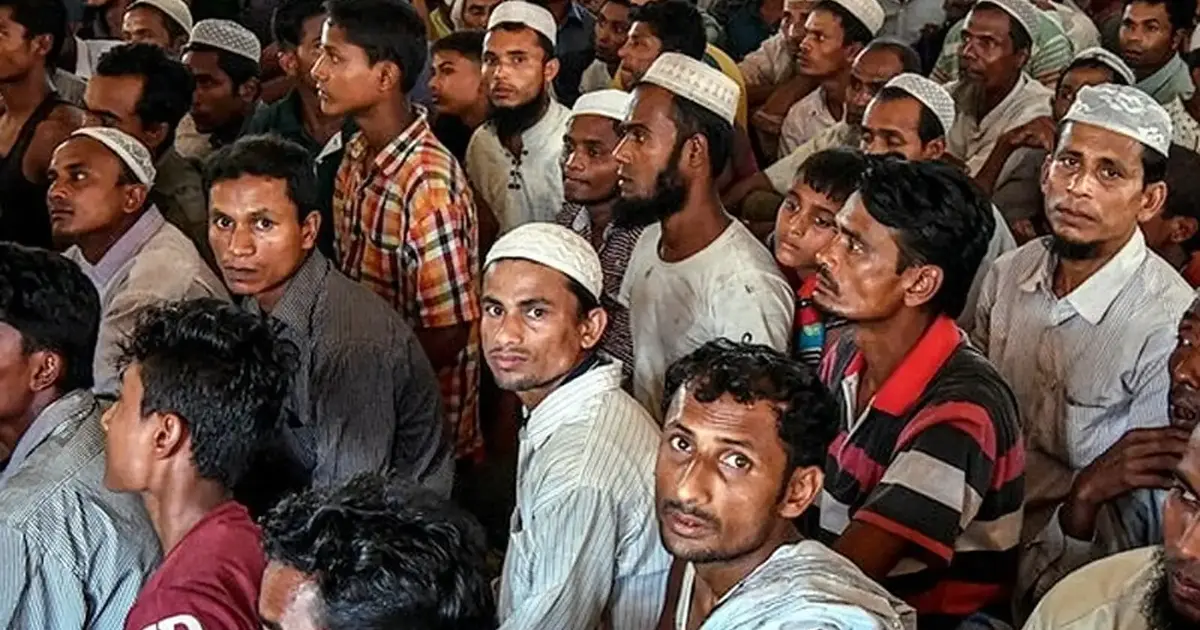
The Rohingya Ulama Council has moved to dispel widespread allegations suggesting that members of the stateless refugee community are actively pursuing Malaysian citizenship, with chairman Rahimullah Hussain characterizing such narratives as manufactured falsehoods intended to stoke communal tension. The denial comes as Malaysia continues grappling with the complex challenge of hosting one of the world's largest stateless populations, a situation that has periodically sparked public controversy and policy debates across multiple levels of governance.
Rahimullah's statement represents a significant intervention in an ongoing discourse that has periodically flared across Malaysian social media and public forums, where unverified claims about Rohingya integration aspirations have circulated widely. The council's position underscores growing frustration within the community over what leadership views as a systematic campaign to misrepresent their intentions and circumstances. By framing these allegations as fabrications rather than honest policy disagreements, the Rohingya leadership is attempting to reposition the narrative from questions about integration to questions about the credibility of those making such claims.
The timing of this clarification is noteworthy, occurring within a broader context of heightened sensitivity around refugee populations in Southeast Asia. Malaysia, which hosts approximately 180,000 registered Rohingya refugees according to UNHCR data, faces mounting pressure from multiple constituencies with diverging interests and concerns. Some segments advocate for greater integration support and pathway regularization, while others express concerns about resource allocation and social cohesion. Against this backdrop, the council's intervention suggests that leadership recognizes the potency of citizenship narratives in shaping public opinion and policy responses.
The distinction between what the Rohingya community actually seeks and what critics claim they pursue appears central to the council's rebuttal. Rather than entirely rejecting aspirations for improved legal status or enhanced livelihood opportunities, the statement focuses on denying that formal citizenship acquisition represents a collective organizational objective. This nuanced position acknowledges that individual refugees might harbor various hopes for their futures while maintaining that the community's official stance remains aligned with existing international humanitarian frameworks governing refugee status and rights.
Understanding this controversy requires recognizing the particular sensitivities surrounding citizenship in Malaysia's political landscape. The country's constitutional framework grants citizenship through genealogical descent and residency pathways that are rarely extended to refugee populations. Any suggestion that non-citizen groups are seeking to alter this arrangement invariably triggers defensive responses from certain political quarters, making allegations of citizenship-seeking potent inflammatory devices regardless of their factual foundation. The Rohingya council's response reflects awareness that such accusations, once circulated, become difficult to fully extinguish through reasoned counter-argument alone.
The council's assertion that claims are designed to incite hatred carries particular weight in a country where communal relations have historically been sensitive to narratives about demographic change and group integration. By explicitly invoking the concept of intentional incitement, leadership is positioning critics as engaging in a form of bad-faith discourse that prioritizes emotional mobilization over factual accuracy. This rhetorical move attempts to shift focus from the substantive question of what policies might be appropriate for refugee populations toward questions about the ethics and intentions of those making allegations.
For Malaysian policymakers, this denial presents both clarification and complication. If the Rohingya Ulama Council genuinely speaks for majority community sentiment, it suggests that citizenship is not the primary pressure point driving policy concerns from that direction. However, it does not resolve underlying questions about what rights, protections, and opportunities should be extended to individuals living in prolonged refugee status. Malaysia's approach to Rohingya populations has historically balanced humanitarian considerations against domestic political constraints, with neither fully satisfied by existing arrangements.
The council's intervention also reflects evolving Rohingya community organization and voice-claiming in the Malaysian context. As refugee populations remain in countries for extended periods, they develop leadership structures, advocacy capacity, and strategic communication capabilities. The Rohingya Ulama Council's willingness to engage in public statement-making and narrative correction indicates maturation of institutional capacity within the community, even as political and legal constraints on their broader participation in Malaysian civic life remain substantial.
Regionally, this episode illuminates continuing challenges facing Southeast Asian societies hosting significant refugee populations. The Rohingya situation spans multiple countries, but Malaysian hosting arrangements have become politically salient in ways that generate periodic controversy. As neighboring states like Bangladesh, Thailand, and Indonesia also manage Rohingya populations, the Malaysian council's effort to shape narratives about community intentions carries implications for how regional burden-sharing and protection responsibilities are understood and debated.
Moving forward, the Rohingya Ulama Council's categorical denial appears designed to establish a clear baseline from which future discussions about refugee integration, livelihood support, and legal status can proceed without the presumption that organizational leadership harbors hidden assimilationist or citizenship-seeking agendas. Whether such clarifications prove sufficient to dampen recurring allegations will depend partly on whether critics engage with the substantive distinction the council is attempting to establish, or whether inflammatory claims continue circulating regardless of official rebuttal. The council's intervention nonetheless marks an important moment in how the Rohingya community is learning to assert voice and counter-narrative in the Malaysian public sphere.

