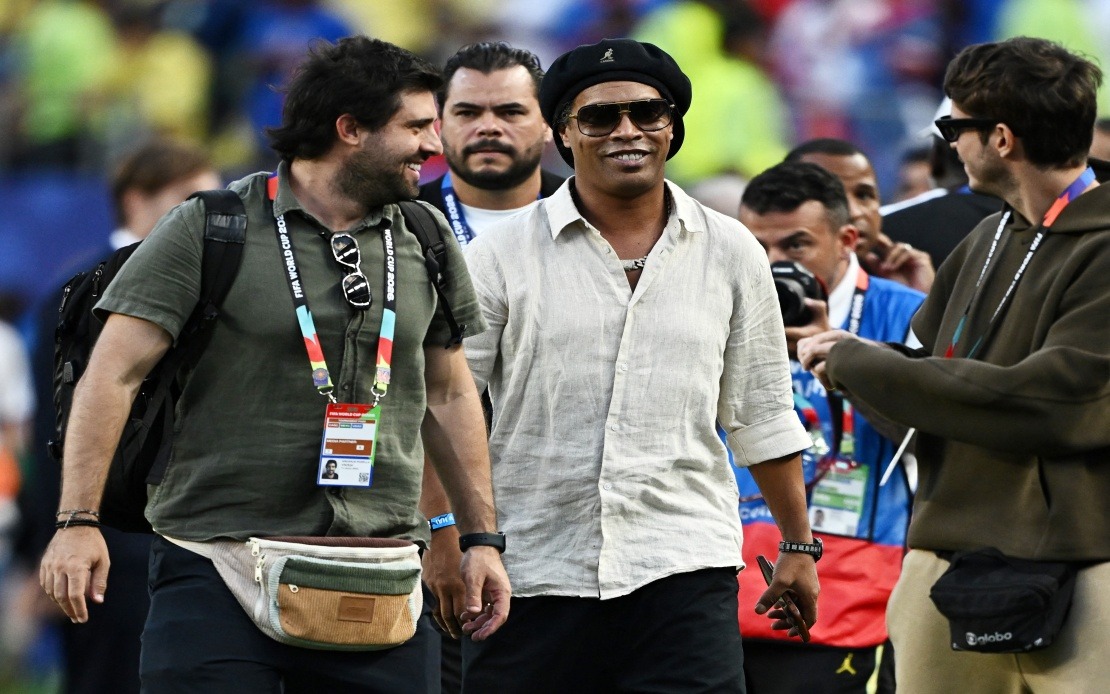
The football world is contemplating the prospect of a remarkable return to the pitch as Ronaldinho, the legendary Brazilian playmaker once regarded as one of the sport's greatest talents, appears poised to join Italian third-tier club Ravenna at the age of 46. While details surrounding the arrangement remain fluid, the signing represents a striking development in the veteran's career trajectory, with greater certainty expected to emerge following a presentation event scheduled for Tuesday in Miami.
Ravenna's intentions to bring the decorated former midfielder to their ranks emerged through Italian sports media, which reported that contractual negotiations have progressed meaningfully. The Emilia-Romagna based club, competing in Italy's third professional division, has positioned itself to welcome the South American icon to its ranks, though the club's leadership has adopted a measured stance regarding whether the Brazilian will materially participate in matches.
Ariedo Braida, serving as vice-president at Ravenna, articulated the club's position with cautious optimism when speaking to ANSA news agency. His remarks suggested openness to the possibility of match participation whilst acknowledging the uncertainties inherent in such an ambitious undertaking. Braida's characterisation of Ronaldinho as a champion transcending conventional age considerations reflected the esteem in which the club holds its prospective addition.
Ronaldinho himself expressed enthusiasm about the prospect, emphasizing his continued affection for the ball and his eagerness to establish fresh narratives within the sport. His quoted remarks specifically referenced Ignazio Cipriani, the businessman and hotel chain proprietor who owns Ravenna, suggesting a personal rapport that may have facilitated the club's interest in securing his services. The tone of his statement conveyed genuine excitement rather than mere ceremonial commitment.
The contemplated signing would constitute a remarkable epilogue to a career distinguished by sustained excellence at sport's highest echelons. Ronaldinho achieved the honour of World Footballer of the Year on two occasions and remains one of few players to have won football's most prestigious collective and individual accolades. His World Cup victory with Brazil in 2002 established his credentials at international level, whilst his spell at Barcelona between 2004 and 2008 produced performances that many connoisseurs regard as the apogee of contemporary midfield play.
Beyond his exploits in Europe and South America, Ronaldinho's footballing portfolio encompasses success in South American club competition, most notably his achievement of the 2013 Copa Libertadores trophy with Atletico Mineiro. His career demonstrated remarkable geographic and competitive breadth, showcasing his ability to thrive across different footballing cultures and tactical systems. The diversity of his accomplishments attests to qualities that transcended era-specific tactical fashions.
Ronaldinho's transition away from the professional game commenced in 2015 when he concluded his involvement with Fluminense, the prominent Rio de Janeiro club, marking the conclusion of his final engagement in conventional association football. Rather than immediately retiring, he subsequently explored futsal opportunities, competing in India's Premier Futsal League across multiple stints before formally announcing his retirement in 2017. The intervening period between his departure from Fluminense and his official retirement announcement reflected a gradual rather than abrupt separation from competitive football.
The prospect of a return at this stage of life raises intriguing considerations regarding athletic capacity, recovery protocols, and the sustainability of meaningful engagement in professional football. At 46 years of age, Ronaldinho would require physical conditioning substantially different from younger competitors, yet his technical foundation and football intelligence might enable contributions qualitatively distinct from conventional positional performance. The Ravenna arrangement appears to acknowledge these realities by maintaining ambiguity regarding actual participation.
For Malaysian and Southeast Asian followers of football, the narrative carries particular resonance given the region's deep connection to Brazilian football culture and the iconic status Ronaldinho commands across Asia. His distinctive playing style—characterized by audacious dribbling, unpredictable creativity, and apparent joy in execution—transcended geographic and linguistic boundaries, establishing him as a figure recognized far beyond traditional European football strongholds. Any appearance at Ravenna would command attention across Asian media platforms and among regional football enthusiasts.
The Ravenna project also reflects broader trends within football management regarding legacy positioning and commercial considerations alongside competitive objectives. Third-division Italian football increasingly leverages international names and stories to enhance profile and engagement, and Ronaldinho's presence would undoubtedly generate substantial media attention and fan interest regardless of playing time. The arrangement thus operates simultaneously as sporting proposition and broader commercial-narrative undertaking.
As confirmation awaits the Miami presentation event, the football community contemplates the genuine possibility of witnessing one of history's most gifted players return to competitive involvement. Whether Ronaldinho ultimately appears in match situations or merely carries the symbolic weight of his name within Ravenna's roster, the development exemplifies the enduring hold that exceptional talents maintain over the sport, even as temporal considerations ostensibly should conclude their active participation. The coming weeks will clarify whether this represents genuine sporting return or carefully constructed narrative conclusion.

