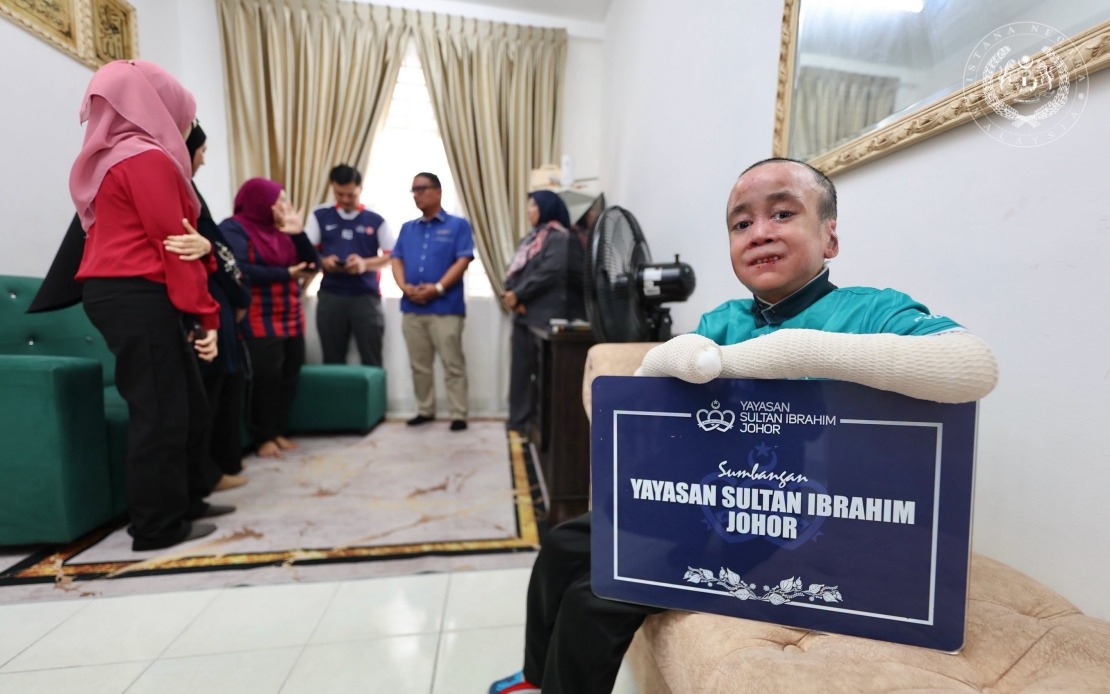
The Yayasan Sultan Ibrahim Johor (YSIJ) has stepped in to support Muhammad Hazreel Mikhail Hizar, a teenager living with epidermolysis bullosa, a rare and painful genetic disorder that has affected him since birth. The foundation delivered the aid through its Ziarah Kasih outreach programme, visiting the home of Hazreel's mother, Noor Halimaton Hashim, in the Sungai Tiram People's Housing Project in Johor Bahru on August 18, targeting the family's immediate living expenses and daily needs.
Epidermolysis bullosa represents one of the more challenging chronic conditions affecting Malaysian children, characterised by extreme fragility of the skin that blisters and tears with minimal trauma. For Hazreel, this means his life revolves around meticulous wound management and infection prevention, requiring constant attention to hygiene protocols and environmental controls. The condition demands that his living space remain consistently cool and air-conditioned, a necessity that places substantial strain on household budgets, particularly for families already struggling financially.
Noor Halimaton, Hazreel's single mother, carries the dual burden of raising three children while providing round-the-clock care for her son's complex medical needs. Her inability to pursue full-time employment stems directly from the demands of Hazreel's condition, which requires her presence and vigilance throughout each day. The financial pressures of this situation extend beyond basic living costs to encompass specialised medical supplies, climate control, and the opportunity cost of foregone income, creating a precarious situation for the entire household.
The intervention by YSIJ represents recognition from the highest levels of Johor's leadership of the genuine hardships faced by families managing rare diseases in Malaysia. Such chronic conditions, while affecting a small proportion of the population, can devastate household economics and parental wellbeing when comprehensive support systems remain limited. The royal foundation's involvement signals a commitment to addressing gaps where government assistance or other support structures may prove insufficient.
Epidermolysis bullosa demands lifelong management, and the transition into adulthood presents additional complications for affected individuals and their families. The psychological toll of managing a visible, painful condition during teenage years adds layers of complexity beyond the physical burden. For young people like Hazreel, educational opportunities and social development must be carefully balanced against medical requirements and the unpredictability of disease progression.
Noor Halimaton's gratitude, conveyed through the Royal Press Office, underscores how targeted assistance can restore dignity and stability to families facing overwhelming circumstances. Her willingness to speak publicly about her family's struggles also brings needed visibility to epidermolysis bullosa, a condition that remains relatively unknown among the general Malaysian public despite its profound impact on those affected. Increased awareness may ultimately encourage other institutions and individuals to consider supporting families in similar situations.
The Ziarah Kasih programme itself demonstrates a model of welfare delivery that combines financial assistance with personal acknowledgment and dignity. Rather than impersonal transfers, the foundation's staff visited the family's home, listened to their circumstances directly, and provided support that addressed real, immediate needs. This approach differs markedly from bureaucratic processing and reflects an understanding that vulnerable families often require not just money but also recognition and social engagement.
For the broader Southeast Asian context, Malaysia's experience with rare disease support reveals both progress and gaps. While developed healthcare systems exist in major urban centres, families in smaller towns and rural areas often struggle to access specialist care and support services. The reliance on charitable foundations and royal patronage to fill gaps suggests that formal, sustainable healthcare and social support frameworks require strengthening across the region.
Moving forward, the case of Muhammad Hazreel Mikhail Hizar and his mother illustrates the importance of comprehensive rare disease registries, targeted social safety nets, and community awareness programmes. Malaysian policymakers and healthcare leaders would benefit from examining how other nations with developed economies manage rare disease support, potentially adapting international best practices to local contexts and capabilities. Families managing chronic conditions deserve not temporary relief but integrated, sustainable systems that enable both children and caregivers to pursue meaningful lives while managing medical realities.

