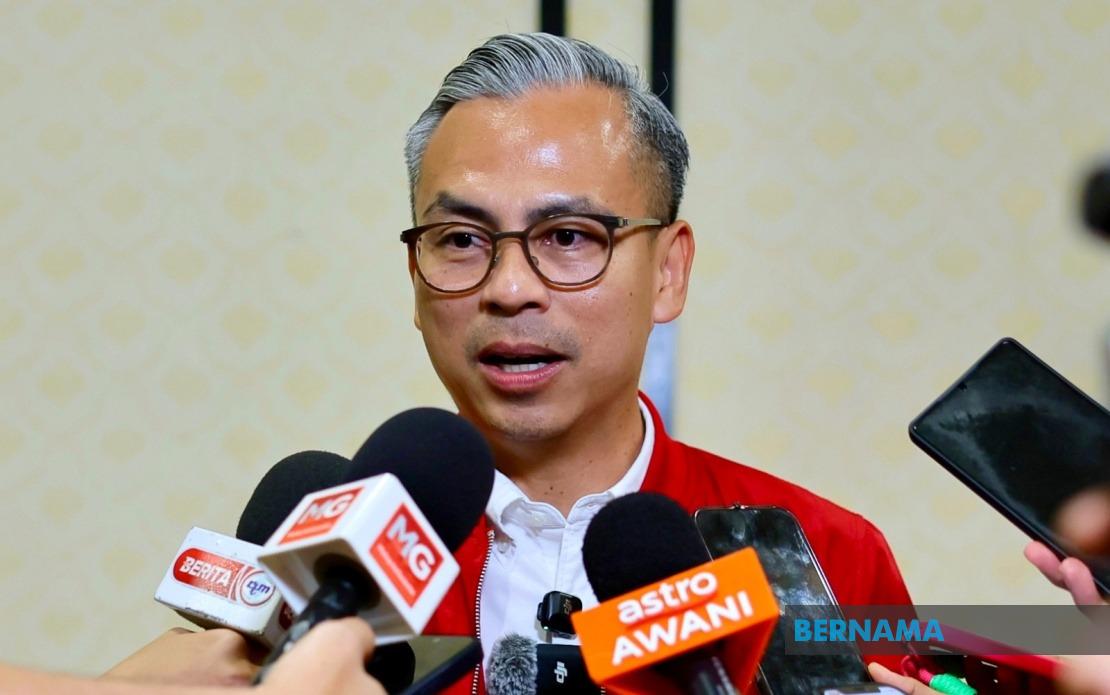
Communications Minister Datuk Fahmi Fadzil has extended an invitation to air a live broadcast debate on RTM between Johor Menteri Besar Datuk Onn Hafiz Ghazi and Pakatan Harapan's Dr Maszlee Malik, the PH candidate contesting the Puteri Wangsa state seat in the upcoming Johor election. Speaking in Muar on July 2, Fahmi indicated that the national broadcaster stands ready to facilitate such an engagement at a time and location convenient to both camps, with Johor Bahru as a potential venue.
The offer comes as campaigns intensify ahead of the July 11 polling day for the 16th Johor state election, with early voting set for July 7. Fahmi's intervention represents an attempt to create space for substantive policy discussions within the electoral contest, positioning the dialogue as an opportunity to examine competing visions for the state's trajectory over the next five-year term rather than serving as a platform for partisan attacks or rhetorical combat.
Fahmi, who doubles as the Pakatan Harapan Communications Director, addressed mounting pressure from certain quarters demanding that PH declare its Menteri Besar candidate before committing to any public debate or dialogue format. His proposal attempts to sidestep this impasse by emphasizing the merit of direct engagement between candidates regardless of whether all parties have unveiled their preferred leadership candidates. The minister's framing suggests that willingness to confront differing perspectives represents a valuable leadership quality essential for steering Johor's development agenda forward.
The communications minister specifically praised Dr Maszlee's demonstrated openness to dialogue, highlighting a recent interactive session the PH candidate held with 41 young voters to explore aspirations for Johor's future direction. This recognition underscores a distinction the government appears keen to establish between constructive engagement and adversarial campaigning, suggesting that candidates willing to listen and respond thoughtfully to community concerns warrant particular commendation.
Fahmi's remarks reflect broader concerns about electoral discourse quality in Malaysian politics. By proposing a structured dialogue focused on developmental issues rather than personal criticism, the minister implicitly advocates for elevating campaign standards and encouraging substantive policy examination. This approach carries particular significance for younger voters, whom Fahmi specifically addressed, urging them to overcome logistical obstacles associated with the mid-month polling date and participate actively in determining Johor's future direction.
The Puteri Wangsa contest presents a crowded field that extends beyond the primary contention between Maszlee and incumbent representatives. Dr Maszlee will compete against Barisan Nasional's Teow Chia Ling, Nicholas Paul Vincent from Parti Bersama Malaysia, MUDA's Rashifa Aljunied, and independent candidate Wang Wee Seong. This multi-candidate environment heightens the complexity of electoral competition and potentially amplifies the value of platforms enabling detailed policy exposition beyond soundbites.
The Machap constituency presents a different battleground, where Onn Hafiz, the BN incumbent, confronts a direct challenge from Pakatan Harapan's Nor Hafiz Roslan. Should Fahmi's proposal materialize, a debate involving the Menteri Besar would carry particular symbolic weight, signaling the importance both coalitions attach to the state's leadership question. The possibility of Onn Hafiz accepting such engagement may indicate his confidence in articulating the government's record and vision.
For Malaysian political observers and regional analysts, the dialogue proposal represents noteworthy positioning by Pakatan Harapan ahead of a state election where the coalition faces significant headwinds. By extending an offer for constructive engagement and emphasizing policy substance, PH attempts to redirect focus toward governance capacity and future plans rather than dwelling on historical grievances or partisan point-scoring. This strategic choice reflects lessons learned from previous electoral contests about voter preferences for forward-looking rather than backward-looking campaigns.
The RTM platform carries particular institutional weight as Malaysia's national broadcaster, suggesting that such a dialogue would reach significantly beyond campaign partisans to encompass broader electorate segments including undecided voters and those with limited engagement in political discourse. Television broadcasts through a mainstream public channel can penetrate demographics and geographic areas that social media and targeted digital campaigns might not effectively reach, potentially expanding the dialogue's impact and legitimacy.
The communications minister's confident assertion that Onn Hafiz will prove willing to engage reflects underlying assumptions about acceptable political comportment and leadership standards in contemporary Malaysia. By framing willingness to debate as an expected leadership attribute rather than an exceptional gesture, Fahmi essentially establishes a normative expectation that candidates and office-holders should embrace public scrutiny and substantive questioning. This framing potentially shifts discourse from whether debates should occur to how they should be conducted.
Johor's electoral significance extends beyond state-level implications given the state's economic importance and its status as a political stronghold where coalition fortunes have historically shifted. The election outcome will influence not only immediate state governance but also broader perceptions about coalition competitiveness and voter sentiment heading into potential national-level contests. Accordingly, campaigns have attracted considerable attention from national leadership across both government and opposition benches.
As the election approaches, the practical question remains whether Onn Hafiz will embrace the dialogue opportunity. His response will provide insights into BN's confidence levels and its assessment of electoral advantage from public engagement versus controlled messaging strategies. Similarly, PH's ultimate success in elevating discourse quality may depend not merely on offering platforms but on demonstrating that substantive policy examination yields more productive outcomes than traditional adversarial campaigning formats.
The Johor election ultimately tests whether Malaysian voters respond positively to campaigns emphasizing developmental substance and future-oriented thinking, or whether traditional political messaging and coalition loyalty continue dominating electoral behavior. Fahmi's dialogue proposal, whether ultimately implemented or not, marks a deliberate attempt to shift campaign norms toward more constructive engagement patterns that may resonate with constituencies increasingly frustrated by repetitive partisan disputes.

