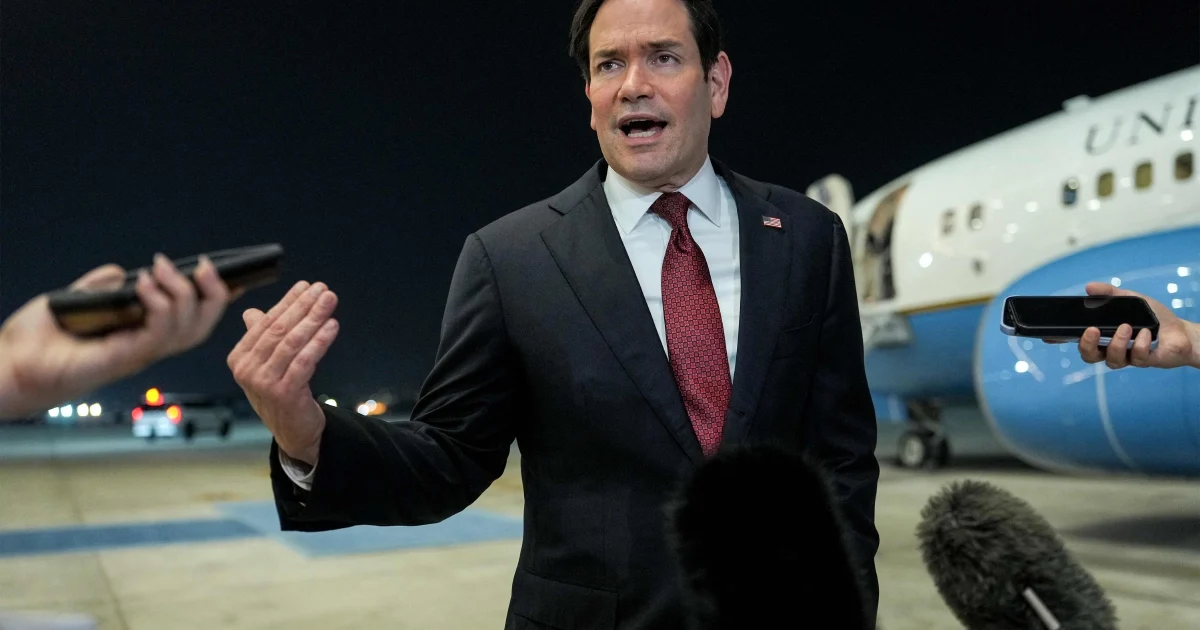
The United States will not tolerate Iranian levies imposed on commercial traffic through the Strait of Hormuz, US Secretary of State Marco Rubio declared on Tuesday, highlighting fundamental disagreements that threaten to derail ongoing diplomatic efforts aimed at resolving the Middle East conflict. The statement underscores how negotiations between Washington and Tehran remain fractious despite declared commitments to finding peaceful solutions, with critical flashpoints centring on maritime commerce, nuclear oversight, and weapons systems.
The Strait of Hormuz represents one of the world's most economically vital chokepoints, with roughly one-fifth of global oil supplies transiting its waters daily. Any attempt by Iran to levy tolls or fees on vessels would disrupt international commerce and directly threaten the interests of oil-importing nations across Asia, including Malaysia, Singapore, and other Southeast Asian economies heavily dependent on Gulf hydrocarbons. Such an arrangement would effectively grant Tehran a degree of economic leverage that Washington and its allies view as untenable, particularly given the waterway's classification under international law as an international strait where free navigation is protected.
Rubio's categorical rejection reflects Washington's determination to maintain the status quo governing passage through these strategically critical waters. The position carries significant implications for regional stability, as any Iranian toll system would inevitably spark confrontation and potentially invite military responses to enforce the principle of unrestricted transit. Southeast Asian shipping interests, already navigating elevated freight costs and insurance premiums due to regional tensions, would face additional economic burdens if such fees were implemented.
Beyond the maritime dispute, the diplomatic impasse encompasses equally contentious issues surrounding Iran's nuclear programme and ballistic missile development. The two sides remain deadlocked over the scope and intrusiveness of international inspections on Iranian nuclear facilities, with Washington demanding comprehensive verification regimes while Tehran insists such arrangements violate its sovereignty. These disagreements echo the fundamental philosophical divide that has defined US-Iran relations for decades, rooted in divergent assessments of what constitutes acceptable security arrangements.
The missiles question adds another layer of complexity to negotiations. The United States has historically sought constraints on Iran's ballistic missile capabilities, viewing them as destabilising weapons that threaten American allies throughout the Middle East and potentially extend Iran's capacity to project power across the region. Tehran, conversely, regards its missile programme as a legitimate defensive deterrent and views American demands for limitations as attempts to preserve Israel's military superiority in the region.
These accumulating tensions suggest that early optimism about resolving the Middle East conflict may have been premature. The negotiating parties appear to be retreating to entrenched positions on core issues, indicating that compromises acceptable to both sides remain elusive. Each side's bottom lines—whether American insistence on free navigation through Hormuz or Iranian refusal to submit to what it characterises as invasive inspections—remain largely incompatible.
For regional observers, particularly those in Southeast Asia watching these developments, the implications are sobering. Malaysia and other nations in the region depend heavily on stability in the Middle East and unimpeded maritime access to global resources. Extended diplomatic gridlock could perpetuate the military tensions, proxy conflicts, and economic disruptions that have characterised the region in recent years. The possibility of negotiations collapsing would likely intensify military posturing and elevate the risk of accidental escalation into direct conflict.
The specific nature of these disputes reveals how structural features of international relations continue to frustrate diplomatic resolution. The Strait of Hormuz remains fundamentally non-negotiable for Washington and its allies because conceding control over international waters would establish a dangerous precedent that other regional powers might seek to replicate. Similarly, Iran's nuclear and missile programmes represent core elements of regime security doctrine that Tehran cannot easily compromise without risking internal political backlash.
Rubio's firm statement therefore signals American resolve to maintain existing frameworks, even if doing so delays or complicates peace negotiations. The message conveyed is that while Washington may be willing to negotiate certain aspects of a settlement, it will not accept arrangements that fundamentally alter the regional balance of power or surrender principle regarding international maritime law. This stance, while defensible from a strategic perspective, leaves little room for the creative compromises that breakthrough negotiations typically require.
The widening gap between negotiating positions raises questions about whether the stated objective of ending Middle East conflict reflects genuine mutual interest in peace or merely tactical positioning ahead of potential further escalation. Southeast Asian nations, having little direct influence over these talks, must prepare contingency plans for prolonged regional instability while hoping that behind-the-scenes diplomacy produces unexpected breakthroughs.

