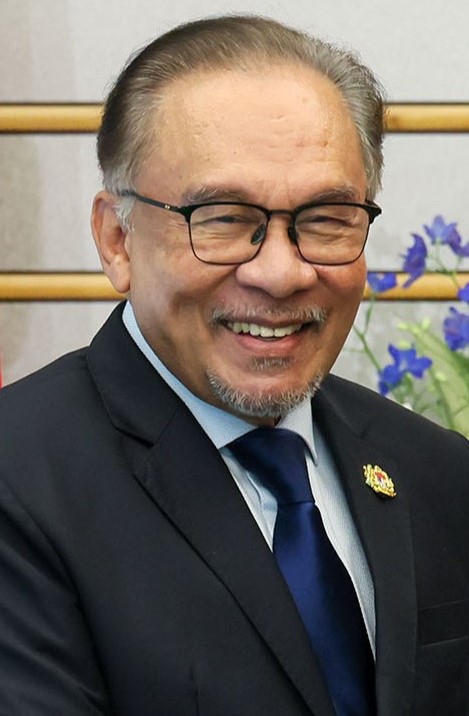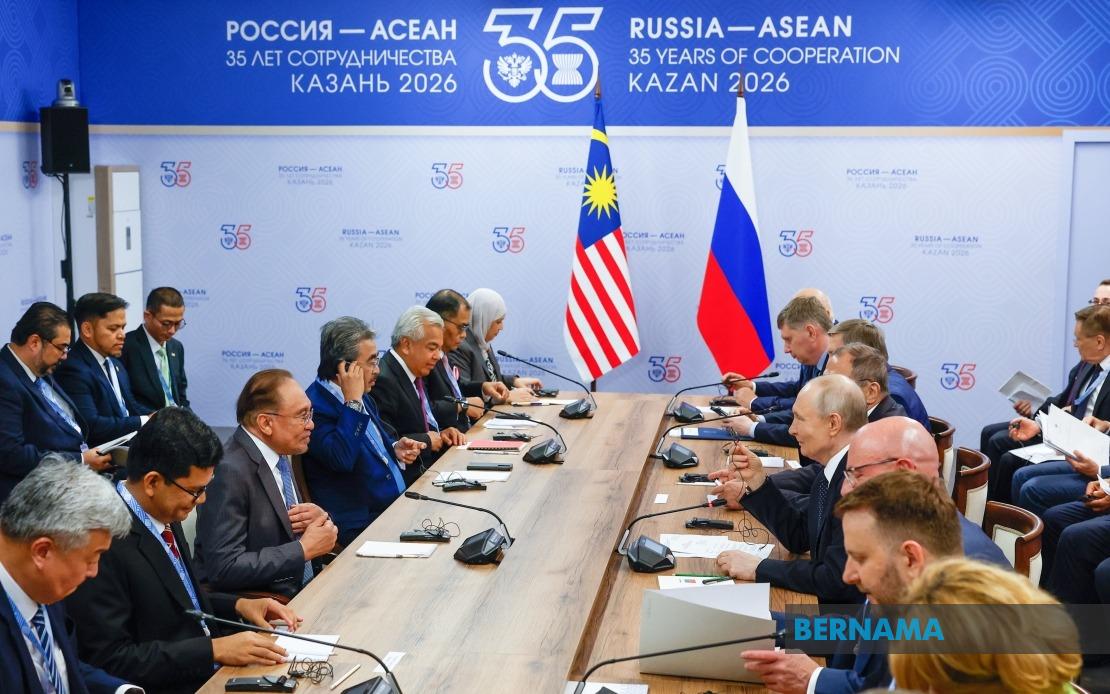
Russian President Vladimir Putin expressed optimism about strengthening Russia-Malaysia relations during talks with Malaysian Prime Minister Datuk Seri Anwar Ibrahim at the ASEAN-Russia Commemorative Summit in Kazan on June 18. The two leaders discussed expanding cooperation as the countries prepare to commemorate six decades of diplomatic ties in 2026, with Putin emphasizing that both nations possess a robust platform upon which to build deeper engagement across multiple sectors.
During their bilateral meeting on the summit sidelines, Putin highlighted the "substantive positive experience" accumulated through years of sustained official and mutual cooperation. He underscored that the approaching milestone represents not merely a historical marker, but rather a springboard for intensifying coordinated efforts in joint endeavours. This framing suggests Moscow views its relationship with Kuala Lumpur as one of strategic consequence within Southeast Asia, particularly given Malaysia's influential position within ASEAN.
The institutional architecture supporting Russia-Malaysia relations has proven durable and functional. Putin noted that both capitals maintain consistent dialogue channels through their respective ministries, government agencies, and parliamentary bodies. Complementing these formal structures is an intergovernmental commission dedicated to economic, scientific, technical, and cultural collaboration, which serves as the practical machinery for translating high-level political commitments into concrete joint projects and initiatives. This multilayered institutional framework reflects a mature diplomatic relationship extending beyond ceremonial exchanges.
Economic ties between the two countries have demonstrated measurable momentum. Trade volumes expanded by 12.9 percent during 2025, a performance Putin characterized as satisfactory and indicative of genuine commercial dynamism. This growth trajectory assumes particular significance given the broader context of Russia's economic engagement with Asia following Western sanctions, making Malaysia and other Southeast Asian partners increasingly vital to Moscow's commercial interests in the region. The figure suggests that despite geopolitical complexities, bilateral trade relationships remain resilient and expanding.
Beyond commerce, Putin emphasized Moscow's commitment to cooperation spanning education, scientific research and technological development, tourism infrastructure, and cultural exchanges. These dimensions of the bilateral relationship appeal to Malaysian stakeholders across academic, business, and civil society sectors. Educational partnerships, in particular, have long characterized Russia-Malaysia ties, with thousands of Malaysian students historically pursuing higher education at Russian institutions. Investment in human-to-human exchanges and knowledge transfer reinforces the people-to-people foundations of diplomatic relationships.
Malaysia's role within ASEAN carries special significance in Putin's strategic calculations. He specifically welcomed Kuala Lumpur's support for strengthening the Russia-ASEAN strategic partnership, noting that Malaysia hosted the inaugural Russia-ASEAN summit-level meeting in 2005. By acknowledging Malaysia's recent tenure as ASEAN chair and its continued backing for Russia-ASEAN institutional development, Putin signalled recognition of Malaysia's diplomatic weight within the regional organization. This emphasis reflects Moscow's understanding that engagement with Southeast Asian nations through ASEAN frameworks provides diplomatic legitimacy and reach.
Putin's characterization of Malaysia as a "long-standing global partner" positioned the relationship on a foundation of sustained mutual respect and reciprocal consideration of interests. This language avoids the patronizing overtones sometimes present in great-power rhetoric, instead suggesting a relationship among relative equals guided by pragmatic recognition of shared concerns and complementary interests. For Malaysian audiences, this framing matters considerably, as it affirms that bilateral engagement rests on acknowledged respect for sovereignty and legitimate national interests.
The personal dimension of Russian-Malaysian leadership relations received explicit attention. Putin recalled previous meetings with Anwar in Malaysia and conveyed warm greetings to His Majesty Sultan Ibrahim, King of Malaysia, requesting that the Prime Minister transmit his best wishes to the monarch. Such courtesies, while seemingly ceremonial, carry diplomatic weight in Southeast Asian contexts where respect for national institutions and traditional authority remains deeply embedded in political culture. The gesture reflects awareness of protocol importance and deference to Malaysia's constitutional framework.
The timing of this bilateral engagement within the ASEAN-Russia Commemorative Summit itself carries layered meaning. Rather than meeting in isolation, Putin and Anwar's discussion occurred within a broader gathering designed to mark and strengthen Russia's ties across the Southeast Asian region. This setting reinforces that Malaysia functions as one pillar of Russia's ASEAN strategy, though arguably an especially important one given historical trade ties and diplomatic consistency. The summit context also provides opportunities for Moscow to demonstrate commitment to regional engagement patterns acceptable to ASEAN members collectively.
Looking forward, the 60th anniversary of Malaysia-Russia diplomatic relations presents both symbolic and practical opportunities. Commemorative occasions frequently prompt governments to announce new initiatives, upgrade institutional frameworks, or launch joint projects designed to demonstrate renewed commitment. Malaysian stakeholders may anticipate proposals for enhanced cooperation in sectors ranging from energy and resource development to defence and security matters, though such discussions typically remain confidential during early negotiating phases.
For Malaysian readers, the significance of this engagement extends beyond bilateral diplomacy. As Southeast Asian nations navigate complex geopolitical currents involving multiple great powers, Malaysia's capacity to maintain substantive working relationships with diverse partners—including Russia—enhances regional stability and provides Kuala Lumpur with diplomatic flexibility. This approach aligns with Malaysia's traditional non-aligned positioning and its emphasis on ASEAN centrality in regional affairs.