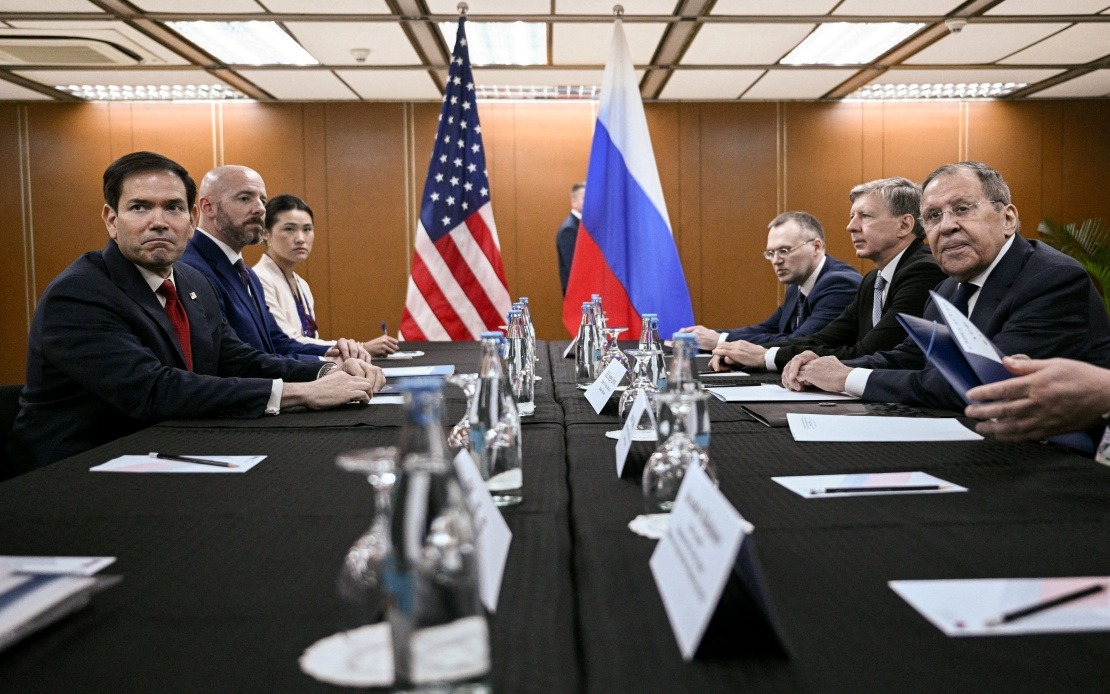
Russian Foreign Minister Sergey Lavrov and United States Secretary of State Marco Rubio have struck an agreement to preserve communication channels between their respective foreign ministries, with a particular emphasis on interactions within multilateral international forums. The understanding emerged from their meeting in Manila on July 23, according to a statement released by the Russian Foreign Ministry, marking a noteworthy moment of diplomatic engagement between Moscow and Washington at a senior level.
The accord reflects a pragmatic recognition by both nations that despite considerable tensions in their bilateral relationship, maintaining functional lines of communication through established international structures remains beneficial. Rather than pursuing direct bilateral negotiations on contested matters, the agreement channels future contact through the architecture of international organisations where both countries maintain membership and participate in collective decision-making. This approach allows the two governments to interact within defined procedural frameworks that provide some degree of formality and legitimacy to their engagement.
For Southeast Asian observers and policymakers, this development carries particular significance given the region's position within broader great-power competition dynamics. Malaysia and other ASEAN nations have consistently advocated for dialogue and the maintenance of peaceful channels of communication among major powers, viewing escalating tensions as destabilising to regional security and economic interests. The agreement between Lavrov and Rubio demonstrates that even amid substantive disagreements, major powers can sustain mechanisms for peaceful interaction, a principle that underpins regional stability frameworks that Southeast Asian countries have worked to construct.
Beyond the general commitment to maintain contacts, the two foreign ministers addressed the practical functioning of diplomatic infrastructure. They discussed efforts to normalise working conditions for Russian and American diplomatic missions in each other's territories. This focus on operational normalisation suggests an effort to ensure that diplomatic staff can perform their functions effectively, preventing the kind of comprehensive diplomatic breakdown that would signal complete rupture between the two capitals. Such considerations often prove foundational to maintaining any meaningful diplomatic relationship.
A particularly notable development involves space cooperation. Lavrov and Rubio jointly welcomed the resumption of full operational engagement between Roscosmos, Russia's space agency, and NASA, the American space administration. This represents a significant area of bilateral collaboration that has historically transcended political disagreements between the two nations. The renewal of substantive contact between these premier space organisations indicates that certain domains of technical and scientific cooperation can persist even when broader political relationships remain strained, offering a model for compartmentalised engagement on mutually beneficial issues.
The ministers further expressed support for expanding interparliamentary exchanges and strengthening cultural ties between the two countries. These initiatives represent the softer dimensions of bilateral relations—the people-to-people connections and legislative dialogue that can help preserve understanding and reduce mutual suspicion even during periods of heightened political tension. Parliamentary exchanges allow lawmakers from both nations to engage directly, potentially building relationships that transcend immediate policy differences. Cultural ties similarly serve to humanise the other nation and remind both populations of shared interests and values.
The timing of this diplomatic engagement warrants contextual consideration. International relations between Russia and the United States have been substantially strained by multiple factors including geopolitical competition in Europe, differing approaches to regional conflicts, and fundamental disagreements over international law and sovereignty. Against this backdrop, any agreement to preserve communication channels represents a counterweight to forces pushing toward complete antagonism. The Manila venue itself—a Southeast Asian location far from either capital—carries symbolic weight, suggesting that international forums and neutral ground provide opportunities for such engagement.
For Malaysia specifically, these developments touch on the country's broader strategic interests. As a nation maintaining diplomatic relations with both Russia and the United States, Malaysia benefits from their ability to communicate and manage differences peacefully. Escalating Russia-US tensions could force Southeast Asian countries to navigate increasingly difficult diplomatic terrain, pressuring them to take sides in disputes where they have legitimate interests in remaining non-aligned. The preservation of communication channels reduces this pressure and creates space for Southeast Asian countries to pursue their own strategic priorities.
The agreement also reflects international norms around diplomatic practice. Despite political disagreements, the maintenance of formal channels and participation in international organisations remains standard practice among major powers. This adherence to established diplomatic conventions provides reassurance that conflicts, however serious, will remain subject to some degree of rules-based interaction rather than descending into chaos or uncontrolled confrontation. Such predictability, while perhaps unseatisfying to those seeking more dramatic outcomes, serves broader international stability.
Moving forward, the effectiveness of this agreement will depend on follow-through by both foreign ministries and their respective governments. The specific mechanisms through which these contacts will occur within international organisations, the frequency of engagement, and whether substantive negotiations on contentious issues will be pursued remain to be clarified. Nevertheless, the formal acknowledgment that such contacts should continue represents a baseline commitment to managed diplomacy rather than escalatory competition.
For regional stakeholders in Southeast Asia, this diplomatic moment underscores the continued importance of multilateral forums and international organisations as venues for maintaining peace. As ASEAN and its dialogue partners navigate an increasingly complex security environment, the example of Russia and the United States preserving communication channels through international structures offers lessons about the value of institutional frameworks in managing great-power relations. The agreement demonstrates that even profound disagreements need not preclude functional diplomatic engagement, a principle essential to regional stability in an era of intensifying strategic competition.

