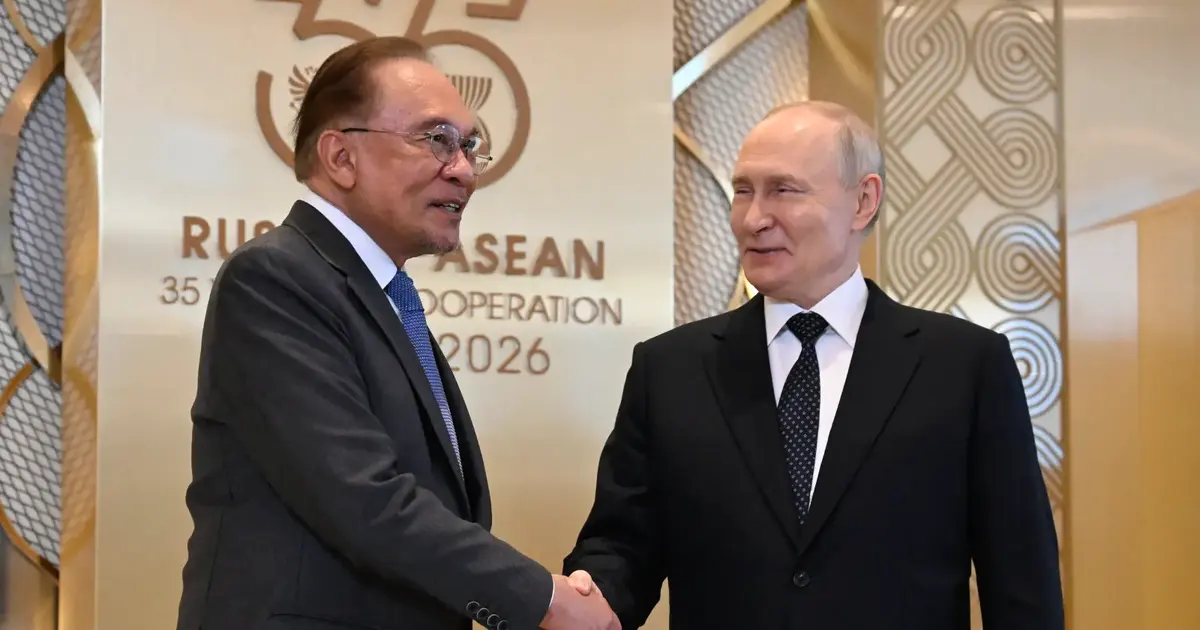
Prime Minister Anwar Ibrahim has secured assurances from President Vladimir Putin guaranteeing Malaysia's access to Russian oil and gas supplies over the next two decades, marking a significant development in bilateral energy ties between the two nations. The commitment reflects deepening energy cooperation between Kuala Lumpur and Moscow at a time when stable hydrocarbon access remains critical for Malaysia's economic stability and industrial competitiveness across Southeast Asia.
Malaysia's reliance on energy imports has intensified as domestic crude production from the Petronas-operated Gunung Tapis and other aging fields declines. The assurance from Putin provides strategic certainty for Malaysia's energy planners, particularly given volatile global markets and supply chain disruptions that have characterised the post-pandemic era. For Malaysian policymakers, securing long-term supply agreements with major producers reduces exposure to sudden price shocks and geopolitical uncertainties that have repeatedly destabilised energy markets in recent years.
Russia remains among the world's largest oil and natural gas producers, with reserves and production capacity that dwarf most other suppliers. The bilateral commitment signals Moscow's intention to deepen economic ties with Southeast Asia beyond energy, expanding its geopolitical footprint in a region increasingly caught between great power competition. For Malaysia, the arrangement diversifies its supplier base beyond traditional Middle Eastern sources, reducing concentration risk and enhancing negotiating leverage with existing partners.
The energy assurance came during discussions that underscored Malaysia's multifaceted approach to regional engagement. Anwar indicated that his subsequent visit to Turkmenistan would pursue parallel objectives focused on expanding Malaysian export opportunities. Turkmenistan, Central Asia's largest gas producer, represents another critical energy partner while offering commercial platforms for Malaysian goods and services seeking access to landlocked Central Asian markets.
Malaysia's export strategy increasingly emphasises connectivity with major Asian economies including China, Japan, and South Korea. These three nations collectively represent over USD 3 trillion in annual economic output and command substantial import demand across multiple sectors. Malaysian exports, ranging from manufactured goods and chemicals to palm oil and semiconductors, find receptive markets in these countries, yet transport logistics and trade relationships continually evolve. Deepening ties with Turkmenistan and neighbouring Central Asian republics potentially opens alternative trade corridors through land and maritime routes that bypass traditional choke points.
China remains Malaysia's largest trading partner and primary destination for crude oil and natural gas exports. Japanese and South Korean corporations maintain significant manufacturing and sourcing operations throughout Malaysia, particularly in electronics, automotive components, and petrochemicals. The Malaysian government recognises that strengthening relationships with Central Asian energy producers and trading hubs enhances its positioning as a strategic node within broader Asian economic networks.
From Moscow's perspective, energy diplomacy with Malaysia serves multiple objectives. Russia faces international sanctions restricting its access to Western markets, making Asian customers increasingly valuable. Malaysia's geographic position along key maritime routes and its role as a regional economic anchor make it an attractive partner for Russia's energy export strategies. The twenty-year commitment signals Moscow's confidence in maintaining stable bilateral relations despite broader geopolitical tensions elsewhere.
The energy guarantee also carries implications for ASEAN and regional stability. Malaysia's economic prosperity underpins regional growth, and assured energy supplies strengthen domestic industrial competitiveness and electricity generation capacity. As Southeast Asian nations pursue energy transition goals while maintaining industrial development, diversified supplier relationships provide flexibility in managing the complex transition from hydrocarbons toward renewable sources over coming decades.
Anwar's diplomatic engagement across multiple regions reflects Malaysia's non-aligned foreign policy tradition, balancing relationships with major powers while prioritising national economic interests. This approach contrasts with some regional neighbours facing pressure to align exclusively with either Western or Chinese spheres. Malaysia's strategy of cultivating diverse partnerships—spanning Russia, Central Asia, China, Japan, and South Korea—positions the nation as an independent actor capable of leveraging multiple relationships for economic advantage.
The energy assurance addresses immediate Malaysian vulnerabilities while Anwar's broader export drive tackles medium-term competitiveness challenges. Malaysian manufacturers increasingly compete with producers across Asia, requiring both stable cost structures and reliable market access. Central Asian engagement opens markets for Malaysian services, technology, and consumer goods while potentially providing alternative sourcing routes for raw materials and intermediary products.
Looking forward, the twenty-year energy commitment requires institutional arrangements ensuring reliable payment mechanisms, logistics coordination, and dispute resolution frameworks. Russia and Malaysia must establish detailed contractual terms covering pricing mechanisms, delivery schedules, and quality specifications. Such agreements typically involve multiple government and corporate entities, requiring sophisticated coordination between Petronas, Malaysia's state oil company, and Russian energy firms.
The diplomatic engagement also signals Malaysia's continued emphasis on economic pragmatism over ideological alignment. Despite international controversy surrounding Russia, Malaysia maintains commercial relationships reflecting national interest calculations rather than geopolitical pressure from other powers. This independent posture has historically served Malaysian interests, allowing the nation to benefit from multiple partnerships without sacrificing strategic autonomy.

