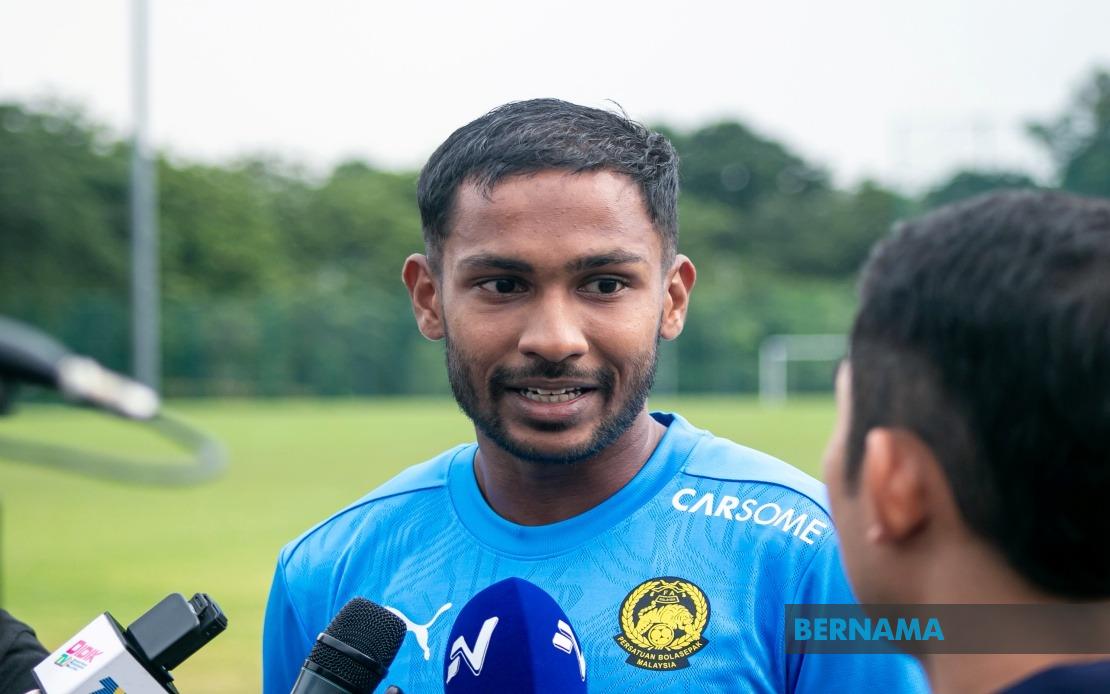
Malaysia's national football team is preparing for a crucial test in the 2026 Hyundai ASEAN Cup, with veteran defender V. Ruventhiran making an impassioned appeal to the football-loving public to rally behind Harimau Malaya. Speaking during the squad's centralised training camp in Shah Alam on July 17, Ruventhiran underscored that supporting the national side transcends individual grievances or controversies, framing the tournament as fundamentally an expression of patriotic duty. His remarks signal an attempt to rebuild the emotional connection between the Malaysian football fanbase and the national team, a relationship that has been strained by recent performances and administrative challenges.
The defender's call for fans to return to the stadiums carries particular weight given that Malaysia will begin their Group B campaign with an away fixture against Myanmar at Thuwunna Stadium on July 25. Despite the disadvantage of opening on foreign soil, Ruventhiran expressed optimism that the Malaysian support base would materialise for subsequent home matches, where the crowd factor could prove decisive. In Southeast Asian football, the psychological boost provided by a packed home stadium is invaluable, and Ruventhiran explicitly referenced the traditional "12th man" concept—the notion that a vociferous home crowd functions as an additional player. This strategic appeal aims to transform stadium attendance from a passive consumption experience into an active participation in national representation.
The regional tournament structure places Malaysia in Group B alongside Myanmar, Laos, Thailand, and the Philippines. The group format demands consistent performance across four matches spanning two weeks, a demanding schedule that will test both the physical conditioning and mental resilience of the squad. After the Myanmar opener, Harimau Malaya will face Laos at the Kuala Lumpur Football Stadium in Cheras on July 28, followed by a high-profile encounter against Thailand at Bangkok's Rajamangala Stadium on August 1, and concluding group play against the Philippines back in Cheras on August 8. This sequence of fixtures presents both opportunity and risk—early momentum could prove crucial for advancing from the group, yet fixture congestion leaves minimal room for recovery from poor results or injuries.
Ruventhiran's messaging also reflects the coaching staff's commitment to maintaining focus on the intrinsic motivation of representing Malaysia. By emphasising the honour of wearing the national badge rather than fixating on external pressures or past failures, the team leadership is attempting to create a psychological environment where players perform for principle rather than merely attempting to escape criticism. This represents a deliberate shift in narrative, one that acknowledges the team's struggles while simultaneously seeking to transcend them through collective national purpose. For Malaysian football fans, this framing offers a pathway to re-engagement—the opportunity to support the team not as vindication of past decisions but as participation in an ongoing national sporting endeavour.
Parallel to Ruventhiran's exhortations, Penang FC player Aliff Haiqal Lokman Hakim Lau has embraced his squad inclusion as an opportunity for personal rehabilitation. Having battled significant injury setbacks in the previous season, Aliff Haiqal views the ASEAN Cup call-up as a transformative moment—a chance to reset his career trajectory and demonstrate renewed fitness and form. His gratitude for the selection reflects the perspective of an athlete who has experienced the frustration of sidelined status, unable to contribute to both club and country. For many Malaysian players, international tournament appearances represent career-defining moments where performances can rehabilitate public perception and attract the attention of higher-profile domestic or foreign clubs.
Aliff Haiqal's personal narrative intersects with broader squad dynamics. The injury recovery process can psychologically distance players from peak competitive sharpness, and his determination to "prove something" at the ASEAN Cup suggests awareness that his continued relevance to national selection requires demonstrated excellence. The tournament thus functions on multiple levels: for Ruventhiran and established figures, it represents an opportunity to lead and validate continued selection; for players like Aliff Haiqal, it offers the prospect of career resurrection following periods of enforced inactivity. This mixture of motivations within the squad creates a complex psychological environment that coaching staff must navigate carefully.
The advancement format to the semi-finals—where the top two teams from each group progress to two-legged semifinals in mid-August, with the tournament culminating in finals scheduled for August 22 and 26—creates a relatively condensed timeframe for Malaysia to establish credibility. Unlike lengthy qualifying campaigns, the ASEAN Cup compressed schedule offers limited opportunities to correct strategic approaches or develop cohesion through repeated competition. Each group match becomes consequential, and a single defeat could materially complicate Malaysia's path to the knockout stages. This structural reality adds urgency to Ruventhiran's plea for fan support, as psychological momentum generated by home crowds becomes tactically significant rather than merely morale-boosting.
Southeast Asian football contexts differ substantially from European or South American competitions, where established institutional infrastructure and sustained fan engagement create robust support bases. In Southeast Asia, tournament-specific enthusiasm often drives attendance fluctuations, with fans mobilising for high-profile matches while lower-profile fixtures struggle to draw crowds. Ruventhiran's explicit call for consistent stadium presence across all home matches acknowledges this cultural reality while attempting to reshape it—essentially asking Malaysian supporters to demonstrate a more permanent commitment to national football development rather than opportunistic engagement during moments of anticipated success.
The 2026 ASEAN Cup represents Malaysia's first significant tournament undertaking following the FA transition period and structural reforms within the national programme. Success in the competition would provide validation for emerging coaching philosophies and player development strategies, while also rebuilding public confidence in Malaysian football's competitive standing within the region. Ruventhiran's passionate advocacy thus serves dual purposes: on the immediate level, securing fan engagement for the tournament ahead; on the strategic level, attempting to catalyse a broader cultural shift towards sustained investment in national football. Whether Malaysian supporters respond to his appeal will substantially influence both the team's tactical environment and the broader narrative surrounding Malaysian football's regional trajectory.

