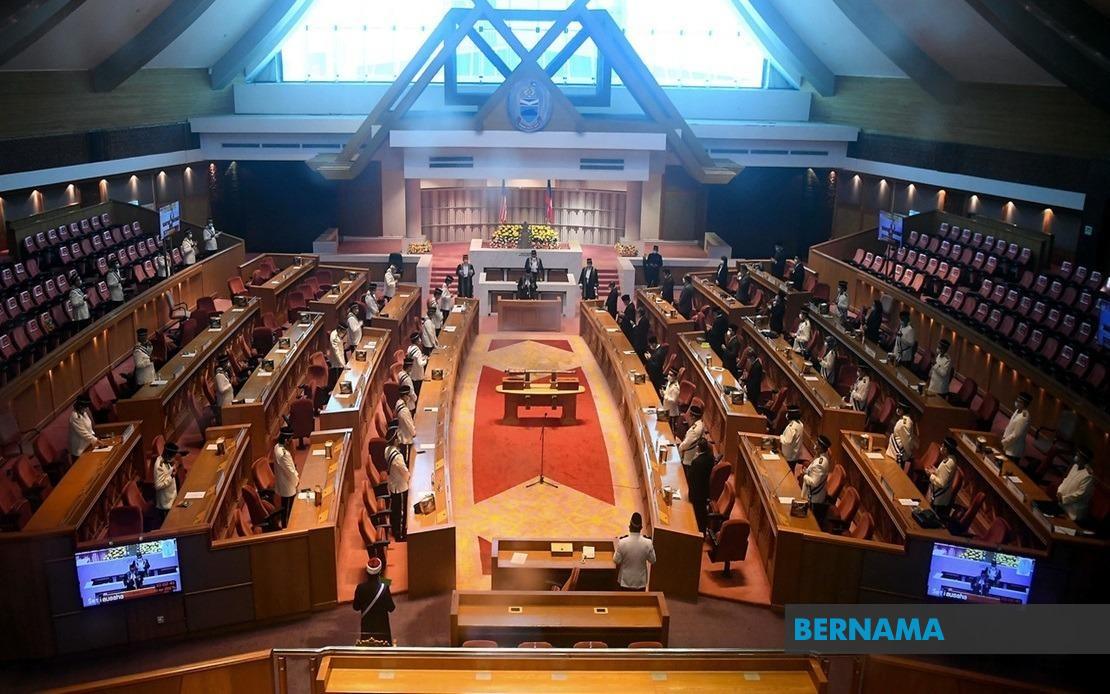
Sabah's State Legislative Assembly has passed the Ports Authority (Amendment) Bill 2026, formally embedding recent administrative changes within the state's legal framework for port governance. The measure, presented by Deputy Chief Minister III Datuk Ewon Benedick, secured approval following parliamentary debate among six assemblymen, with Deputy Speaker Datuk Al Hambra Tun Juhar presiding over proceedings at the assembly in Kota Kinabalu on July 22.
The legislative action represents a technical yet substantive modernisation of the Sabah Ports Authority Enactment 1981, a foundational statute that had remained largely unaltered despite evolving government structures. The amendment specifically recalibrates regulatory language to account for portfolio reshuffling that took effect on December 3, 2025, when the state government consolidated and redistributed ministerial responsibilities across its cabinet architecture.
The core impetus driving the amendment stems from a functional transition that relocated port-related authorities from the Sabah Ministry of Public Works and Utilities to the newly configured Sabah Ministry of Industrial Development, Entrepreneurship and Transport, which Datuk Ewon now oversees. This consolidation reflects a strategic realignment within state governance, positioning maritime and port infrastructure management as integral to broader economic development and transportation strategy rather than treating it as ancillary to public works administration.
A principal technical issue addressed by the amendment concerns definitional inconsistencies embedded within the 1981 enactment. The existing legislation defined the 'Minister' responsible for port affairs by reference to the minister holding the communications and public works portfolio, language that became obsolete once those functions redistributed across different administrative units. Such redundant definitions could potentially create legal ambiguity regarding ministerial authority and decision-making capacity, hence the urgency in rectifying the statutory language to reflect operational reality.
Datuk Ewon clarified that the amendment contains no financial implications for the Sabah government, meaning no additional budget allocations or expenditure reallocations are required to implement the changes. This aspect proves significant for fiscal planning, as it confirms that the restructuring constitutes primarily an administrative reorganisation rather than a resource-intensive institutional overhaul. The enactment merely updates the legal designation of ministerial oversight without expanding or contracting the Ports Authority's operational mandate or funding envelope.
Crucially, the amendment preserves institutional continuity by including transitional provisions that validate all prior decisions, approvals, and administrative actions executed by the minister previously responsible for port affairs. This safeguard prevents retroactive legal challenges to contracts, permits, or policy directives issued under the previous administrative arrangement, thereby protecting the Ports Authority's operational stability and the legitimacy of its historical determinations. Such protective measures are standard practice when government restructuring occurs, as they prevent administrative disruption and maintain stakeholder confidence in institutional reliability.
The amendment explicitly states that existing policies, functions, and powers vested in the Sabah Ports Authority remain unaffected by these statutory changes. This clarification proves important for port operators, shipping enterprises, and maritime stakeholders who depend on consistent regulatory frameworks. By confirming that the amendment constitutes pure administrative restructuring rather than substantive policy revision, the legislation provides legal certainty to commercial actors operating within Sabah's maritime sector.
From a broader Southeast Asian perspective, Sabah's ports assume strategic importance as commercial gateways serving Borneo's interior hinterland and connecting regional maritime trade networks. Positioning port governance within an industrial development ministry rather than public works reflects an evolving recognition across Southeast Asian jurisdictions that port infrastructure serves as critical economic development infrastructure rather than mere public utility. This conceptual shift aligns Sabah with contemporary regional practices where maritime commerce receives integration within wider economic development strategies.
The legislative process itself demonstrates parliamentary functionality within Malaysia's state system, where substantive debate precedes approval. The involvement of multiple assemblymen in discussing the amendment, despite its technical nature, underscores the assembly's oversight role and commitment to transparent legislative processes. Such procedural rigour, even for seemingly administrative matters, reflects democratic principles that extend beyond federal to state governance levels throughout Malaysia.
For Malaysian stakeholders tracking governance trends, this amendment illustrates how states actively modernise legal frameworks to accommodate administrative evolution. While such technical amendments often escape public notice, they prove essential for maintaining coherent governance structures and preventing legal conflicts that could otherwise obstruct efficient administration. Sabah's proactive approach to updating relevant legislation demonstrates responsible legislative practice within federal Malaysia's constitutional framework.

