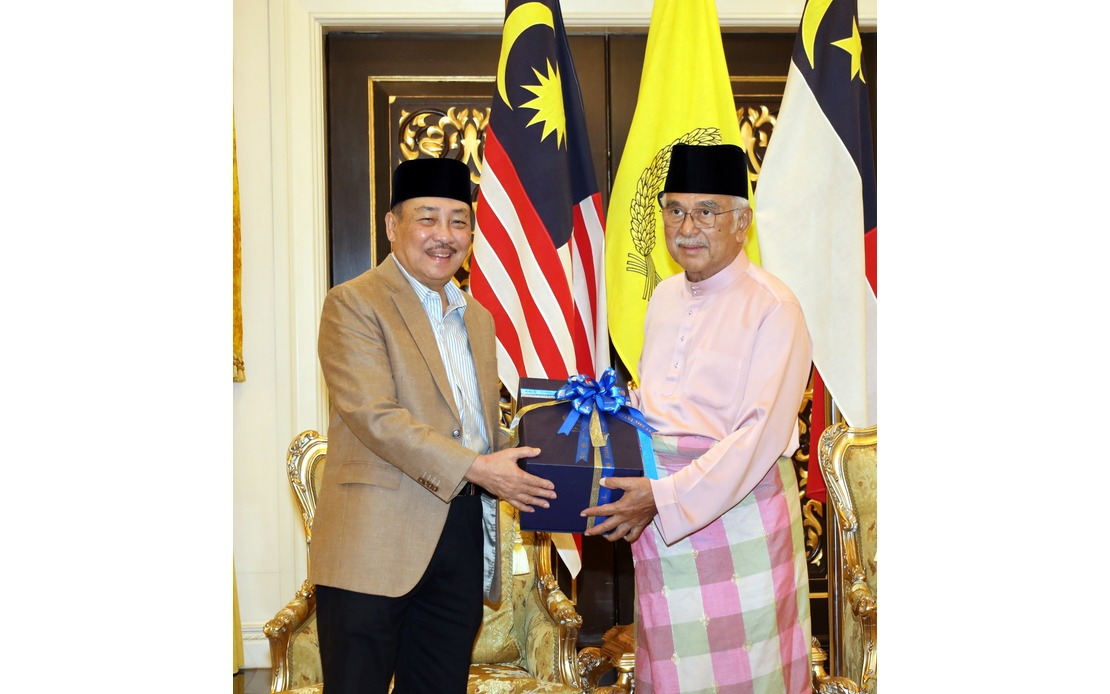
Sabah Chief Minister Datuk Seri Hajiji Noor travelled to Melaka on Wednesday to pay a courtesy call on Yang Dipertua Negeri Tun Dr Mohd Ali Mohd Rustam, marking another step in deepening political and administrative ties between the east Malaysian state and the southern peninsula state. The meeting, held at Istana Melaka in Bukit Beruang, underscores the ongoing commitment of Malaysian state leaders to foster cross-regional cooperation amid the country's complex federal structure.
The high-level visit reflects a broader pattern of interstate engagement that has become increasingly important in Malaysia's governance landscape. As state governments assume greater responsibility in key policy areas—from infrastructure development to economic planning—direct dialogue between chief ministers and state heads allows for coordinated action on issues that transcend state boundaries. For Sabah, a state geographically distant from the peninsula, such visits signal political presence at the federal tier and strengthen networks crucial for securing development investments and policy alignment.
Hajiji's delegation arrived at approximately 3.35 pm and was formally received by Tun Mohd Ali, setting the tone for substantive discussions. The composition of the visiting delegation itself carries significance: the inclusion of Sabah Rural Development Minister Datuk Rubin Balang, Agriculture, Fisheries and Food Industry Minister Datuk Jamawi Jaafar, and Nominated Member of the Sabah State Legislative Assembly Datuk Mohd Razali Mohd Razi indicates that the talks encompassed portfolio-specific concerns rather than serving as a purely ceremonial engagement.
While the statement from the Sabah Chief Minister's Office remained characteristically circumspect about specific topics discussed, the presence of the rural development and agricultural ministers hints at potential conversations around food security, agricultural trade, and rural infrastructure—areas where federal coordination and interstate resource-sharing have become pertinent following pandemic-related supply chain disruptions and broader concerns about Malaysia's self-sufficiency in key commodities.
The meeting provided what officials described as a platform for exchanging views on matters of mutual interest affecting both Sabah and Melaka. In the Malaysian context, such diplomatic language typically masks substantive discussions about development allocations, inter-state cooperation frameworks, and alignment on key national initiatives. The deliberate framing emphasizes partnership over hierarchy, which carries particular weight for East Malaysian states that have historically sought to ensure their concerns receive attention within a federation often perceived as peninsula-centric.
Melaka, as one of Malaysia's smaller states by land area and population, similarly benefits from interstate engagement. The state's strategic location along major peninsular trade corridors and its role as a historical trading hub give it influence disproportionate to its size. For Tun Mohd Ali, welcoming such high-level delegations demonstrates Melaka's continued relevance in national political networks and provides opportunities to advocate for state-specific development initiatives or to explore potential bilateral projects.
The afternoon tea that concluded the meeting served a diplomatic function beyond hospitality. Such informal settings often allow participants to discuss matters unsuitable for formal records or to establish personal rapport that facilitates future administrative cooperation. In Malaysia's political culture, where personal relationships and trust significantly influence bureaucratic interactions, these social dimensions of official visits carry practical importance.
The visit occurs within a broader context of Malaysian federalism where state governments have become more assertive in recent years. Following the 2018 national elections and subsequent political realignments, state-level administrations—whether led by Barisan Nasional, Perikatan Nasional, or Pakatan Harapan—have sought to build networks that enhance their negotiating positions with the federal government. For Sabah, maintaining such connections is particularly crucial given its geographic distance and the historical sensitivities surrounding its status within the federation.
From a Southeast Asian perspective, such interstate visits also reflect Malaysia's federal model as an ongoing experiment in managing diversity across ethnic, religious, and geographic dimensions. Successful coordination between state governments demonstrates the viability of decentralized governance—a model increasingly relevant as other regional nations grapple with questions of autonomy and resource distribution. How Malaysian states navigate cooperation and competition thus carries implications beyond Malaysia's borders, offering lessons to observers across the Association of Southeast Asian Nations.
Looking forward, whether this courtesy call leads to concrete joint initiatives remains to be seen. Malaysian state visits frequently establish frameworks for cooperation that materialize slowly, subject to budget cycles, federal policy shifts, and electoral considerations. Nevertheless, the fact that such engagements occur regularly indicates a functioning system of interstate diplomacy that, while sometimes opaque, provides channels for addressing shared challenges in areas ranging from infrastructure and environmental management to trade facilitation and disaster response coordination.

