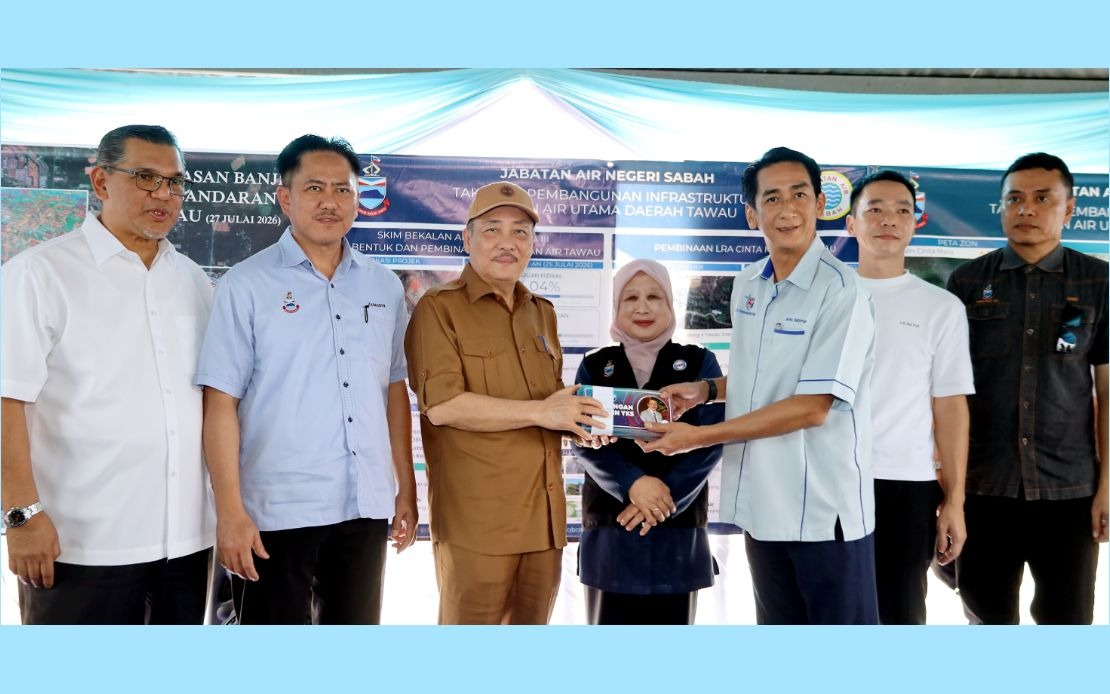
Sabah Chief Minister Datuk Seri Hajiji has handed over RM30,600 in relief funds from Yayasan Kebajikan Sabah to support families devastated by flooding in Tawau. The monetary assistance was formally presented to Tawau Municipal Council president Mohd Shoffian Mohd Said, marking an initial step towards helping communities rebuild following the disaster that swept through the coastal town earlier this month.
The relief allocation targets 102 household heads who suffered losses during the inundation, with each beneficiary receiving RM300 to ease immediate financial pressures. The Sabah Chief Minister emphasised that the assistance scheme aims to alleviate the strain faced by affected residents as they begin their recovery process. This focused distribution reflects deliberate targeting of the most vulnerable households rather than a broader, less effective aid dispersal.
Tawau experienced severe flooding on July 25 when heavy rainfall overwhelmed drainage systems and waterways across the district. The scale of the emergency forced authorities to establish an evacuation relief centre at Dewan Serbaguna Kompleks Sukan Tawau, where 362 residents sought temporary shelter as floodwaters inundated residential and commercial areas. The incident highlighted the region's vulnerability to monsoon-related weather patterns and renewed concerns about infrastructure capacity in Sabah's eastern coastal communities.
Beyond the financial contribution, Datuk Seri Hajiji publicly recognised the coordinated response mobilised by multiple agencies throughout the emergency. His acknowledgment encompassed civil protection personnel, including Civil Defence Force operatives, Royal Malaysia Police officers, and Fire and Rescue Department teams who conducted rescue and evacuation operations. The commendation extended to the Health Ministry staff who provided medical support and sanitation oversight at relief centres, ensuring public health standards were maintained during the crisis period.
The Tawau disaster management committee and associated government bodies received particular mention for their organisational efforts in coordinating the response across different sectors. This multi-agency approach reflects Malaysia's established protocols for managing natural disasters, where responsibility is distributed among specialised departments rather than concentrated in a single entity. Such coordination between federal and state institutions proves essential when responding to rapid-onset emergencies affecting civilian populations.
The timing of the donation arrives as affected communities face the immediate aftermath of displacement and property damage. Many households in Tawau would have sustained losses to household goods, furniture, electronics, and foodstuffs, with damage assessments still ongoing. The RM300 per household, while modest, provides immediate liquidity for purchasing essential replacement items and covering temporary accommodation costs for families whose homes remain uninhabitable.
Yayasan Kebajikan Sabah's intervention demonstrates the role played by state-level charitable foundations in disaster response mechanisms across Malaysia. Unlike federal relief packages, which involve more complex bureaucratic processes, state foundations can mobilise assistance relatively swiftly by drawing from existing reserves and established distribution networks. This institutional flexibility often proves valuable during the critical first weeks following disaster strikes, when households face urgent survival needs.
For Sabah, such flooding incidents are recurring phenomena tied to the state's tropical monsoon climate and coastal geography. Tawau, positioned on the southeast coast, regularly experiences heightened rainfall during the Southwest Monsoon season spanning May to September. The July 25 incident follows a pattern of seasonal inundation affecting this region, raising questions about whether current infrastructure investments adequately address flood mitigation. Urban planners and hydraulic engineers continue debating whether conventional drainage upgrades suffice or whether more comprehensive watershed management approaches are necessary.
The relief operation also underscores broader vulnerabilities within Sabah's eastern districts, where population concentrations in coastal towns create particular exposure to weather-related hazards. Unlike inland communities that may benefit from natural elevation or dispersed settlement patterns, coastal urban centres like Tawau concentrate thousands of residents in flood-prone lowlands. Climate variability and potential sea-level changes amplify these structural vulnerabilities, making disaster preparedness an ongoing policy imperative for state administrators.
Looking forward, the Tawau incident may catalyse discussions about enhancing predictive capabilities and early warning systems within Sabah. Advanced weather forecasting and hydrological monitoring could enable preemptive evacuation protocols, reducing both casualties and the scale of infrastructure damage. Regional coordination with similar meteorological services in neighbouring Southeast Asian nations might also strengthen Malaysia's adaptive capacity for managing transnational weather systems affecting multiple jurisdictions simultaneously.
The assistance distribution also reflects political recognition of Tawau's significance within Sabah's economic and demographic landscape. As a substantial port city and commercial centre, Tawau's vulnerability to natural disasters carries implications extending beyond immediate flood relief to encompass port operations, trade logistics, and regional business continuity. State governments therefore pursue disaster mitigation partly as economic strategy rather than purely humanitarian obligation, recognising that rapid recovery in commercial hubs generates positive multiplier effects throughout broader provincial economies.

