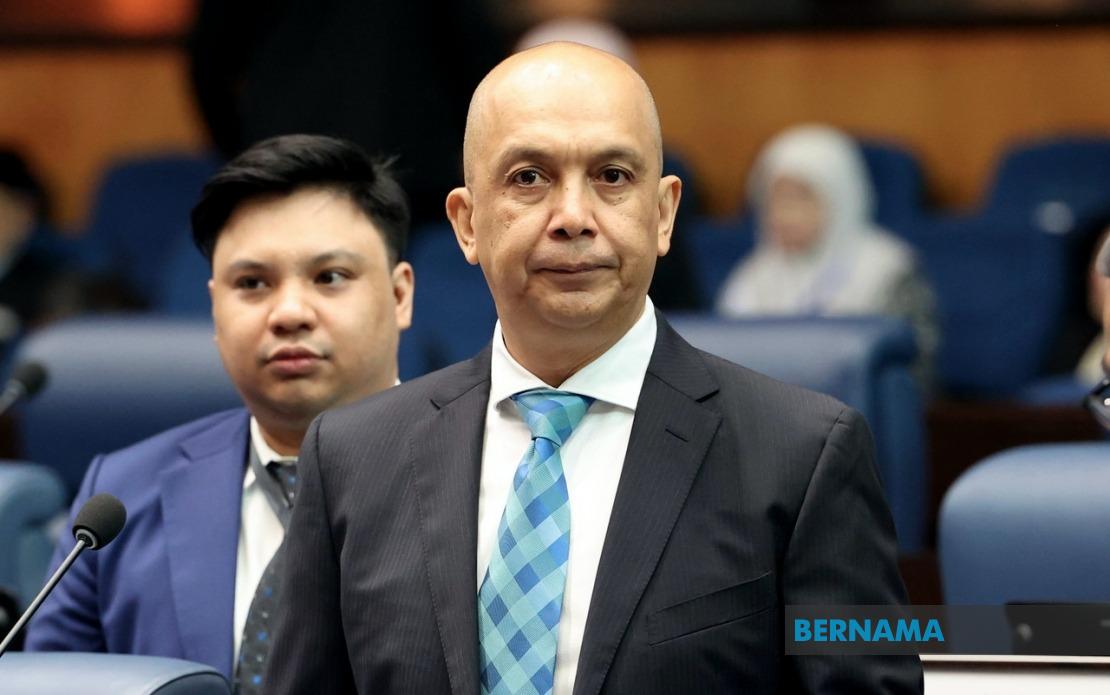
The Sabah state government has received RM600 million from the Federal Government's interim Special Grant allocation of RM1.5 billion, which was transferred on June 12, and is now pressing for the remaining RM900 million to be channelled to the state before the year ends. The payment represents a significant but incomplete step towards addressing longstanding fiscal disparities between the federal centre and the mineral-rich East Malaysian state, though officials have taken care to signal that acceptance of this interim tranche carries no agreement on the final quantum Sabah is entitled to receive under the Federal Constitution.
In a parliamentary response, Sabah Assistant Finance Minister II Datuk Mohd Ishak Ayub clarified that the state's position remains anchored to its constitutional prerogatives outlined in Articles 112C and 112D of the Federal Constitution, which establish a framework for resource-sharing arrangements with the federal government. The careful language employed by Mohd Ishak—emphasizing that acceptance came "without prejudice" to Sabah's rights—reflects the political sensitivity surrounding revenue distribution in a federation where historical grievances run deep. Sabah's claim centres on the 40 per cent formula stipulated in the constitutional text, a principle the state government insists must be fully honoured rather than selectively applied or eroded through interim compromises.
The acceleration of this payment follows Prime Minister Datuk Seri Anwar Ibrahim's announcement during the Kaamatan Festival celebration on May 30, when he signalled an increase to the interim allocation. This public commitment, made during one of Sabah's most significant cultural observances, carried unmistakable political messaging aimed at the state's electorate ahead of potential electoral contests. The subsequent correspondence between federal and state governments dated June 9, 19, and 26 established the mechanics for the initial tranche, suggesting a structured if protracted negotiation over the modalities and timing of payments.
For Malaysian observers tracking centre-state relations, this development illustrates the complex interplay between constitutional entitlements and fiscal realities. Sabah, as one of Malaysia's least densely populated yet resource-endowed states, has long contended that its contribution to federal revenues through petroleum and other natural resources far exceeds the development allocations it receives in return. The interim special grant represents a partial acknowledgement of this imbalance, yet the state's insistence on the full 40 per cent formula indicates unresolved tensions remain. Other states monitoring this outcome will keenly watch whether Sabah ultimately secures its full constitutional entitlement or whether the interim payment becomes, de facto, the new baseline.
The broader significance extends beyond Sabah alone. The resolution of such disputes affects federal-state fiscal relations throughout Malaysia and sets precedents for how the centre interprets and implements constitutional revenue-sharing provisions. Peninsular states, which operate under different constitutional arrangements, may view Sabah's assertiveness as a model for pressing their own claims, though the constitutional architecture differs markedly. Sarawak, similarly positioned as a resource-rich state with historical grievances, will also be observing these developments closely as it negotiates its own financial settlements with Kuala Lumpur.
Parallel announcements concerning welfare assistance reveal the state's efforts to balance fiscal pressures with social commitments. Sabah Assistant Minister of Women, Health and People's Wellbeing Datuk Rina Jainal informed the assembly that welfare assistance levels would be maintained within the RM200 to RM350 range, with expansion contingent upon improvements in the state's financial position. This cautious stance reflects the reality that even with the interim special grant, state finances remain constrained relative to developmental needs across education, healthcare, and infrastructure. The acknowledgement that welfare increases depend on federal budget decisions also underscores the hierarchical nature of fiscal federalism in Malaysia, where state governments operate within constraints set by federal policy.
The expansion of welfare eligibility thresholds provides some mitigation for lower-income households. The Poverty Line Income ceiling for household eligibility has been increased from RM1,198 in 2025 to RM1,236 in the current year, a modest but meaningful adjustment that widens the net of beneficiaries. This recalibration reflects inflationary pressures and cost-of-living increases that have eroded the purchasing power of earlier thresholds. For Sabah, where rural poverty remains more pronounced than in Peninsular Malaysia and informal sector employment predominates, such adjustments carry genuine consequences for vulnerable populations. The state's emphasis on maintaining existing assistance levels while gradually expanding coverage suggests a pragmatic approach to welfare provision under fiscal constraints.
The parliamentary questions addressed in this series of responses came from members spanning different political alignments, including Datuk Seri Wilfred Madius Tangau of UPKO representing Tamparuli, Warisan representatives Datuk Seri Mohd Shafie Apdal and Alias Sani, and appointed member Grace Lee Li Mei. This cross-party engagement on fiscal and welfare matters reflects concerns that transcend partisan divisions, particularly regarding federal-state relations and social safety nets. The fact that multiple legislators raised related questions within the same session underscores the salience of these issues within Sabah's political discourse.
Looking forward, the central question remains whether Sabah will ultimately secure the full RM1.5 billion by year's end and, more importantly, whether this interim arrangement will evolve into a permanent settlement or whether negotiations over the constitutional 40 per cent formula will continue. The state's refusal to characterize the interim payment as anything other than a partial advance suggests officials expect further negotiations. For development planners and finance officials in Kota Kinabalu, the uncertainty creates challenges in medium-term budgeting and project planning, as projected revenues remain contingent upon federal decisions. The political capital invested by Prime Minister Anwar in announcing the increased interim allocation suggests federal goodwill, yet translating such goodwill into full constitutional compliance remains the outstanding challenge.

