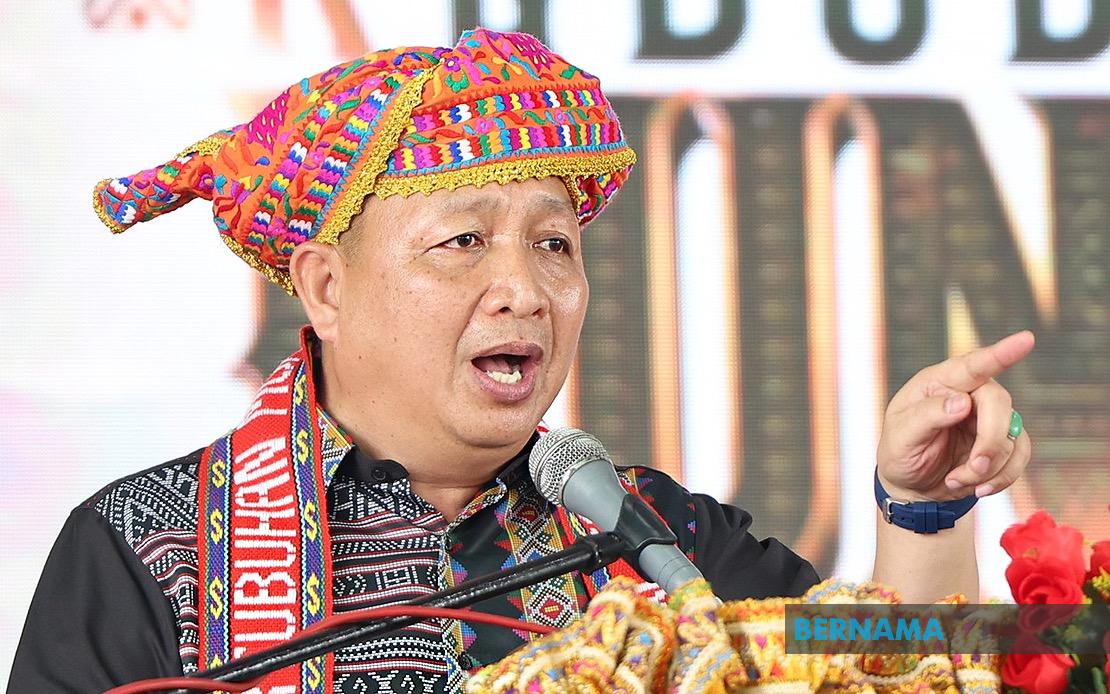
Deputy Prime Minister Datuk Seri Dr Ahmad Zahid Hamidi announced a substantial RM4.06 billion allocation for Sabah's Rural Water Supply programme during the Rungus Cultural Festival in Kudat, signalling renewed federal commitment to addressing water access challenges in the state's interior communities. The announcement represents one of the largest infrastructure commitments targeting rural Sabah's basic service deficits, an issue that has persisted despite decades of development initiatives across the region.
Kota Marudu Member of Parliament Datuk Wetrom Bahanda, who chairs the Malaysian Momogun Rungus Association, characterised the funding decision as evidence of the Federal government's determination to strengthen foundational infrastructure in districts where development gaps remain pronounced. The allocation flows through the Rural Water Supply programme, administered via the Rural and Regional Development Ministry, and marks a strategic pivot in how Kuala Lumpur approaches service delivery challenges in Sabah's remote areas.
A significant departure from conventional practice underlies this initiative. Rather than maintaining centralised management through the ministry in Putrajaya, the Rural and Regional Development Ministry has opted to channel funds directly to Sabah's state government, enabling local authorities to tailor interventions to community-specific conditions. Wetrom emphasised that this decentralised approach recognises that state administrators possess superior knowledge of on-ground realities and can therefore deploy resources with greater precision than distant federal bureaucracies.
The water supply challenge in Sabah's rural interior remains acute. Many communities lack consistent access to clean piped water, forcing residents to rely on rainwater harvesting, shallow wells, or contaminated sources. This infrastructure gap disproportionately affects agricultural productivity, public health outcomes, and quality of life in districts already marginalised by geographic distance and limited economic opportunities. The RM4.06 billion commitment, therefore, carries implications extending well beyond mere utility provision.
Concurrently, the federal government has sustained funding for complementary road infrastructure projects that enhance connectivity within Sabah's interior. Wetrom highlighted active development of routes including the Sonsogon-Megandai and Mangin roads, alongside planned upgrades to Jalan Rendemon, Jalan Teringai, Jalan Sembayan, and the corridor linking Jalan Raditiden to Pampang Poring. These interconnected initiatives reflect recognition that water supply alone cannot drive development without concurrent improvements in transport accessibility.
The broader strategic context involves conscious federal efforts to reduce developmental disparities within Sabah. Kota Marudu and Kudat districts have historically ranked among Malaysia's economically weakest regions, with limited integration into national value chains and persistent poverty incidence well above federal averages. Infrastructure investment targeting these areas represents an attempt to create foundational conditions for economic transformation, though sustained progress depends on complementary initiatives in human capital development, productive capacity building, and market access.
Wetrom also acknowledged Federal backing for upgrading Matunggong subdistrict to full district status, a administrative reorganisation intended to facilitate targeted development programming and improve governance responsiveness. This structural change, combined with infrastructure investment, suggests a multi-layered federal approach addressing both physical and institutional dimensions of underdevelopment.
The RM4.06 billion allocation must be contextualised within Sabah's broader infrastructure deficit. The state encompasses approximately 73,619 square kilometres with dispersed settlement patterns, making service provision inherently expensive per capita. Rural communities in Sabah face challenges—geographic isolation, limited private sector engagement, constrained state revenue bases—that fundamentally differ from urban and periurban contexts where infrastructure investments typically generate faster returns. Federal allocations therefore serve not merely economic development functions but also citizenship equity objectives.
Implementation success hinges critically on state government capacity and governance quality. Sabah's bureaucratic apparatus has historically struggled with project execution timelines, technical expertise constraints, and coordination challenges across sectoral agencies. The federal government's decision to entrust substantial resources to state stewardship represents calculated risk, implicitly banking on improved institutional performance. Transparent monitoring mechanisms and progress accountability frameworks will prove essential to translating budgetary allocations into tangible improvements in water access and service reliability.
For Malaysian policymakers and Southeast Asian observers, the Sabah initiative illuminates evolving approaches to managing development disparities within federal systems. Decentralisation rhetoric has characterised Malaysian governance debates for decades, but translating rhetoric into resource commitments remains inconsistent. This water supply allocation suggests selective movement toward genuine subsidiarity, particularly where federal agencies acknowledge that distant decision-making perpetuates inefficiency. Whether this represents broader institutional learning or isolated sectoral adjustment remains uncertain.
The timing of the announcement during a cultural festival also carries political significance. By coupling infrastructure commitments with celebration of indigenous heritage, the government signals recognition of Sabah's distinct cultural identity and communities' legitimate demands for equitable development participation. In a state where Sabahan identity carries political salience, such symbolic positioning complements fiscal commitments.
Looking forward, the RM4.06 billion programme's outcomes will significantly influence federal rural development strategy. Should implementation succeed in substantially improving water access within target communities, precedent would strengthen arguments for expanded state-led service delivery models in other federal contexts. Conversely, implementation shortcomings would reinforce scepticism about decentralisation's efficacy and justify renewed centralised approaches. For rural Sabahans, however, the immediate priority remains simple: consistent access to safe, affordable water. Whether infrastructural ambitions translate into tangible improvements will ultimately determine this allocation's genuine developmental impact.

