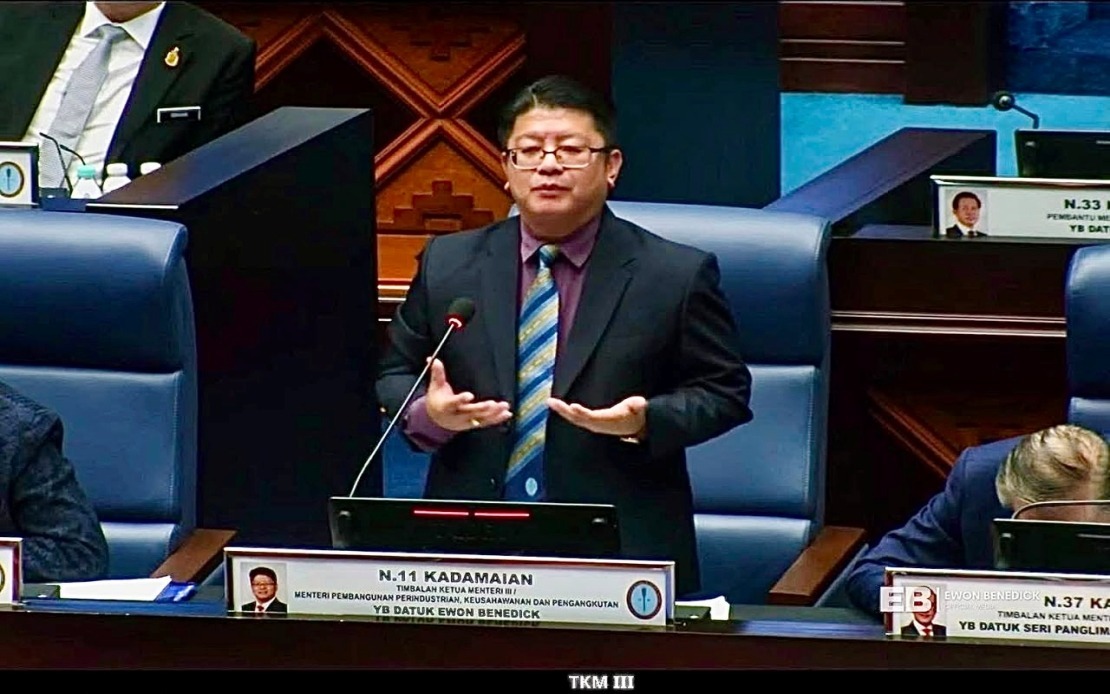
The Sabah government has made significant headway in clearing chronic container congestion at Sepanggar Port through a combination of increased docking fees and stricter retention policies, according to statements made to the state legislative assembly this week. Deputy Chief Minister III Datuk Ewon Benedick, who oversees the transport portfolio, reported that the measure has already forced the removal of 103 containers that had languished at the facility for extended periods, with some sitting idle for more than 407 days.
The core problem stemmed from underpriced storage rates that inadvertently incentivised shipping operators and container owners to leave goods at the port rather than relocating them to private warehousing facilities. The previous tariff structure failed to create sufficient financial pressure to move cargo through the system efficiently, allowing containers to accumulate and consume valuable berthing and apron space that could otherwise accommodate transiting shipments. By raising the cost of prolonged port storage, the administration effectively reversed this perverse incentive and motivated swift removal of stagnant inventory.
The new regulatory framework combines heightened charges with a clear enforcement mechanism. Containers remaining at the port beyond 21 days now face disposal under established procedures, creating an explicit deadline that concentrates the minds of vessel owners and freight forwarders. When port authorities publicly announced their intention to remove abandoned units, owners swiftly claimed and relocated their containers, liberating approximately 100-plus storage positions for active cargo operations. This rapid response demonstrates how transparent penalty structures can achieve compliance without necessarily requiring intensive enforcement actions.
Datuk Ewon acknowledged that the measure has generated complaints from port user groups concerned about the financial impact of higher tariffs. Rather than dismiss these grievances, he indicated the Ministry of Industrial Development, Entrepreneurship and Transport remains willing to engage stakeholders in dialogue aimed at identifying sustainable solutions that balance operational efficiency with commercial viability. The government has established a structured task force incorporating representatives from port user associations, shipowners' federations, and maritime operators to facilitate monthly consultations on fee structures and port policies.
The underlying legislative change driving these operational reforms involves a reshuffling of ministerial responsibilities within the Sabah state administration. Control of port affairs transferred from the Ministry of Works and Utilities to the Industrial Development and Transport portfolio, necessitating amendments to the Sabah Ports (Privatisation) Enactment 1998 to reflect the new administrative alignment. The amendment also harmonises terminology across the 1998 Ports legislation and the Sabah Ports Authority Enactment 1981, eliminating definitional inconsistencies that had created regulatory ambiguity in previous governance frameworks.
The legislative assembly approved the Sabah Ports (Privatisation) (Amendment) Bill 2026 through majority voice vote, clearing the final hurdle for implementation. This procedural step, while technical in nature, represents a formal legitimisation of the operational initiatives already underway at Sepanggar. The bill's passage signals sustained political commitment to the port efficiency agenda at the highest levels of the Sabah administration.
Sepanggar Port occupies critical importance within Sabah's economic infrastructure, serving as a primary maritime gateway for the state's resource-based industries and international trade flows. Container congestion at the facility cascades through multiple stakeholder groups including manufacturers, traders, logistics providers, and international shipping lines operating regional services. Restoring consistent operational capacity enhances competitiveness relative to alternative ports in the region, particularly as Southeast Asian maritime logistics become increasingly concentrated around high-efficiency hubs competing for container traffic volumes.
The port management approach reflects broader global practices in maritime terminal operations, where dynamic pricing and strict dwell-time policies have become standard mechanisms for maximising throughput and reducing land-side congestion. Ports in Singapore, Hong Kong, and other regional centres have long employed similar fee structures to ensure cargo moves efficiently through facilities rather than accumulating as storage inventory. Sabah's adoption of comparable methodologies aligns local port operations with international best practices.
The success of the initial phase—removing 103 containers—provides a foundation for sustained port efficiency improvements. However, long-term operational success will depend on maintaining stakeholder buy-in across the user community. The government's commitment to ongoing dialogue through the structured task force suggests recognition that port authorities must balance operational objectives with the commercial concerns of shipping companies and freight forwarders who generate revenue and throughput.
Beyond port modernisation, the state assembly also progressed legislation addressing Sabah's administrative and cultural governance structures. The Sabah Native Affairs Council (Amendment) Bill 2026 and the District Chief, Native Chief and Headman Bill 2026 were separately advanced, both tabled by Local Government and Housing Minister Datuk Dr Mohd Arifin Mohd Arif. These measures extend the Native Affairs Council's advisory functions to encompass customary education and heritage preservation, while establishing comprehensive regulatory frameworks governing the appointment and accountability of traditional leaders across districts and communities.
The native affairs amendments formalise the creation of specialised Native Affairs Officer positions within the state civil service, tasked with managing customary law proceedings through native courts and investigating offences against traditional regulations. These institutional additions represent an effort to professionalise the administration of customary law while maintaining cultural continuity within indigenous Sabah communities. The District Chief bill simultaneously establishes transparent criteria for appointments, remuneration structures, and grounds for removal of traditional leaders, modernising governance frameworks rooted in colonial administrative precedents.
Collectively, the legislative agenda advanced through the assembly session reflects Sabah's dual emphasis on contemporary port competitiveness and preservation of customary governance traditions. The port efficiency measures directly impact economic dynamism and regional competitiveness, whilst the native affairs amendments address cultural preservation and administrative modernisation within indigenous communities. Both legislative streams signal forward-oriented governance that simultaneously engages 21st-century logistics standards and maintains institutional recognition of Sabah's distinct multicultural and customary heritage.

