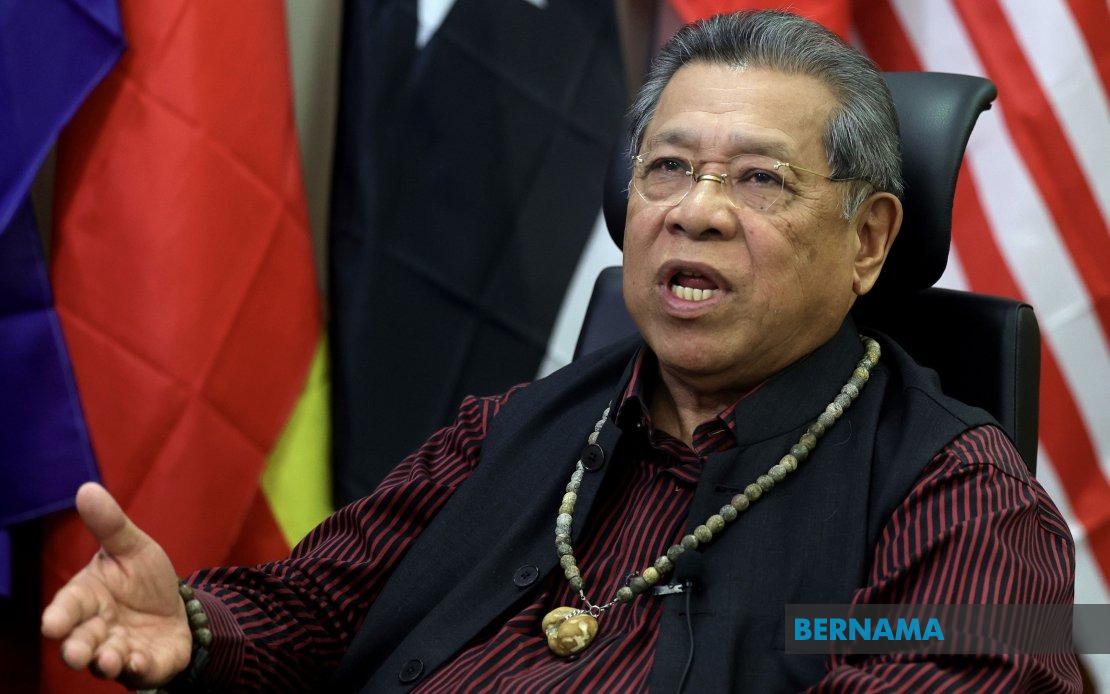
Tan Sri Pandikar Amin Mulia, president of the United Sabah National Organisation (USNO), has underscored the transformative potential of the federal government's enhanced financial commitment to Sabah, asserting that the additional resources will catalyse a wave of infrastructure and development projects designed to improve the quality of life for residents across the state. Speaking at the 2026 PKR National Congress held at the Melaka International Trade Centre in Ayer Keroh on August 15, Pandikar emphasised that such investment extends beyond regional benefit, positioning Sabah's advancement as integral to Malaysia's broader developmental trajectory and economic competitiveness on the international stage.
The funding increase represents a substantial commitment from the federal administration, with allocations to Sabah rising 35 per cent compared to the distribution levels of 2022. Prime Minister Datuk Seri Anwar Ibrahim revealed during his presidential policy address that Sabah's annual federal funding has climbed from RM13 billion in 2022 to RM17.6 billion in the current budgetary cycle of 2026. This RM4.6 billion increment signals a deliberate policy shift toward channelling greater resources to the state, reflecting either heightened recognition of development imperatives or a recalibration of federal priorities.
For Malaysian observers and particularly those monitoring East Malaysian affairs, this budgetary adjustment carries considerable significance. Sabah, one of Malaysia's largest states by land area but facing persistent infrastructure deficits and developmental disparities compared to peninsular counterparts, has historically advocated for proportionate federal support. The scale of this increase suggests the federal government has responded to such representations, though questions persist regarding whether the allocation adequately addresses accumulated backlogs in education, healthcare, transportation, and rural connectivity.
Pandikar's remarks, delivered during a congress convened by the People's Justice Party (PKR), also functioned as a public endorsement of the current Prime Minister's stewardship. The USNO chief stated he believes Malaysia requires Anwar Ibrahim's continued leadership in navigating both the international diplomatic landscape and domestic political complexities. This declaration of confidence from a Sabah-based political figure carries weight, particularly given the intricate coalition dynamics that characterise Malaysian governance and the importance of East Malaysian political blocs to federal stability.
The Prime Minister's announcement addressed persistent allegations that his administration has marginalised or deprioritised certain states in favour of others. Anwar explicitly rebutted such contentions, arguing instead that federal allocations reflect differentiated approaches to regional priorities rather than arbitrary or politically motivated disparities. This defence reflects broader tensions within Malaysian federalism, where states frequently perceive their resource allocation as insufficient or inequitable relative to peers or to their historical contributions to national revenue generation.
Understanding the context of federal-state relations in Malaysia reveals why such budgetary announcements carry political resonance. The distribution of development funds constitutes one of the most tangible manifestations of federal power and commitment, directly influencing state governments' capacity to deliver services and undertake capital projects. For Sabah, which shares borders with Indonesian Kalimantan and maintains strategic significance for regional security and maritime interests, demonstrating federal investment levels becomes both economically and politically consequential.
The 35 per cent increase, while notable in numerical terms, warrants contextual evaluation. Observers must consider whether this increment represents a recovery from previous underfunding, an expansion reflecting economic growth, or a deliberate rebalancing of federal priorities. Additionally, the effectiveness of these funds depends substantially on implementation mechanisms, project selection criteria, and the capacity of state and federal agencies to execute planned initiatives efficiently. Historical patterns in Malaysian development spending reveal that budgetary allocation frequently diverges from actual expenditure, with projects experiencing delays, cost overruns, or incomplete implementation.
For the broader Southeast Asian context, Sabah's development trajectory possesses implications extending beyond Malaysia's borders. The state's proximity to Brunei and Indonesian territories, combined with its rich natural resources and strategic maritime position, positions developmental progress as relevant to regional stability and economic integration. Enhanced infrastructure, improved digital connectivity, and strengthened institutional capacity in Sabah could facilitate cross-border cooperation and regional value-chain integration.
The announcement also reflects political calculations within Malaysia's governing coalition. USNO, as a Sabah-based component of the Perikatan Nasional-aligned grouping, represents electoral constituencies and political interests that the federal administration must actively court. By demonstrating tangible resource commitments to Sabah, the government seeks to reinforce the political allegiances necessary for maintaining parliamentary majorities and securing East Malaysian support for legislative initiatives. In this sense, the funding increase functions simultaneously as developmental policy and coalition management strategy.
Looking ahead, scrutiny will inevitably focus on how expeditiously these allocated funds translate into visible projects and measurable improvements in service delivery. Sabahans will expect concrete outcomes—completed roads, enhanced educational facilities, expanded healthcare infrastructure—rather than merely increased nominal allocations. The success or failure of implementation will significantly influence public perception of both USNO's advocacy effectiveness and the federal government's commitment to regional equity.
Pandikar's comments, delivered during an opposition coalition's congress, also merit examination for their strategic positioning. His appearance and remarks suggested a pragmatic willingness to acknowledge federal initiatives favourably while maintaining USNO's distinct political identity. This balanced approach reflects the delicate equilibrium East Malaysian political figures must navigate within Malaysia's complex coalition landscape, where demonstrating government effectiveness can boost electoral prospects while excessive partisan alignment risks alienating constituencies skeptical of federal intentions.
Ultimately, the significance of this funding increase extends beyond the numerical figures. It signals federal acknowledgment of regional disparities, reflects ongoing negotiation dynamics within Malaysia's political system, and sets expectations for development outcomes that the Sabah state government and federal authorities must now meet. How effectively these resources are deployed will substantially determine whether this budgetary initiative succeeds as transformative policy or remains merely an announcement reflecting political expediency.

