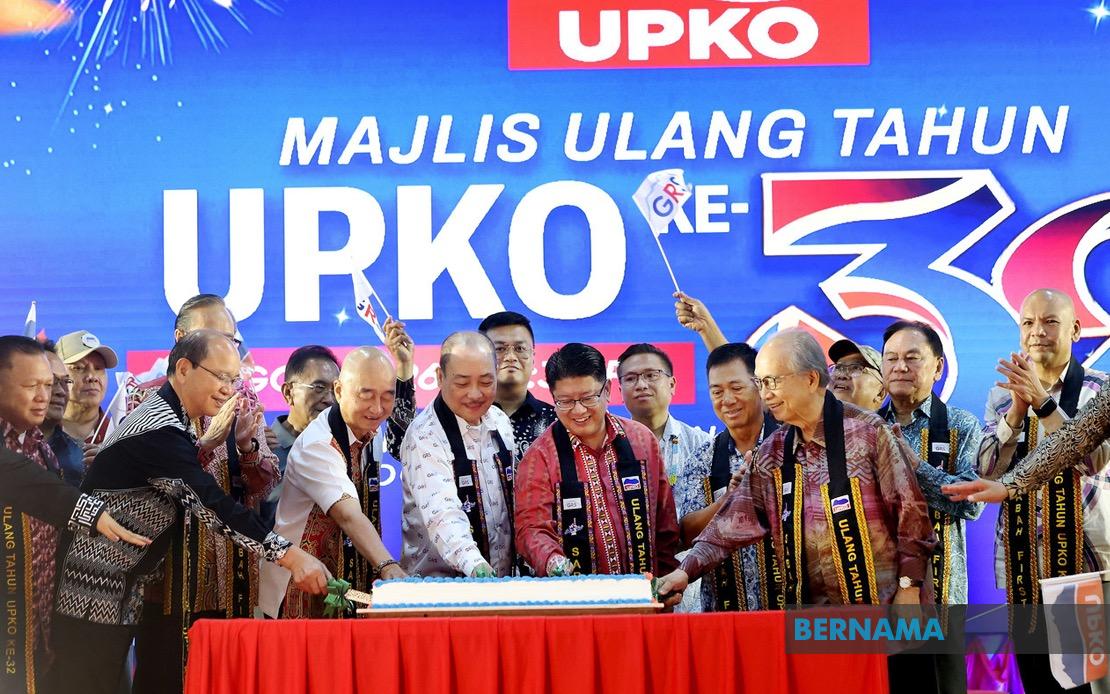
Sabah's Chief Minister Datuk Seri Hajiji Noor has reaffirmed his government's commitment to directing federal allocations directly into tangible benefits for the state's population, signalling an intensified focus on translating central government support into visible improvements in daily life. Speaking at the United Progressive Kinabalu Organisation's 32nd anniversary celebration and 17th Triennial Delegates Conference in Kota Kinabalu, Hajiji outlined how the recently enhanced interim special grant payment—raised to RM1.5 billion from previous levels—will serve as a cornerstone for the state's development trajectory across multiple sectors affecting ordinary Sabahans.
The boost in federal funding represents a significant windfall for East Malaysia's largest state, which has long advocated for greater resource allocation relative to its geographical size and population. Prime Minister Datuk Seri Anwar Ibrahim's decision to increase the interim special grant reflects the Federal Government's recognition of Sabah's fiscal challenges and development needs. The state had previously received RM600 million of the RM1.5 billion allocation in June, establishing a payment schedule that provides some predictability for medium-term budgeting in Kota Kinabalu.
Hajiji's commitment centres on deploying these resources across infrastructure that directly impacts household quality of life. Road construction and bridge development feature prominently in the allocation plan, addressing long-standing connectivity challenges in both urban and rural areas where poor transport links have historically constrained economic activity and service delivery. The emphasis on roads and bridges suggests recognition that Sabah's terrain and dispersed settlement patterns require sustained investment in basic infrastructure to support other development goals.
Water and electricity supply improvements constitute another major deployment avenue, addressing essential service gaps that continue to affect portions of Sabah's population. Access to reliable utilities remains uneven across the state, particularly in interior and remote communities, where inadequate power and water systems constrain both quality of life and business opportunities. By earmarking federal revenue specifically for these utilities, the state government signals that basic service delivery remains a foundational priority ahead of more ambitious economic transformation initiatives.
The Rumah Mesra Sabah Maju Jaya programme—affordable housing initiative—features as a welfare-focused component of the spending plan. This programme directly addresses housing accessibility, a persistent challenge in rapidly urbanising areas where land costs and construction expenses have priced affordable shelter beyond reach for lower-income households. The expansion of SMJ units through federal grants represents targeted social intervention addressing a fundamental necessity that shapes household financial stability and social well-being.
The Sentuhan Kasih Rakyat (SYUKUR) programme represents another welfare mechanism through which federal allocations reach ordinary citizens. Though Hajiji did not elaborate extensively on SYUKUR's specific mechanisms during the event, such assistance programmes typically provide direct or indirect aid to vulnerable populations, complementing infrastructure investment with immediate relief measures. This dual-track approach—simultaneously building long-term economic infrastructure and providing shorter-term welfare support—reflects sophisticated budgeting that addresses both structural and immediate needs.
Beyond the federal grant, Hajiji highlighted the state government's independent revenue-generation capacity as evidence of Sabah's growing economic resilience. Annual state revenue collections have been sustained at RM7 billion since 2022, with projections to reach RM8 billion during the current fiscal year. This upward trajectory in internally generated revenue, combined with federal allocations, provides Sabah with expanded fiscal space to pursue development objectives without excessive dependence on borrowing or external financing, a position that strengthens the state's financial autonomy.
The emphasis on revenue collection reflects a deliberate shift in how Sabah approaches fiscal management. Rather than relying primarily on federal transfers, the state government has worked to expand its own revenue base through improved tax administration, resource management, and economic activity stimulation. This approach builds long-term capacity while reducing vulnerability to federal budgetary fluctuations, positioning Sabah to sustain development investments across electoral cycles and changing federal priorities.
Hajiji's framing of Sabah as a resilient economy navigating domestic and global headwinds addresses both internal confidence-building and external investor perception. By emphasising economic resilience despite external challenges, the Chief Minister projects stability and governance competence—key considerations for potential investors evaluating Sabah as an investment destination. This positioning matters significantly given competition for foreign direct investment across Southeast Asia, where investor confidence depends heavily on perception of political stability and economic soundness.
The Chief Minister's declaration that Sabah represents a strategic investment destination carries implications for the state's broader economic diversification agenda. Beyond traditional sectors like palm oil and timber, Sabah has pursued opportunities in tourism, value-added manufacturing, and technology-enabled services. Positioning the state as attractive to capital flows, while simultaneously channelling federal revenue into foundational infrastructure, creates conditions where private investment can flourish with lower risk and higher returns.
For Malaysian readers in other states, Sabah's experience with federal allocations offers lessons about fiscal federalism and centre-state financial relationships. The negotiations around the interim special grant reveal how states with distinct circumstances and geographic challenges secure federal recognition and support. The transparency with which Hajiji commits to deploying these funds also establishes accountability frameworks that voters and observers can monitor, creating political incentives for delivery on stated objectives.
The timing of Hajiji's announcements—coinciding with UPKO's organisational gathering—reflects the political dimensions of resource allocation. UPKO, a component of the state ruling coalition, maintains constituency support partly through demonstrable delivery of government benefits. By announcing spending commitments at UPKO's conference, Hajiji signals that coalition partners and their supporters will benefit from federally funded development, reinforcing political cohesion ahead of potential electoral contests.
Looking forward, the sustainability of Sabah's development trajectory depends on whether these federal allocations continue at enhanced levels and whether state-generated revenue growth maintains its upward momentum. Economic resilience, as Hajiji frames it, requires consistent investment, improved service delivery, and capacity-building that positions residents and businesses to participate fully in regional economic opportunities. The translation of federal revenue and state collection into tangible improvements—functioning roads, reliable utilities, affordable housing—ultimately determines whether fiscal commitments translate into genuine improvements in Sabahan livelihoods.

