Sabah UMNO has committed to deploying its organisational resources to bolster Barisan Nasional's campaign efforts in the upcoming Johor state election, with particular emphasis on constituencies where Sabahan voters form a substantial portion of the electorate. The party's involvement reflects a broader strategy to mobilise support across Malaysia's constituent states, with Sabah UMNO taking responsibility for specific geographic areas where demographic patterns favour targeted outreach.
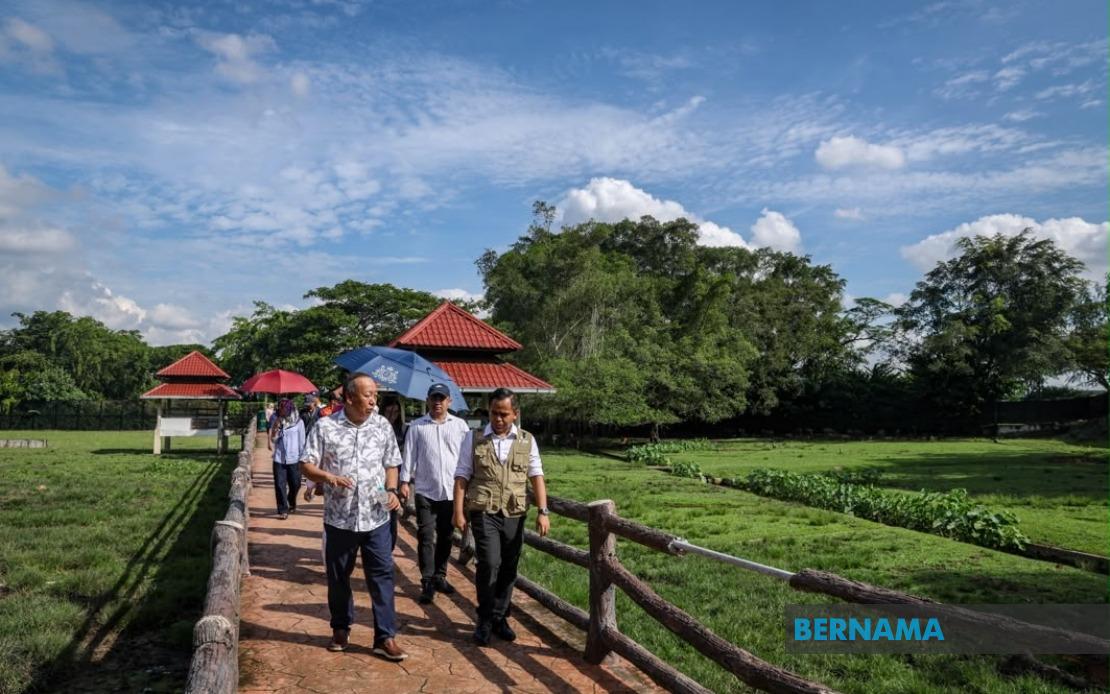
Datuk Jafry Ariffin, who heads Sabah UMNO's liaison committee, outlined the party's electoral responsibilities during a visit to Johor Bahru. According to Jafry, who also serves as Sabah's Minister of Tourism, Culture and Environment, the committee has been assigned to support BN's campaign machinery within the Pasir Gudang parliamentary constituency, with concentrated efforts directed at the Permas and Johor Jaya state seats. This division of labour represents a common feature of Malaysian electoral strategy, where parties leverage internal structures and demographic expertise to optimise campaign effectiveness in specific precincts.
The rationale behind Sabah UMNO's focus becomes clearer when examining voter demographics in target areas. Official records indicate that approximately 3,000 voters originally from Sabah maintain voter registration in Permas, while another 2,000 registered voters with Sabahan connections reside in Johor Jaya. These figures, totalling around 5,000 voters across the two seats, represent a cohesive electoral segment that responds to coordinated outreach efforts from a fellow Sabahan organisation. In a closely contested election where seat margins may prove decisive, this voting bloc could exert meaningful influence over final outcomes.
Sabah UMNO's involvement in these constituencies is not unprecedented. The party executed similar campaign responsibilities during the 2022 Johor state election, providing the committee with accumulated operational knowledge and established relationships within Sabahan voter communities. Jafry emphasised that this institutional memory would prove invaluable, as campaign operatives could draw upon prior experience and existing networks to execute more sophisticated voter engagement strategies. The familiarity with local conditions and voter concerns developed over four years of intermittent engagement provides a competitive advantage over organisations without such established groundwork.
The campaign machinery, while operational on a modest scale at present, is expected to escalate significantly following nomination day on June 27. Jafry indicated that early preparations are underway, with party operatives beginning to establish presence and conduct preliminary voter outreach. However, the substantially more intensive campaign period will commence after nominations close, allowing candidates to be formally presented and specific party messaging to be coordinated with individual campaigns. This staged approach reflects strategic planning designed to maintain momentum through the polling date of July 11.
Understanding the broader electoral context reveals the significance of Sabah UMNO's contribution to BN's overall strategy. The Johor State Legislative Assembly comprises 56 seats, and before the assembly's dissolution on June 1, Barisan Nasional held 40 seats, establishing the coalition as the dominant force in state politics. Pakatan Harapan held 12 seats, while Perikatan Nasional controlled three, with independent party MUDA occupying a single seat. For Barisan Nasional to maintain control following the election, the coalition must secure sufficient seats to form government, making campaign efficiency in every constituency consequential.
The timing of the election carries particular strategic weight for Malaysian politics at the national level. Johor's status as a major economic state and its historical significance to UMNO make electoral performance there deeply symbolic. A strong BN showing would reinforce the coalition's recovery narrative following electoral setbacks in 2022, while conversely, any significant losses could raise concerns about broader coalition vulnerability. Sabah UMNO's mobilisation therefore represents more than regional support—it demonstrates continued cohesion within a national political coalition that has faced considerable strains in recent years.
The decision to involve East Malaysian party machinery in Peninsular Malaysian elections underscores the persistent national orientation of Malaysia's major political coalitions. Despite distinct regional contexts and sometimes divergent interests between Sabah and Johor, party structures maintain mechanisms for cross-regional support during critical electoral moments. This practice facilitates resource concentration in competitive constituencies while simultaneously reinforcing bonds between coalition members operating in different states, creating interdependencies that encourage continued unity.
For Sabahan voters residing in Johor, Sabah UMNO's campaign presence may carry distinct cultural and linguistic resonance unavailable through purely local campaign organisations. Campaign messaging can be tailored to reflect shared experiences and concerns relevant to diaspora communities, potentially generating higher engagement rates than generic state-level campaigning. This targeted approach recognises that voter communities maintain distinct identities and concerns even after relocating, and that acknowledging these differences may improve electoral receptivity.
The broader implications extend to how Malaysian political parties optimise campaign resources. The identification of specific voter communities and deployment of organisations with particular demographic expertise represents rational electoral strategy in a diverse, multi-ethnic system. Sabah UMNO's specialised focus on Sabahan voters allows Barisan Nasional to engage this community through trusted party structures while enabling local BN machinery to concentrate on other constituencies. This division of labour theoretically improves overall campaign efficiency and voter persuasion effectiveness.
As the campaign progresses toward nomination day on June 27 and culminates in polling on July 11, Sabah UMNO's mobilisation will likely prove increasingly visible throughout Pasir Gudang's constituencies. The party's commitment to supporting BN candidates reflects confidence in the coalition's electoral prospects while simultaneously demonstrating organisational capability. Whether the Sabahan voter segment ultimately proves decisive in these constituencies will become evident following the July 11 polling, but the campaign infrastructure being constructed by Sabah UMNO ensures that this demographic will receive sustained, coordinated political engagement throughout the election period.

