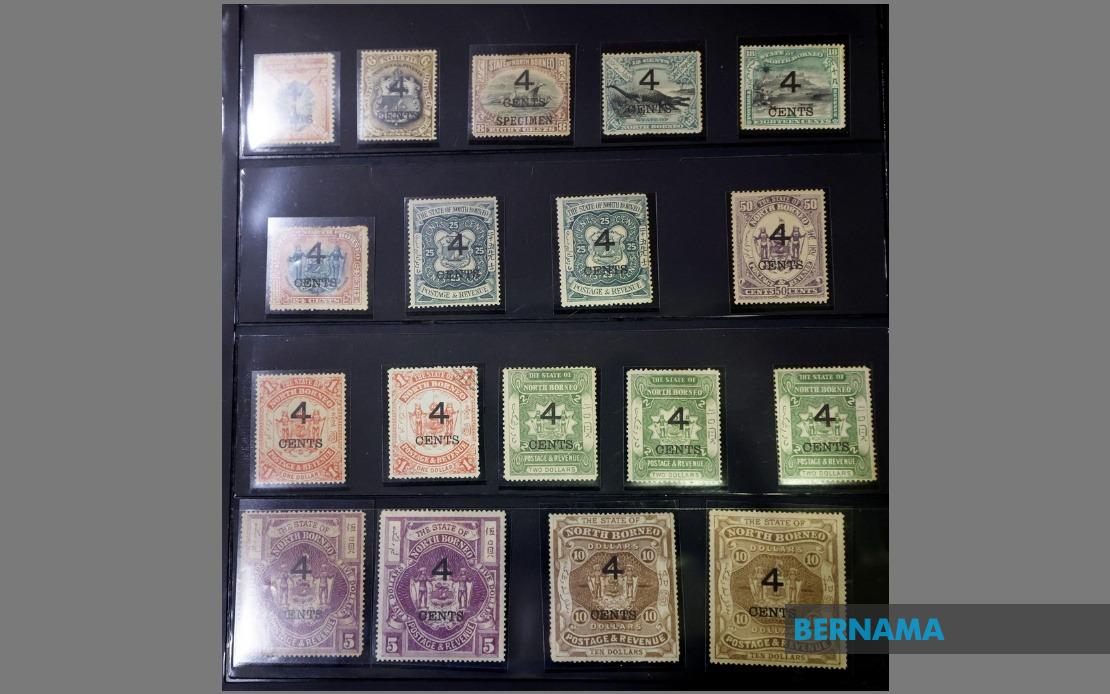
The struggle to safeguard North Borneo's historical postal legacy has become increasingly urgent in Kota Kinabalu, where stamps dating back more than a century are vanishing from public awareness even as their historical and monetary value climbs. Dr Shari Jeffri, founder and president of the Borneo History Association, has emerged as a leading voice in this conservation effort, characterising these century-old stamps as living documents that embody the region's development story. The philatelic collection spanning from 1883 to 1963 represents an era when Sabah's identity was still being formed under colonial administration, making each stamp a tangible record of that transformative period.
The challenge facing stamp preservation advocates is both cultural and practical. Younger Malaysians have grown up in an age of digital communication where the postal service represents little more than a logistical necessity rather than a ceremonial or collectible practice. Dr Shari observed to Bernama that contemporary enthusiasm for stamp collecting has diminished considerably compared to previous decades, with only a committed minority pursuing the hobby seriously. This generational shift threatens to sever the transmission of knowledge about what these stamps represent and why they matter to understanding Sabah's journey from colonial possession to modern state.
Surveys conducted across Kota Kinabalu's antique dealers reveal how scarcity is reshaping the philatelic market. Older North Borneo stamps now command increasingly premium prices, with valuations heavily influenced by factors such as age, physical condition, and rarity status. A particularly notable discovery during recent market investigations was an album containing a six-cent stamp from between 1954 and 1961 that depicted Queen Elizabeth II alongside a Dusun woman, as well as a ten-cent denomination showing logging operations. Such pieces offer visual windows into Sabah's mid-twentieth-century reality and the cultural relationships of that period.
Dr Shari's personal journey into philately illuminates how family heritage can anchor historical preservation efforts. His collection originated with his grandfather, who worked at the Recreation Club Jesselton during the 1920s and developed a passion for stamp collecting after observing British officers engaged in the hobby. This familial transmission across generations demonstrates how colonial-era social practices evolved into genuine scholarly interest. Introduced to collecting at age seven, Dr Shari only became deeply engaged during secondary school, when he began building his own collection alongside peers who shared his curiosity about postal history.
Among Dr Shari's most prized holdings are two two-cent North Borneo stamps from the original 1883 issue, featuring a brown sailing boat and bearing period postmarks. For serious collectors, these inaugural stamps represent an essential foundation—a collection without 1883 issues is considered incomplete within philatelic circles. Beyond their rarity, these stamps function as historical narrators, each one documenting a specific moment in Sabah's past when postage was a primary communication mechanism. After nearly four decades immersed in the field, Dr Shari has become an expert interpreter of how design evolution reflected changing historical circumstances.
The British North Borneo Chartered Company introduced the first stamps in 1883, maintaining this postal system for approximately 52 years before transitioning to other arrangements. The visual language of these stamps shifted significantly over time, reflecting contemporary priorities and aesthetics. Early designs incorporated symbols like lions, boats, and tigers alongside various mottos, but beginning around 1894, the imagery gradually transitioned to feature Borneo's distinctive natural environment—its native flora, fauna, and wildlife. A particularly significant redesign occurred in 1935, when stamps were modified to more explicitly reflect Sabah's identity while being issued across numerous denominations ranging from two sen to one dollar.
Authenticity and preservation present ongoing technical challenges that demand specialised knowledge. Dr Shari emphasises that stamps must be stored exclusively in acid-free albums to prevent deterioration and colour fading over time. The postal cancellations themselves carry immense value—stamps bearing complete postmarks from their original mailing are considered uniquely precious because they preserve comprehensive postal information including the mailing date, the sending post office's name, timestamp, and location details. This metadata transforms a simple stamp into a documented historical artifact. Additionally, the composition of stamp paper and its adhesive backing serve as important authentication markers, requiring expert evaluation to verify legitimacy and establish value.
Dr Shari's commitment to rigorous scholarship has led him to consult with internationally recognised experts including Voon Kyam Foh and Tan Chun Lim in Singapore, ensuring his collection assessments meet professional standards. He regularly references specialised catalogues such as Commonwealth & British Empire Stamps to verify details and document acquisitions properly. This scholarly approach distinguishes serious conservation efforts from mere collecting, transforming personal passion into contributory historical work that benefits broader understanding of the region.
While electronic communication has fundamentally displaced traditional letter-writing across Malaysia and Southeast Asia, North Borneo stamps retain their irreplaceable function as material witnesses to Sabah's historical development. These small adhesive pieces contain compressed narratives about colonial administration, indigenous representation, economic activities, and social hierarchies of their era. The urgent imperative facing preservation advocates is ensuring that this documentary capacity is recognised and maintained before these stamps become too rare or fragmented across private collections to tell their collective story. For Malaysian historians and heritage professionals, the North Borneo postal collection represents a valuable—and rapidly disappearing—resource that deserves systematic documentation and institutional protection to serve future generations seeking to understand how Sabah became what it is today.

