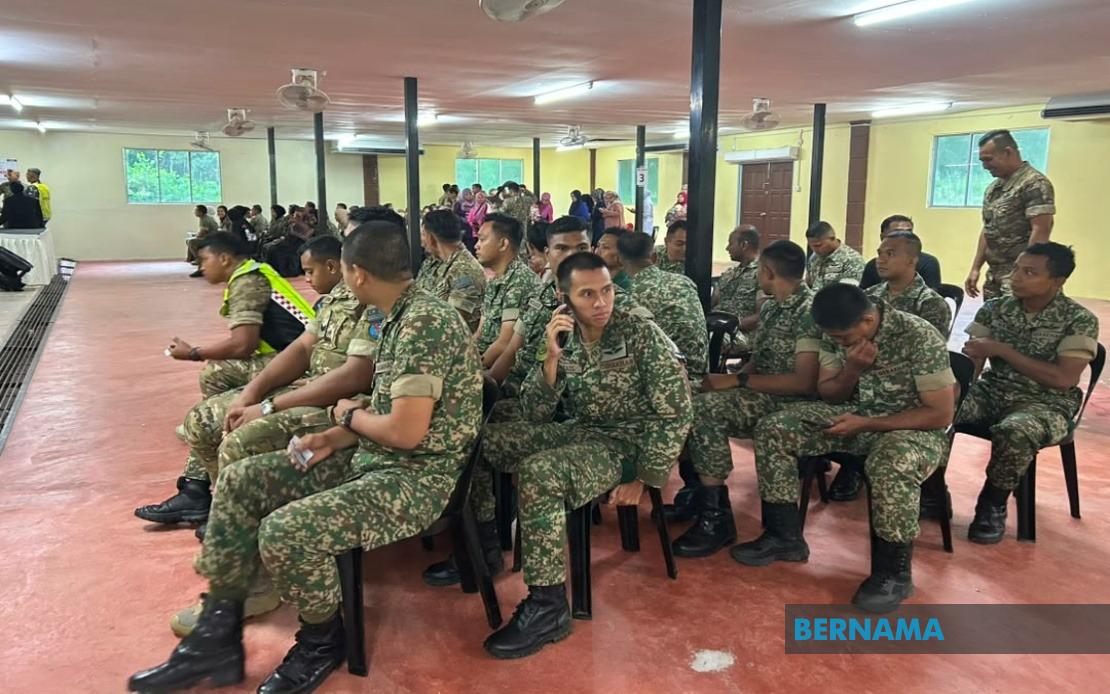
Security forces and their families began voting on July 7 in the 16th Johor State Election, with senior government ministers seizing the occasion to reinforce themes of democratic participation and civic responsibility. Home Minister Datuk Seri Saifuddin Nasution Ismail and Defence Minister Datuk Seri Mohamed Khaled Nordin both publicly encouraged the approximately 24,751 early voters eligible to cast ballots, addressing them through social media to emphasise the importance of voting with integrity and in the spirit of democracy.
Saifuddin Nasution, who additionally serves as secretary-general of Pakatan Harapan, framed voting as both a right and a responsibility, urging early voters to exercise their franchise conscientiously. Beyond the immediate appeal to voters, he also directed his messaging toward the PH campaign machinery itself, calling on party operatives to sustain their ground efforts through the remainder of the official campaign period. His instruction emphasised the need for continued engagement with constituents and the maintenance of a mature campaign atmosphere, reflecting broader concerns about election conduct standards across Malaysia.
Mohammed Khaled approached the matter from a governance angle, situating the voting act within a larger narrative of state progress and development. His appeal to early voters framed their participation as essential to ensuring Johor remains on a trajectory of advancement, connecting individual ballot-casting to collective state outcomes. This framing reflects a common rhetorical strategy in Malaysian politics, where voting choices are positioned as consequential not merely for electoral results but for tangible improvements in public services and economic performance.
Menteri Besar Datuk Onn Hafiz Ghazi, representing the Barisan Nasional, used the early voting period to consolidate support around his coalition's candidates. He appealed to early voters to place confidence in every BN candidate, with his messaging centred on themes of stability, development, and public welfare. The coordinated messaging from both major coalitions during early voting demonstrates how Malaysian political actors treat even preliminary polling phases as opportunities to shape narrative and mobilise their respective bases.
The early voting exercise itself reflected institutional arrangements designed specifically for military and police personnel, who often face operational constraints that prevent participation in standard polling schedules. The 24,751 early voters comprised 12,041 members of the Malaysian Armed Forces together with their spouses, alongside 12,710 police personnel and their families. This segmented voting approach recognises the operational demands on security forces while attempting to ensure their electoral participation remains robust.
The logistical apparatus supporting early voting involved 64 designated centres opening at 8 am, with staggered closing times between noon and 6 pm depending on voter registration numbers and location-specific considerations. This phased approach sought to manage voter flows while accommodating the geographic distribution of military and police communities across Johor. The coordination of such infrastructure underscores the technical complexity underlying what voters experience as a simple civic act.
The Johor election itself represents a significant political contest within Malaysia's federal system, with both PH and BN presenting candidates across all 56 available seats. The total candidate pool reached 172 individuals competing for state assembly representation, indicating relatively competitive contests in many constituencies. The scale and scope of the election—involving multiple coalitions, numerous candidates, and a diverse electorate—means that early voting patterns often attract political analysis as potential indicators of broader electoral sentiment.
Saturday's main polling day would determine whether the incumbent BN administration under Onn Hafiz Ghazi retained control or whether PH could make significant gains in this strategically important state. Johor's electoral outcomes carry implications beyond the state itself, influencing national political dynamics and perceptions of coalition viability ahead of potential federal-level contests. The performance of either coalition in Johor serves as a testing ground for their respective campaign messages and organisational capacity.
For Malaysian observers and regional analysts, Johor elections typically function as barometers of political sentiment, particularly regarding the effectiveness of incumbent administrations and the resonance of opposition messaging. The emphasis placed by multiple ministers on early voting conduct and citizen participation reflects recognition that democratic legitimacy depends not merely on results but on perceptions of procedural fairness and genuine electoral engagement. By publicly encouraging responsible voting behaviour among security personnel, these leaders sought to reinforce institutional confidence in the electoral process itself, even as their respective coalitions competed vigorously for votes.

