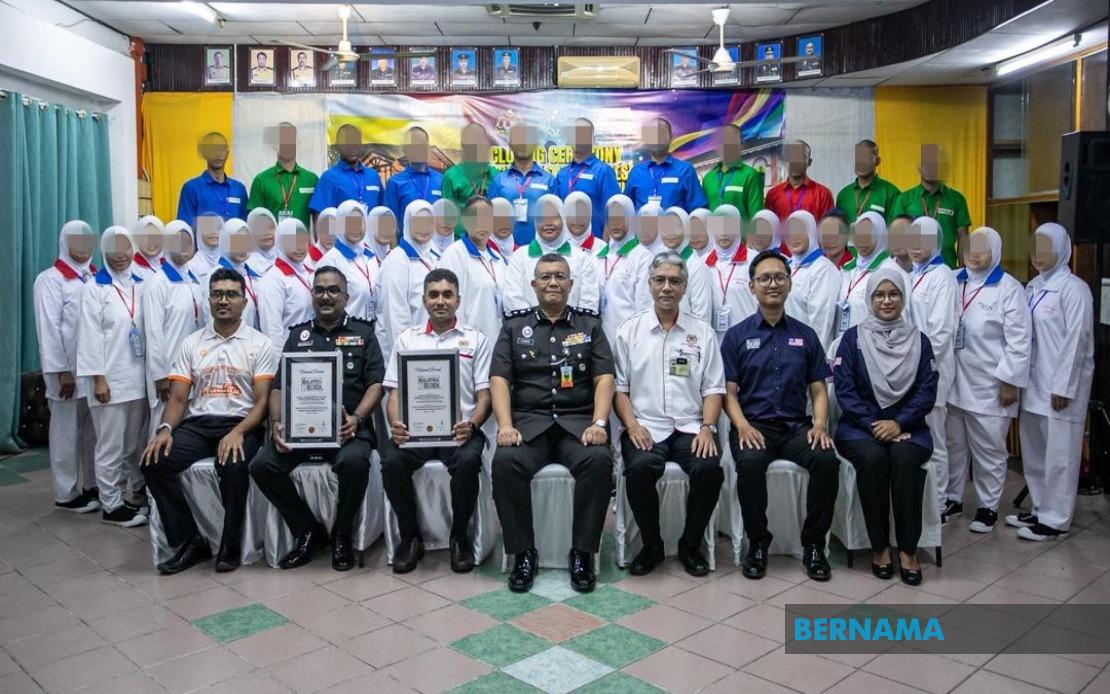
Home Minister Datuk Seri Saifuddin Nasution Ismail has lauded the Malaysian Prisons Department for achieving a significant milestone through the Batu Gajah Correctional Centre, which earned recognition from the Malaysia Book of Records for conducting comprehensive Basic Life Support and Automated External Defibrillator training involving 42 inmates. The achievement represents a tangible demonstration of how custodial institutions are evolving beyond their traditional penal role to become centers of genuine rehabilitation and skill development.
The minister emphasized that this accomplishment underscores a critical philosophical shift in how Malaysia's prison system operates and defines its core mission. Rather than viewing incarceration solely as punishment for criminal conduct, the initiative reflects an institutional commitment to transforming the lives of those in custody by equipping them with marketable, life-saving competencies that have broader societal value. The recognition by the Malaysia Book of Records validates the prison department's approach and provides tangible evidence that rehabilitation-focused programs can succeed within the constraints of a correctional facility.
Saifuddin noted that participants in the training program acquired not merely technical skills in emergency response and defibrillation techniques, but also internalized essential humanitarian values that prepare them for reintegration into civilian society. The curriculum appears designed to cultivate qualities such as discipline, personal responsibility, and self-assurance alongside the practical medical knowledge. This holistic approach acknowledges that successful rehabilitation extends far beyond the transmission of technical skills; it requires transforming attitudes and building confidence in individuals who may have experienced systemic marginalization before and during their incarceration.
The fundamental philosophy driving this initiative represents a departure from purely punitive models of imprisonment that have dominated corrections policy in many jurisdictions. Malaysia's prison department has articulated a vision wherein the primary function of detention is to prepare individuals for eventual return to their communities as functioning, productive citizens. This rehabilitation-centered paradigm requires substantial investment in educational and vocational programming, a commitment that Batu Gajah Correctional Centre has demonstrated through this life-support initiative.
The minister articulated the department's ultimate objective with clarity: ensuring that every individual released from custody possesses the practical competencies, ethical foundation, and psychological resilience necessary to make constructive contributions to their families, neighborhoods, and the broader nation. This outcome-focused approach shifts the measure of success from mere custody maintenance to genuine behavioral change and social reintegration. By framing the purpose of imprisonment this way, the government acknowledges that prisons either function as institutions that reduce recidivism and create opportunities for reformation, or as facilities that perpetuate cycles of criminality and social dysfunction.
The decision to train 42 inmates in life-support techniques carries symbolic weight beyond the immediate beneficiaries. These individuals will reenter their communities equipped with credentials that may enhance their employment prospects and enable them to serve as first responders in medical emergencies within their families and neighborhoods. The ripple effects of providing such training extend throughout the social networks of participants, potentially preventing deaths and injuries in communities that frequently experience limited access to emergency medical resources.
Saifuddin's public endorsement of this initiative reflects broader government commitment to modernizing Malaysia's correctional approach during a period when criminal justice systems globally are reassessing their methods and objectives. The minister's emphasis on rehabilitation over punishment aligns with emerging international evidence suggesting that programs combining skill development with character reformation yield superior outcomes in reducing reoffending rates compared to purely custodial approaches. By highlighting this achievement, the government signals to institutional leaders throughout the prisons department that innovation in rehabilitation programming is valued and will be recognized.
The recognition by the Malaysia Book of Records provides external validation that lends credibility and prestige to the program. Such official acknowledgment can motivate other correctional facilities throughout Malaysia to develop similarly ambitious initiatives, potentially creating a demonstration effect that encourages systemic improvements across the prisons department. It also provides participating inmates with tangible recognition of their achievement, which psychological research suggests can meaningfully enhance self-esteem and reinforce commitment to behavioral change.
The minister expressed optimism that this success would catalyze expanded programming of comparable ambition and impact throughout the correctional system. He specifically called for replication of high-impact initiatives that simultaneously advance rehabilitation objectives and social reintegration goals. Such expansion would require sustained investment in instructor training, curriculum development, and program evaluation to ensure that initiatives maintain quality and effectiveness as they scale across different facilities with varying inmate populations and institutional capacities.
From a regional perspective, Malaysia's emphasis on rehabilitation-centered corrections reflects growing recognition across Southeast Asia that purely punitive approaches fail to address root causes of criminal behavior or reduce the likelihood of reoffending. The Batu Gajah initiative demonstrates that even within resource-constrained correctional environments, creative programming can deliver meaningful outcomes when guided by clear philosophical commitment to human transformation. This approach may offer valuable lessons for neighboring countries developing or reforming their own correctional policies.

