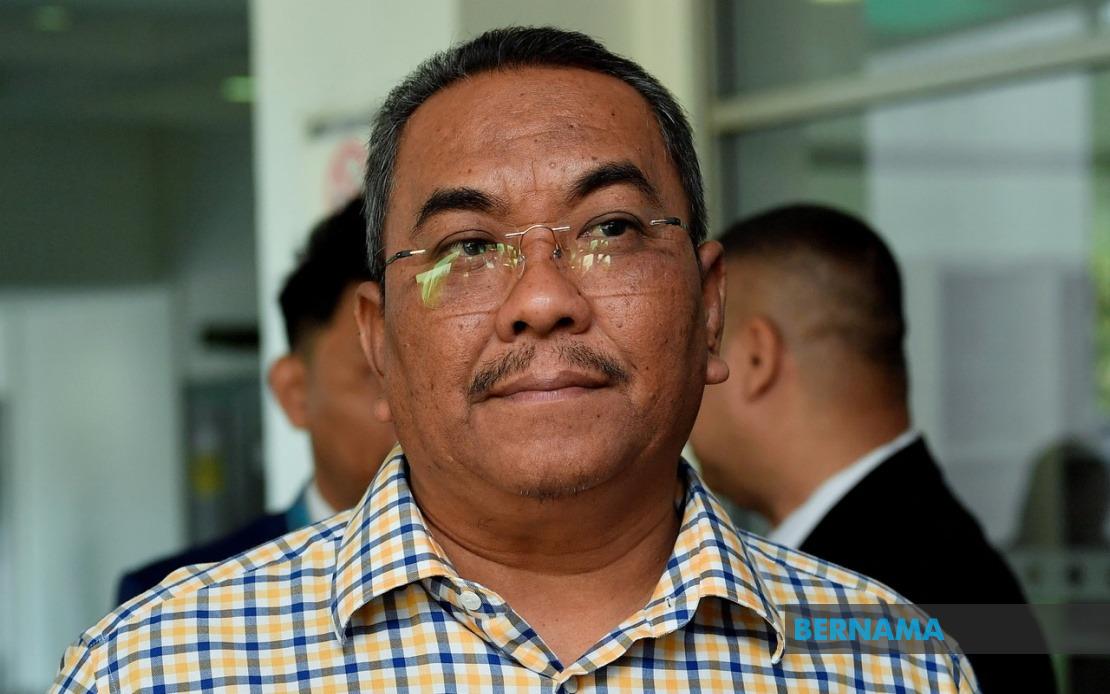
Political leaders must demonstrate greater restraint and awareness when making public statements, particularly during election campaigns, according to PKR Vice-President Datuk Chang Lih Kang, who has taken issue with recent remarks made by Kedah Menteri Besar Datuk Seri Muhammad Sanusi Md Nor. Speaking after launching a major technology financing initiative in Petaling Jaya on July 27, Chang expressed concern that such statements risk undermining social cohesion at a time when Malaysia requires unity and stability across all communities.
While acknowledging the intensified political activity that characterises election periods, Chang emphasised that the context does not justify remarks he considers improper and unsuitable for the Malaysian setting. He drew a distinction between the resilience of seasoned politicians, who may deflect criticism more readily, and ordinary citizens who bear the brunt of divisive rhetoric. The Science, Technology and Innovation Minister stressed that electoral competition should never come at the expense of the social harmony that successive Malaysian governments have worked to maintain across the country's diverse population.
The impact of such statements extends beyond immediate political theatre, Chang warned. Communities with deep historical roots in Malaysia—groups that have contributed substantially to the nation's economic, social, and cultural development—can feel targeted and alienated by insensitive political language. This concern reflects a broader anxiety within Malaysia's multicultural body politic about the tone and content of campaign messaging, particularly as parties jostle for electoral advantage in competitive races.
Chang's rebuke comes as Malaysian politics continues to navigate a delicate balance between robust democratic competition and the need to preserve communal trust. Election campaigns inevitably generate heat and controversy, yet there remains an expectation that even fierce rivals will respect certain boundaries regarding the communities and identities that form Malaysia's social fabric. The criticism suggests that some political leaders may be crossing those boundaries in pursuit of electoral gains.
Shifting to substantive policy matters, Chang unveiled details of TechnoMART Malaysia, an ambitious financing programme designed to accelerate the country's innovation ecosystem. The initiative mobilises RM5 billion in financing capacity through a collaborative framework involving 15 organisations spanning funding agencies and commercial financial institutions. This substantial pool represents a significant commitment to supporting Malaysian startups and innovators who have historically faced challenges in accessing adequate development capital.
The financing will roll out over approximately 18 months, though Chang cautioned that funds will not be distributed automatically to applicants. Each participating organisation will apply its own eligibility criteria and terms, meaning entrepreneurs seeking support must navigate individual assessment processes tailored to different lenders' risk profiles and sectoral focuses. This tiered approach reflects the reality that innovation financing requires customised solutions rather than one-size-fits-all disbursement mechanisms.
The TechnoMART platform addresses a long-standing structural weakness in Malaysia's innovation landscape: fragmentation. Historically, innovators, investors, government agencies, and financial institutions have operated in relative isolation, creating inefficiencies and missed opportunities. By establishing a centralised hub that connects these stakeholders, the programme seeks to reduce information asymmetries and transaction costs that have hindered early-stage ventures from accessing the capital they need to scale.
The broader strategic objective underpinning TechnoMART is to reposition Malaysia within the global technology value chain. Rather than remaining a consumer or assembler of imported technologies, the government aims to develop homegrown intellectual property and technological capability. This ambition reflects recognition that Malaysia's future prosperity depends on moving beyond manufacturing and services toward knowledge-intensive, high-value-added sectors where local innovators can compete internationally.
The 15 participating organisations represent a cross-section of Malaysia's financial and development institutions, suggesting broad-based buy-in for the initiative across government, banking, and quasi-public sectors. This coalition-building approach typically signals serious intent, though success will ultimately depend on how actively lenders deploy the available capital and how efficiently the platform matches entrepreneurs with appropriate funding sources.
For Malaysian startups and innovators, particularly those in emerging technology sectors such as artificial intelligence, biotechnology, and green energy, TechnoMART represents a potentially transformative opportunity. The availability of RM5 billion in dedicated financing could unlock ventures that have struggled to secure early-stage capital from conventional banking channels, which often view innovation-focused lending as high-risk. The programme's structured rollout over 18 months also allows participating organisations to refine processes and learn from initial transactions, potentially improving capital allocation efficiency over time.
Chang's dual message—cautioning political leaders while advancing concrete economic initiatives—underscores the complexity facing Malaysia's policymakers. Maintaining social cohesion whilst pursuing ambitious transformation agendas requires both responsible political communication and tangible policies that generate inclusive economic opportunity. The tension between these imperatives will likely remain a defining feature of Malaysian politics as the nation navigates ongoing electoral cycles and evolving global technological disruption.

