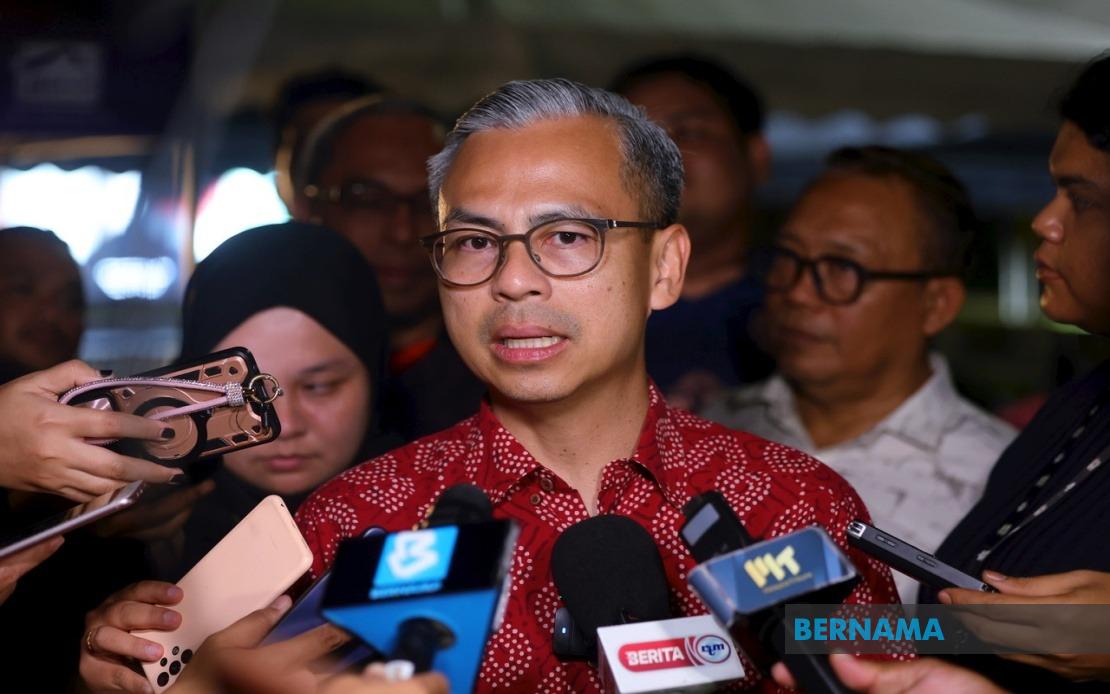
The friction between Malaysia's political coalitions deepened this week when Datuk Seri Fahmi Fadzil, the Pakatan Harapan communications director and Minister of Communications, launched a sharp rebuke against Kedah Menteri Besar Datuk Seri Muhammad Sanusi Md Nor for remarks touching on race and territorial belonging. Speaking at the Wayang Pacak programme near Jempol on July 25, Fahmi characterized Sanusi's recent statements as emblematic of a troubling pattern within the Islamic-based PAS party, one that prioritizes appeals to ethnic grievance over national cohesion.
Sanusi's controversial comments, delivered during a Barisan Nasional and Perikatan Nasional joint talk in Jempol the previous day related to the Negeri Sembilan state election campaign, had asserted that Malaysia constitutes the exclusive homeland of Malays, while other communities possess their own countries of origin such as India and China. As the central PAS election director, Sanusi's platform and prominence lent considerable weight to observations many viewed as divisive. Fahmi seized on this moment to escalate the opposition's pushback, arguing such rhetoric fundamentally undermines the nation's founding principles of diversity and shared citizenship.
Fahmi's criticism extends beyond a single politician or statement, instead indicting what he characterized as a systemic approach within PAS leadership. He referenced earlier pronouncements from the PAS president on immigration matters, suggesting a coordinated ideological emphasis on ethnic and national identity questions that privileges one community's claims over pluralistic governance. The communications director contended that this brand of politics contradicts Malaysia's mature democracy and the inclusive values that should guide national discourse following seven decades of independence.
The Pakatan Harapan official articulated a vision of constructive political engagement grounded in recognition of Malaysia's ethnic and religious plurality. Rather than exploiting demographic distinctions or stoking communal anxieties, Fahmi argued, elected representatives must actively promote unity whilst respecting fundamental differences. His remarks carried implicit skepticism about whether Sanusi would meaningfully reflect on such criticism, suggesting entrenched positions within certain political quarters resist substantive change.
Beyond Sanusi's comments, Fahmi addressed a parallel controversy involving Datuk Dr Asyraf Wajdi Dusuki, chairman of MARA, who had linked opposition politician Anthony Loke, the DAP secretary-general, to potential Menteri Besar candidacy in Negeri Sembilan if the incumbent Datuk Seri Aminuddin Harun suffered electoral defeat. Fahmi pointed out that constitutional provisions specific to Negeri Sembilan have long reserved the Menteri Besar position for Malays, rendering Asyraf Wajdi's suggestion constitutionally impossible and analytically flawed. He called upon the MARA chairman to apologize to Negeri Sembilan residents for the erroneous and potentially inflammatory insinuation.
These twin controversies occur against the backdrop of intensifying campaigning for the Negeri Sembilan state election, where Pakatan Harapan seeks to defend its incumbent administration while competing against Barisan Nasional and Perikatan Nasional coalitions. The deployment of race-centric messaging by opposition figures appears designed to consolidate support among Malay-Muslim voters by invoking preservation narratives and territorial belonging claims. For Malaysian audiences watching from elsewhere in the country, the Negeri Sembilan campaign increasingly resembles a microcosm of the ethnic political framing that has periodically resurfaced across Malaysia's electoral landscape.
Fahmi also rejected predictions from former Rembau Member of Parliament Khairy Jamaluddin regarding Malay voter receptivity toward Pakatan Harapan, specifically Khairy's claim that the opposition received roughly ten percent support from Malay voters in Johor. The communications minister emphasized that political dynamics and voter behavior differ substantially across different states and constituencies, and expressed confidence in Aminuddin Harun's record of serving all communities equitably regardless of ethnic or religious background. This counterargument highlights a strategic difference in how the coalition emphasizes performance-based governance over identity-first politics.
Separately, Fahmi addressed speculation from UMNO deputy president Datuk Seri Mohamad Hasan regarding the possible timing of the sixteenth general election, with Tok Mat suggesting it could materialise by year's end. The communications director characterized such speculation as personal conjecture rather than Cabinet discussion or governmental intention. He stressed that Prime Minister Datuk Seri Anwar Ibrahim and the current administration remain focused on economic stabilization and recovery from geopolitical disruptions affecting West Asia, implicitly suggesting that premature election scheduling would distract from these priorities.
The unfolding controversy illuminates persistent tensions within Malaysian politics between competing visions of national identity and governance. Pakatan Harapan's public positioning emphasizes inclusive multiethnic administration and results-driven leadership, whilst opponents increasingly resort to majoritarian identity appeals. Whether such messaging strategies meaningfully influence voter behavior in Negeri Sembilan remains to be seen, though the pattern suggests that questions of ethnicity and constitutional order will continue shaping electoral competition across the peninsula. For observers in neighbouring Southeast Asian democracies grappling with similar pluralism questions, Malaysia's current trajectory offers cautionary lessons about the risks of permitting identity politics to dominate public discourse.

