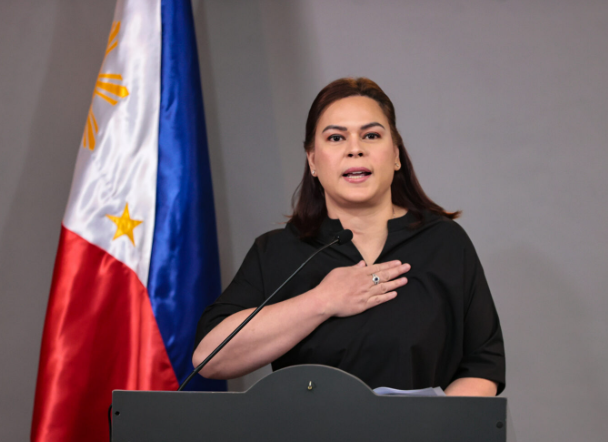
Vice President Sara Duterte has seized on a major gathering along Manila's Epifanio de los Santos Avenue as emblematic of what she characterizes as a burgeoning tide of public dissatisfaction with the Marcos administration. Speaking on Tuesday, June 30, Duterte framed the assembly as confirmation of longstanding criticism she has voiced throughout 2024 regarding governance failures under the current President. The rally, which drew thousands of Iglesia ni Cristo members who protested against what they described as "selective justice" and miscarriage of law, provided the Vice President with a platform to articulate broader grievances extending well beyond the specific concerns that mobilized the religious organization.
Duterte's characterization of the administration centers on an assertion that governance has been fundamentally compromised by incompetence and inaction on critical national challenges. She contends that the government has systematically failed to grapple with the complex socioeconomic pressures confronting ordinary Filipinos, allowing problems to fester without meaningful intervention or remedy. This framing seeks to position her as a voice for ordinary citizens whose material circumstances have deteriorated, a rhetorical strategy designed to build political distance between herself and the President despite their shared party affiliation.
At the heart of Duterte's critique lies an economic narrative centered on the purchasing power crisis facing Filipino households. She emphasizes how rising commodity prices, wage stagnation, and escalating daily living costs have squeezed families across income levels. By connecting the Edsa rally to these tangible hardships, Duterte argues that public frustration reflects not abstract political disagreement but genuine economic anxiety that the administration has failed to acknowledge or address substantively. This economic dimension resonates across the Philippines and Southeast Asia more broadly, where cost-of-living pressures have become central political concerns.
Duterte additionally charges the administration with what she characterizes as authoritarianism disguised as accountability. She claims that critics of government performance, questioning of alleged corruption within the presidential palace, and those raising allegations against President Marcos himself face intimidation rather than engagement. By framing suppression of dissent as the administration's response to legitimate inquiry, she positions herself as defending democratic principles and the right to political speech. This argument holds particular salience in a region where concerns about democratic backsliding and press freedom have gained prominence in recent years.
The Vice President's indictment extends to what she describes as the President's detachment from lived experience of economic struggle. According to her characterization, Marcos operates within a bubble of privilege disconnected from the daily reality of Filipinos navigating inflation and job precarity. Rather than implementing policies or programs that would mitigate these hardships, Duterte suggests the administration has opted for a defensive posture, attacking those who voice criticism rather than implementing substantive reforms. This argument about presidential disconnection from popular suffering constitutes a classic opposition strategy in populist politics across Southeast Asia.
Crucially, Duterte frames these issues as transcending partisan political calculation. She contends that the challenges at stake concern the legitimacy and honor of the state itself, as well as the trajectory of the nation's future. By elevating the discourse beyond electoral competition or factional disputes, she attempts to claim the moral high ground and position her criticism as principled rather than self-interested. This rhetorical move gains added weight given her own precarious political position and the impeachment proceedings initiated against her.
Duterte's invocation of democratic governance failures and erosion of free expression speaks to anxieties that have animated political discourse across Southeast Asia in recent years. Many in the region have grown concerned about the concentration of executive power, the vulnerability of institutions designed to check presidential authority, and the capacity of sitting leaders to silence opposition through legal mechanisms. The Vice President's emphasis on how the administration weaponizes the apparatus of state against its critics taps into these broader regional concerns about democratic health and institutional independence.
The timing and context of Duterte's statements carry additional significance given the institutional drama unfolding in Manila. The House of Representatives has impeached Duterte over allegations including threats directed toward President Marcos and his wife, unexplained personal wealth accumulation, and misappropriation of confidential government funds. Her Senate impeachment trial was scheduled to commence on July 6, placing her legal jeopardy in direct proximity to these public attacks on the President's record. This juxtaposition raises questions about whether Duterte's escalating public critique represents a strategic effort to shift political momentum or reflects genuine constitutional objections to administration policies.
For Malaysian and Southeast Asian observers, the unfolding confrontation between Duterte and Marcos illuminates broader tensions within Philippine democracy regarding institutional accountability and the nature of executive power. The impeachment mechanism, designed as a constitutional check on presidential misconduct, functions here as a weapon in partisan conflict. Simultaneously, the President's administration faces credible allegations from high-ranking officials regarding governance failures and possible corruption. This dynamic reflects challenges common across the region as countries navigate competing demands for strong executive leadership and robust institutional oversight.
The Edsa rally itself carries historical weight in Philippine political culture, evoking memories of the 1986 People Power Revolution that toppled the Marcos dictatorship. By characterizing the gathering as representative of contemporary dissatisfaction, Duterte invokes this powerful historical precedent, however implicitly, suggesting that current circumstances warrant similar levels of public mobilization and democratic reassertion. This rhetorical strategy seeks to elevate ordinary political disagreement into a moment of historical consequence and civic reclamation.
Moving forward, Duterte's framing of the rally and her escalating critique of Marcos administration policies appear designed to accomplish multiple objectives simultaneously. Politically, such statements position her as a viable alternative voice responsive to public grievance, potentially bolstering her standing ahead of future electoral cycles. Institutionally, her emphasis on suppression of dissent and democratic erosion may influence the Senate impeachment proceedings, potentially generating sympathy among senators troubled by executive overreach. Strategically, she seeks to shift public discourse away from her own legal vulnerabilities toward broader questions about administration competence and democratic principle.

