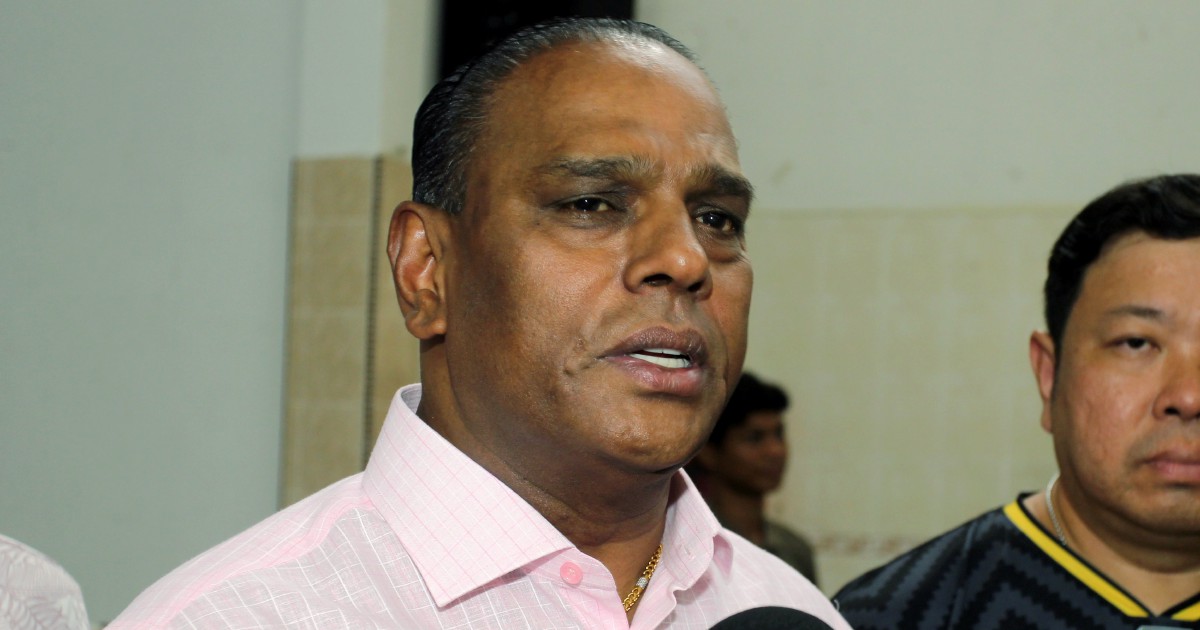
A significant gathering of supporters dressed entirely in black converged at the Kuala Lumpur court complex on Monday as former Human Resources Minister Datuk Seri M. Saravanan prepared to face formal corruption charges stemming from allegations of impropriety in the foreign worker recruitment sector. The visible show of support underscores the political dimensions of the case and the divisions that remain surrounding the former minister's legal predicament.
Saravanan's anticipated appearance before the courts marks a critical juncture in a high-profile investigation that has drawn considerable public attention given his prominent position within the Malaysian government's cabinet. The allegations centre on his involvement in foreign worker recruitment processes, an area of administration that has long been contentious and subject to scrutiny due to concerns over transparency and accountability. The specifics of the corruption allegations have yet to be fully detailed in open court, though officials have indicated they relate to irregularities in how recruitment decisions were made and administered.
The presence of supporters in coordinated black attire suggests an organised effort to demonstrate solidarity with the former minister, a tactic frequently employed by political allies and party members seeking to influence public perception during high-stakes legal proceedings. In Malaysia's political landscape, such courtroom gatherings often carry symbolic weight and serve as opportunities for political factions to signal their backing. The composition and size of the crowd may also provide insight into the depth of support Saravanan maintains within political circles and among his constituency.
The foreign worker recruitment system has been a persistent source of controversy in Malaysia, with previous governments and administrators facing criticism over potential loopholes that could facilitate corruption or preferential treatment. The sector handles the influx of migrant workers from countries across Southeast Asia and beyond, representing a substantial economic interest with considerable sums flowing through various administrative channels. Any substantiated irregularities in how decisions are made regarding worker permits, quotas, or employer eligibility could have broader implications for the integrity of the entire system.
Saravanan's tenure as Human Resources Minister coincided with periods of significant pressure on Malaysia's foreign worker policies, as businesses lobbied for expanded access to migrant labour while civil society groups raised concerns about worker protections and potential abuses. The allegations against him emerge at a time when Malaysia continues to grapple with balancing economic needs against the imperative to prevent exploitation and maintain regulatory standards. His legal troubles may reopen debates about whether sufficient oversight mechanisms exist within the HR Ministry to prevent misconduct.
The formal charging process will determine whether prosecutors have assembled sufficient evidence to proceed with a full trial. Under Malaysian law, corruption cases of this nature typically involve detailed examination of financial records, communication logs, and testimonies from individuals involved in the recruitment decisions in question. The burden of proof remains with the prosecution, and Saravanan will have the opportunity to mount a defence through his legal team. The exact nature of the charges—whether they involve abuse of power, receiving gratification, or other corruption-related offences—will become clearer once formal proceedings commence.
For the government, the case presents both a challenge and an opportunity. On one hand, pursuing corruption allegations against a former minister demonstrates commitment to accountability and the rule of law. Conversely, if the minister is politically well-connected within the ruling coalition, the proceedings could expose rifts or create awkward political dynamics. The resolution of the case may influence public confidence in the integrity of government institutions and the independence of Malaysia's anti-corruption enforcement bodies.
The broader implications extend to Malaysia's international standing regarding governance and corruption control. Foreign investors and trading partners often monitor high-profile corruption cases as indicators of a nation's commitment to clean governance. A conviction could strengthen Malaysia's credentials in this regard, while an acquittal or perceived weakness in prosecution might invite questions about selective enforcement or political interference in the judicial process.
Saravanan's supporters gathering at court also raise questions about the nature of Malaysian political solidarity and how different constituencies respond to challenges facing their representatives. The demonstration may be intended to generate media coverage and influence public opinion, though it also carries risks of appearing inappropriate or inappropriately pressuring the judiciary, concerns that Malaysian civil society organisations have periodically raised regarding such gatherings.
The case is likely to unfold over several months, with multiple court dates scheduled for preliminary submissions, evidence gathering, and eventual trial proceedings if charges are formally filed. Media coverage and public discussion will likely intensify as details emerge, particularly given Saravanan's profile and the significance of the human resources portfolio in Malaysian governance. Legal observers will be watching closely to assess how the courts handle the matter and whether the proceedings meet international standards for fairness and due process.

