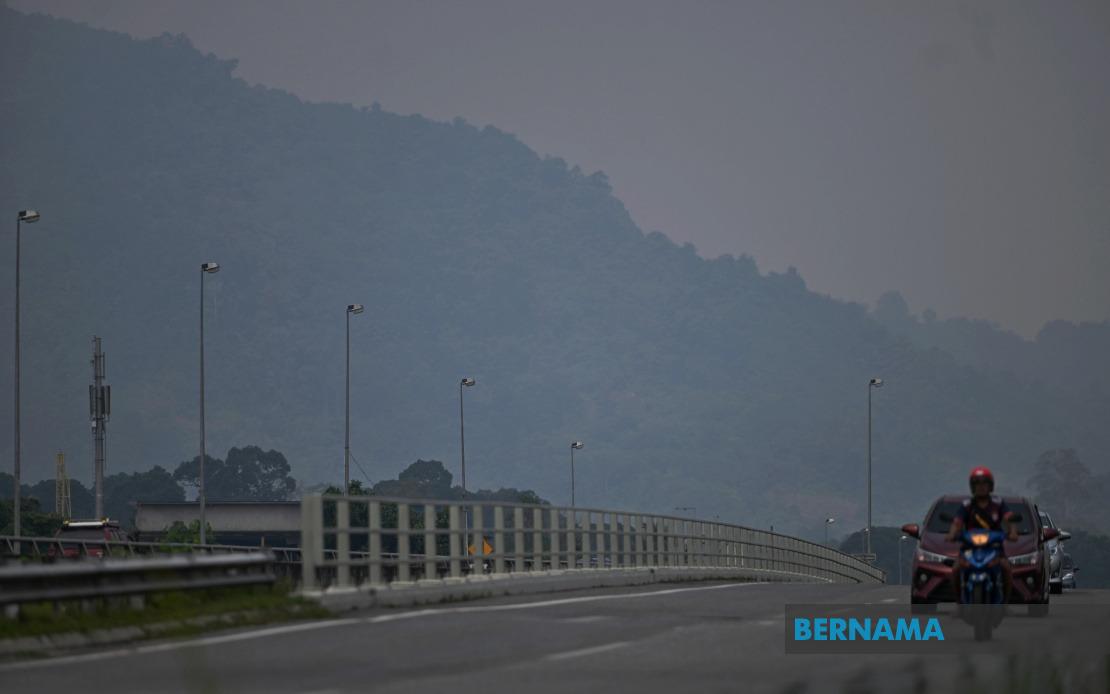
Air quality in Sarawak has deteriorated sharply, with the coastal town of Serian experiencing the most severe pollution levels recorded across the state. The Air Pollution Index at Serian's monitoring station climbed to 227 on August 21 afternoon, entering the 'very unhealthy' category that poses significant risks to vulnerable populations and the general public alike. This reading represents a substantial jump from baseline conditions and signals the advancing edge of transboundary pollution affecting the broader region.
Nine additional locations across Sarawak have slipped into unhealthy territory, indicating a broad geographical spread of air quality degradation. Sri Aman registered the second-highest index at 187, with Kuching following at 176. The deterioration extends across the state's population centres: Samarahan measured 175, Sarikei reached 174, and Sibu recorded 157. More distant monitoring stations at Bintulu and Samalaju both registered 154, whilst Kapit and Mukah each posted readings of 130. This pattern suggests that smoke and pollutants are affecting both the northern urban zones and the inland communities stretching toward the interior regions.
According to Azuri Azizah Saedon, deputy director-general of the Department of Environment, the deterioration stems from haze advancing from multiple directions across Sarawak's airspace. The chief driver of this pollution event originates from the Indonesian side of Borneo, where fire activity has reached alarming proportions. The ASEAN Specialised Meteorological Centre documented 288 active hotspots across Kalimantan, substantially exceeding the 53 detected in Sumatra during the same reporting period. Malaysia itself has recorded minimal fire activity with only two hotspots—one each in Sarawak and Terengganu—indicating that the state's pollution burden is primarily imported rather than locally generated.
Meteorological conditions across Southeast Asia are creating an environment conducive to smoke transport. Most of the southern ASEAN region continues experiencing dry weather, which perpetuates fire activity and allows smoke to persist in the atmosphere without being washed away by precipitation. The notable exceptions are northeastern Borneo and northern Sumatra, where rainfall is providing some respite from air quality deterioration. The ASEAN haze map reveals that moderate to dense smoke plumes have developed in West Kalimantan and are moving steadily northward toward western Sarawak, suggesting the situation may worsen before improving.
The transboundary nature of this pollution event underscores the ongoing regional air quality challenge that Malaysia and its neighbours continually struggle to manage. Sarawak, positioned directly in the path of smoke transport from Indonesian fire zones, remains particularly vulnerable to seasonal and episodic haze events. Unlike localised pollution sources that governments can directly control through regulation and enforcement, transboundary haze requires coordinated international responses and depends heavily on weather patterns that may remain unfavourable for weeks during dry seasons.
In response to the deteriorating conditions, Malaysian authorities have activated their crisis protocols. The Department of Environment has intensified daily patrols in areas identified as having open burning potential, aiming to prevent any domestic fire activity from compounding the existing pollution burden. Additionally, both the National Open Burning Action Plan and the National Haze Action Plan have been mobilised, coordinating responses across multiple government agencies. This coordinated approach reflects the seriousness with which Malaysian officials view the current situation and their recognition that managing haze requires comprehensive, multi-agency engagement.
Public health implications are substantial, particularly for vulnerable groups including children, elderly residents, and individuals with respiratory conditions. The 'very unhealthy' readings in Serian and the unhealthy classifications elsewhere indicate that outdoor activity restrictions may become necessary, and increased hospital visits related to respiratory complaints are typically observed during such episodes. The sustained elevation of API readings across multiple towns suggests that residents will likely face several days of compromised air quality, necessitating precautionary measures such as mask usage and reduced outdoor exposure.
Government communications have emphasised the critical importance of preventing any additional burning within Malaysian territory. Citizens are explicitly warned against open burning activities and encouraged to report suspected burning incidents immediately. The Fire and Rescue Department of Malaysia can be contacted through the emergency number 999, whilst the Department of Environment operates a dedicated hotline at 1-800-88-2727. This dual-contact approach ensures that reports reach the appropriate responding authorities, though the volume of such calls during peak haze episodes often exceeds capacity, underlining the system's limitations during crisis periods.
The current episode represents a recurring regional challenge that demands both national vigilance and international cooperation. Whilst Malaysia can implement strict controls on domestic burning, the proportion of Sarawak's current air pollution originating from Indonesian sources lies beyond direct Malaysian jurisdiction. Effective long-term solutions require sustained diplomatic engagement and enforcement mechanisms across borders, alongside Malaysia's own commitment to preventing domestic fire activity. For Sarawak residents, the immediate focus remains protecting health during the coming days of poor air quality, with hopes that shifting weather patterns will eventually disperse the lingering smoke plumes and restore cleaner atmospheric conditions.

