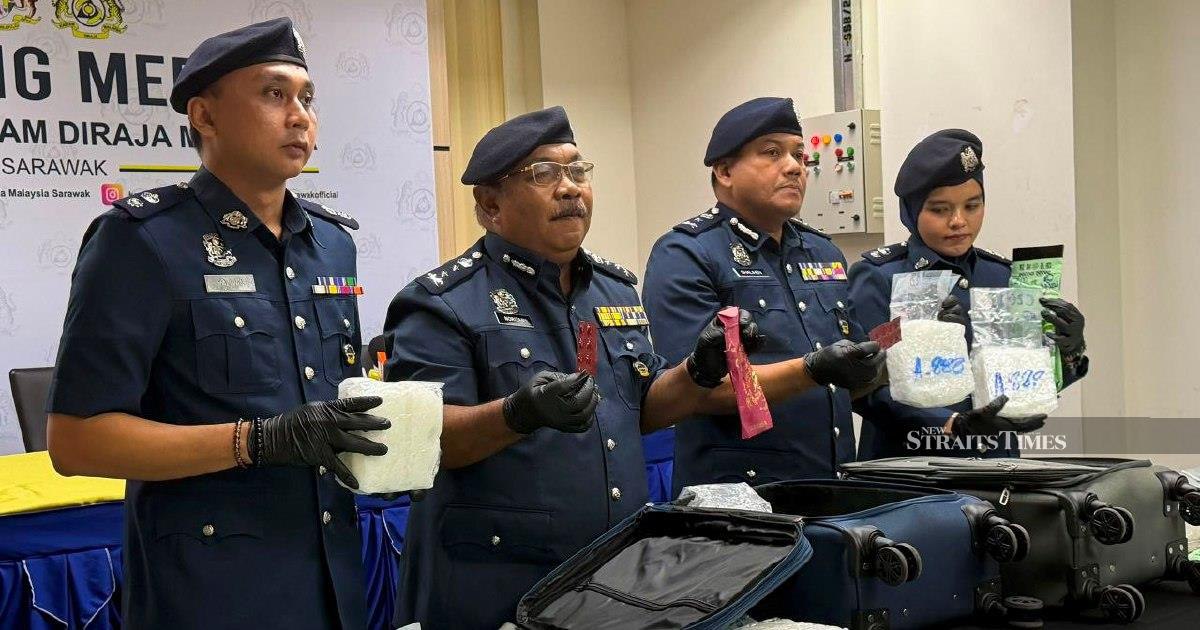
Border control authorities in Sarawak have successfully prevented a major drug smuggling operation at Kuching International Airport, intercepting contraband valued at RM1.32 million on July 9. The Sarawak Customs Department's intervention resulted in the arrest of two men in connection with the illicit trafficking attempt, marking another significant victory in the ongoing battle against narcotics trafficking through the state's primary aviation gateway.
The seizure underscores the persistent challenge faced by Malaysian customs and law enforcement agencies in combating drug smuggling through airport terminals. Kuching International Airport, as one of Sabah and Sarawak's busiest transport hubs, remains an attractive target for drug trafficking networks seeking to exploit passenger flows and cargo operations to move contraband across borders. The airport handles thousands of passengers daily and serves as a crucial connection point for both domestic and international travel, making it a critical frontier in Malaysia's counter-narcotics efforts.
The July 9 interception demonstrates the effectiveness of enhanced screening procedures and intelligence-driven enforcement at border checkpoints. Customs officials employing modern detection technologies and trained personnel were able to identify the concealed shipment before it could proceed further, preventing the drugs from reaching street-level distribution networks. Such operations require coordination between multiple agencies and sustained vigilance, as smugglers continuously adapt their tactics to evade detection.
The two arrested individuals now face investigation under relevant drug trafficking legislation, which carries severe penalties in Malaysia. The country maintains some of the world's strictest drug laws, with trafficking offences potentially resulting in lengthy imprisonment and, in certain circumstances, capital punishment. These deterrents have made Malaysia's approach to narcotics enforcement among the most stringent globally, though challenges in curbing supply routes persist.
For Malaysian readers and particularly those in Sarawak, this seizure carries broader implications for community safety. Drug trafficking networks operating through major airports often feed local addiction markets while generating violence and associated criminal activity. By disrupting supply chains at border points, authorities aim to reduce the availability of hard drugs in communities, though experts acknowledge that addressing demand through rehabilitation and education remains equally critical.
The success at Kuching International Airport reflects intensified customs operations across Malaysia's entry and exit points in response to transnational trafficking trends. Law enforcement agencies have increasingly focused resources on high-volume travel corridors where smugglers attempt to exploit passenger screening procedures. Intelligence sharing between regional customs authorities and international partners has also improved interdiction rates, though the sheer volume of traffic presents ongoing operational challenges.
Sarawak's position as a gateway state with extensive maritime borders and international connectivity makes it particularly significant in regional drug flow patterns. Trafficking networks utilise both air and sea routes to move contraband between Southeast Asian production and trafficking hubs. The state's geography and economic importance therefore position it at the frontline of Malaysia's counter-narcotics strategy, requiring substantial investment in detection capabilities and personnel training.
The RM1.32 million valuation of the seized drugs reflects street-level market prices and indicates the commercial scale of the smuggling operation. Such figures help customs and police highlight the economic stakes involved in drug enforcement to policymakers and the public. The value calculation also serves forensic purposes in determining the precise nature and quantity of the seized substances through laboratory analysis.
Looking forward, this interception demonstrates that enhanced border management protocols continue to yield tangible results in protecting Malaysia's communities from narcotics harm. However, enforcement officials acknowledge that seizures alone cannot solve underlying supply and demand issues. Complementary strategies involving treatment access, poverty reduction, and prevention education remain essential components of comprehensive drug control policy. The Sarawak Customs Department's operational success on July 9 therefore represents one tactical victory within a broader, long-term strategic struggle against organised drug trafficking networks operating across Southeast Asia.

