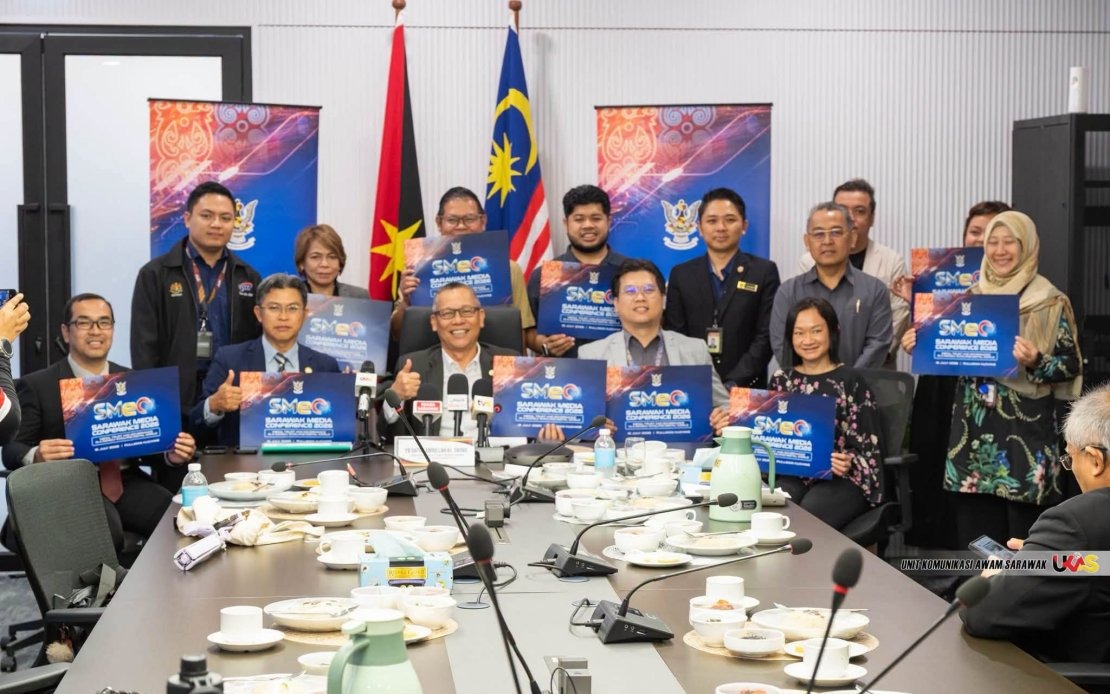
The Sarawak Government is preparing to host the Sarawak Media Conference (SMeC) 2026, an ambitious gathering designed to bring together approximately 800 stakeholders from across the media, communications, academic and policy sectors. Scheduled to take place on Thursday in Kuching, the conference represents a significant platform for dialogue on pressing challenges facing the regional media landscape, with the official proceedings to be opened by Sarawak Premier Tan Sri Abang Johari Tun Openg.
Organised by the Sarawak Public Communications Unit (UKAS) under the auspices of the state government, the conference carries the thematic framework of "Media, Trust and Governance in a Rapidly Evolving Digital World." This focal point reflects growing recognition across Southeast Asia that the credibility and functionality of media institutions depend increasingly on how they navigate technological change whilst maintaining public confidence. The choice of theme is particularly pertinent for Malaysia, where discussions about media independence, ownership structures and the role of digital platforms in shaping public discourse have intensified in recent years.
According to Datuk Abdullah Saidol, Deputy Minister in the Sarawak Premier's Department overseeing corporate affairs, information and UKAS, the conference will prioritise strengthening public confidence in media organisations and advancing governance standards across the sector. Abdullah elaborated that participants will examine both the opportunities and complications emerging from digital technologies, with particular attention to artificial intelligence and its implications for newsrooms, content production and audience engagement. This focus on AI reflects a broader Southeast Asian concern: how media institutions can harness technological advancement whilst upholding journalistic integrity and preventing the spread of misinformation.
The conference programme will incorporate expertise from prominent figures across media, communications and academia. Among the highlighted speakers is Lunnie Gan, founder of SOL Digital, whose perspective on digital innovation will offer practical insights into how media organisations are adapting their business models and distribution strategies. Equally significant is the participation of Premesh Chandran, deputy chairman of the Malaysian Media Council, whose involvement signals a collaborative regional approach to addressing shared challenges in media governance and ethics. Such breadth of expertise positions the conference as a forum for exchanging experiences across Malaysian and Southeast Asian media landscapes.
The parallel celebration of National Journalists' Day at Sarawak level (HAWANA) 2026 will be integrated into the conference schedule, with an evening dinner bringing together media practitioners and government representatives. Deputy Prime Minister Datuk Seri Fadillah Yusof's attendance at this celebration underscores the federal government's recognition of the media sector's role in national governance and democratic participation. The co-hosting of these events within a single conference architecture reflects the interconnected nature of journalism, state communication and public accountability in contemporary Malaysia.
A distinguishing feature of SMeC 2026 is the presentation of the Sarawak Premier's Special Appreciation Awards, which will recognise excellence across five media categories: Editor/Journalist/Stringer, Photographer, Videographer, Radio News Presenter/Broadcaster and Social Media Influencer. The inclusion of social media influencers alongside traditional journalists signals official acknowledgement that the media ecosystem now extends beyond institutional newsrooms. This recognition is significant for Malaysia, where influencers have become substantial channels for public communication and where the boundaries between professional journalism and digital content creation continue to blur, raising questions about accountability and standards.
For Malaysian media professionals, the conference offers a structured opportunity to engage with governance frameworks and ethical standards as the industry confronts accelerating digitalisation. The focus on rebuilding public trust is particularly timely, given widespread concerns across the region about declining confidence in traditional media, the proliferation of unverified information online and the competitive pressure on journalists working in environments of resource constraints. By bringing together policymakers, media executives and journalists, the conference creates space for dialogue that can inform future regulatory approaches and industry self-governance initiatives.
The emphasis on digital transformation challenges reflects the lived reality of Malaysian newsrooms, where organisations are simultaneously downsizing, experimenting with new revenue models and competing with social media platforms for audience attention and advertising resources. The conference agenda suggests that Sarawak intends to position itself as a thought leader on media resilience within the broader Malaysian context, potentially influencing how other states and the federal government approach media policy and support.
The gathering also carries implicit significance for discussions about media freedom and independence in Malaysia, where journalists and editors have increasingly navigated complex terrain between commercial pressures, political sensitivities and professional obligations. By framing the conference around trust and governance rather than freedom alone, organisers appear to emphasise institutional sustainability and audience confidence as prerequisites for journalism's public function. This framing may open pathways for constructive engagement between media practitioners and government representatives on standards, ethics and accountability mechanisms.
With approximately 800 participants expected, SMeC 2026 will constitute one of the more substantial convocations of the Malaysian media sector in recent years, offering opportunity for networking, knowledge exchange and collaborative problem-solving. The presence of academics alongside practitioners suggests the conference will be informed by research and critical analysis rather than purely industry perspectives. For Malaysian journalism and the broader Southeast Asian media landscape, such platforms for structured dialogue about digital futures and institutional trust are increasingly essential as the region navigates rapid technological and social change.

