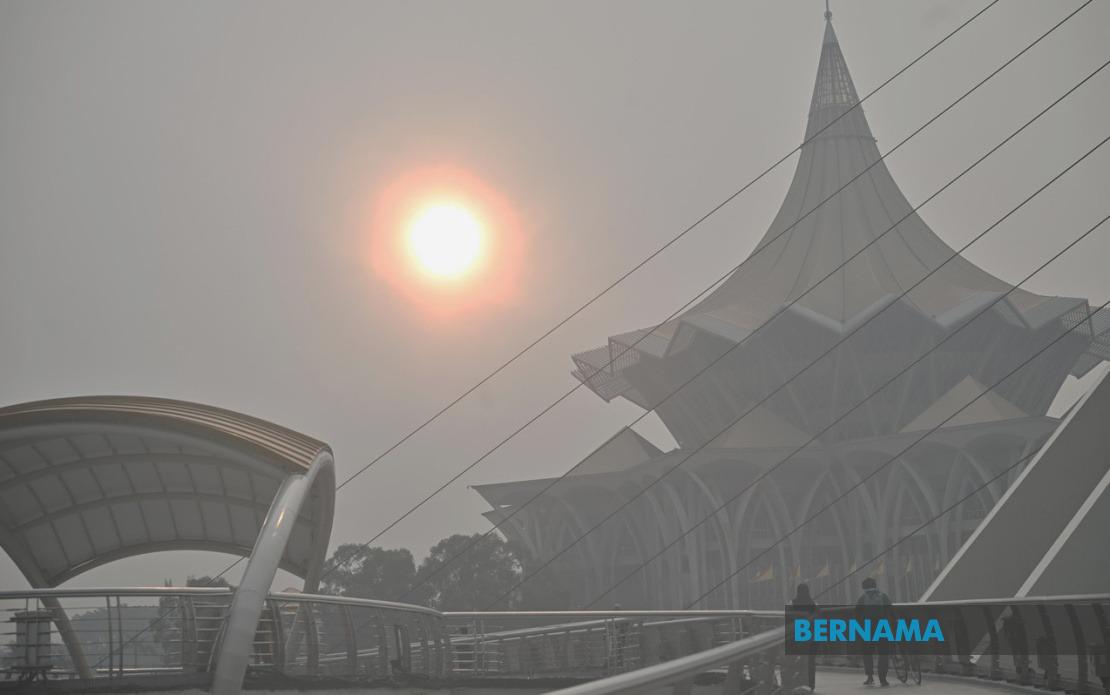
The Sarawak Education Department has ordered the closure of 591 schools across the state for two consecutive days starting today, citing increasingly severe hot and dry weather conditions that have begun to create unsafe conditions for learners and staff. The temporary shutdown encompasses 509 primary schools educating 107,590 pupils alongside 82 secondary schools with an enrolment of 89,733 students, representing a substantial disruption to the academic calendar affecting nearly 200,000 young people under the supervision of 10 District Education Offices.
The geographical extent of the closures reveals the pervasiveness of the weather crisis, with affected administrative zones spanning from the Kuching division in the western reaches of Sarawak down through Padawan, Bau, Lundu, Samarahan, Simunjan, Serian, Sri Aman, Lubok Antu and Betong. This wide distribution indicates that the phenomenon is not localized to particular microclimates but rather represents a state-wide atmospheric pattern requiring coordinated emergency response. The scale of the intervention—closing more than half a thousand educational institutions—underscores the severity of conditions that prompted education authorities to prioritize student welfare over maintaining regular instructional schedules.
The meteorological backdrop driving these closures reflects a broader environmental challenge confronting Sarawak. Extended periods of elevated temperatures combined with markedly reduced precipitation have created conditions vulnerable to multiple cascading hazards. The Sarawak State Disaster Management Committee has positioned itself on high alert, acknowledging that such climatic patterns substantially amplify the probability of uncontrolled fires spreading across forested zones and peatland areas while simultaneously straining the state's freshwater resources. The committee has emphasized the multifaceted nature of the crisis, requiring simultaneous attention to fire prevention, water conservation, and public health considerations.
Air quality has emerged as a particularly concerning manifestation of the weather emergency. Monitoring data collected at two o'clock in the afternoon revealed that nine distinct locations throughout Sarawak were experiencing unhealthy Air Pollutant Index readings, the threshold at which respiratory vulnerability becomes a genuine public health concern. Kuching registered 191 API points, Sarian recorded 195, Lundu reached 180, and Lubok Antu similarly peaked at 191, whilst other urban and district centres including Samarahan, Sri Aman, Sarikei, Sibu, and Tebedu all reported significantly elevated pollution levels ranging between 108 and 178 index points. Such readings typically necessitate vulnerable populations—children, the elderly, and those with respiratory conditions—to minimize outdoor exposure.
The decision to close schools reflects an intersection of multiple environmental concerns that collectively justified the disruption. Beyond the direct discomfort and potential health effects of oppressive heat, the air quality deterioration creates genuine medical risks particularly for students engaged in physical activities during outdoor school sessions. The combination of elevated temperatures and poor air quality creates synergistic health challenges that educational administrators determined exceeded acceptable risk thresholds. Furthermore, children represent a physiologically vulnerable demographic with limited capacity for thermoregulation, rendering prolonged heat exposure during school hours increasingly problematic.
Water supply constraints represent an additional layer of urgency animating the disaster management response. The sustained absence of precipitation characteristic of prolonged dry spells directly threatens freshwater reserves that sustain both residential populations and critical infrastructure including schools themselves. The committee's explicit acknowledgment of pressure on water resources suggests that supply vulnerabilities extend beyond typical dry-season fluctuations into territory that demands proactive management and potential conservation measures. For an educational system serving nearly 200,000 students, reliable water availability represents an operational prerequisite often taken for granted but genuinely threatened during severe drought conditions.
Forest and peatland fire risk constitutes perhaps the most systemically threatening hazard emerging from the current weather pattern. Sarawak's extensive tropical forest coverage, whilst representing invaluable ecological and economic resources, becomes extremely vulnerable to uncontrolled combustion under conditions of prolonged heat and moisture deficit. Peatland areas prove particularly hazardous, as subsurface organic matter can sustain smouldering fires that prove exceptionally difficult to extinguish and generate extraordinary quantities of smoke. The disaster management committee's emphasis on strengthening monitoring and preventive measures in high-risk zones indicates that fire suppression readiness has moved from routine preparedness into active crisis management mode.
The state government's institutional response structures appear mobilized at appropriate levels. The Sarawak State Disaster Management Committee has positioned itself as the coordinating entity overseeing the multifaceted challenge, with explicit commitments to enhanced monitoring, improved preparedness protocols, and intensified prevention and mitigation activities concentrated in districts exhibiting heightened vulnerability. Such structural activation suggests that the hot and dry conditions, whilst perhaps not unprecedented in individual magnitude, have collectively crossed thresholds warranting elevated governmental coordination beyond departmental silos.
For Malaysian readers, this Sarawak situation carries relevance extending beyond the state's borders. Transboundary atmospheric circulation patterns, particularly during extended dry periods, can transmit air quality degradation across political boundaries. Moreover, the cascade of environmental and public health challenges illustrated here—heat stress, deteriorated air quality, elevated fire risk, water scarcity—represents precisely the constellation of climate-linked hazards anticipated to intensify across Southeast Asia. Sarawak's experience in managing simultaneous environmental emergencies offers instructive lessons regarding institutional preparedness, inter-agency coordination, and the necessity for proactive risk communication to populations.
The implications for educational continuity merit consideration. Whilst two-day closures represent manageable disruptions, if meteorological conditions persist beyond this brief window, extended academic interruptions could accumulate into meaningful learning losses, particularly for students approaching critical examination periods. Schools systems across the region may require contingency planning for extended weather-related disruptions, incorporating online learning alternatives and flexible scheduling approaches. The incident also highlights vulnerabilities in physical infrastructure—classroom ventilation systems, water supply reliability, and outdoor facility design—that merit attention as tropical Asia contemplates climate resilience in its built environment.

