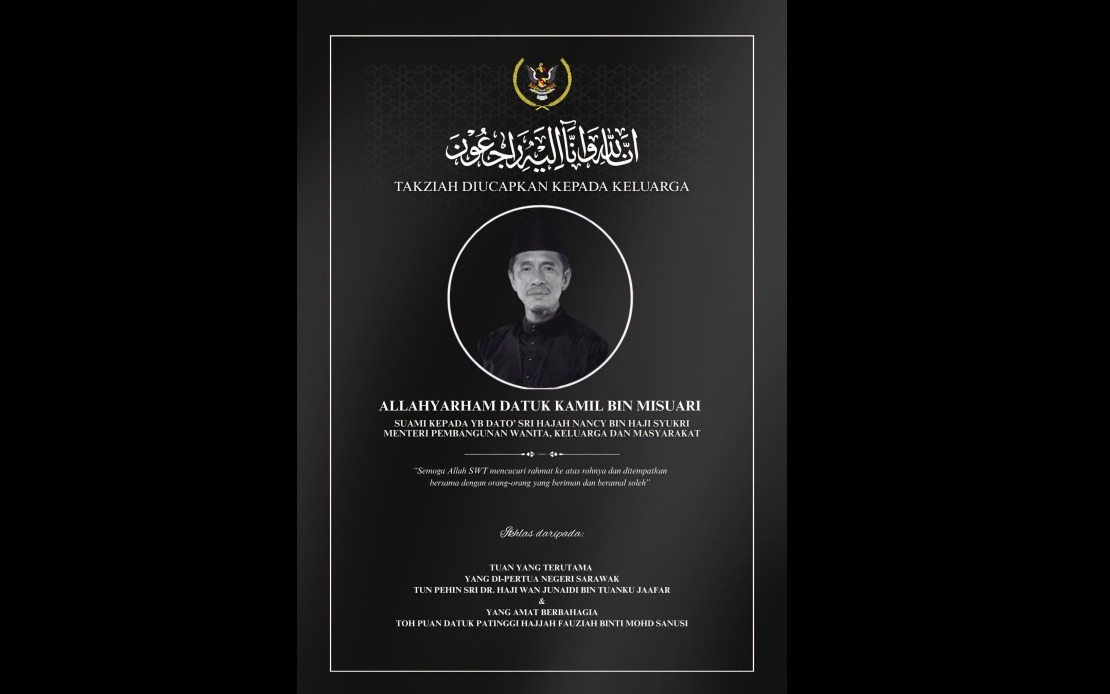
Sarawak's Yang Dipertua Negeri Tun Dr Wan Junaidi Tuanku Jaafar has offered his sympathies to Women, Family and Community Development Minister Datuk Seri Nancy Shukri following the death of her husband, Datuk Kamil Misuari. The late Kamil passed away on June 18 at a hospital in Kuala Lumpur, ending a life spanning 65 years. His passing marks the end of a marriage that began in 1985 and produced three children, representing a significant personal loss for the minister during her tenure in a demanding federal portfolio.
Through a formal statement released by Astana Sarawak, Tun Dr Wan Junaidi and his wife, Toh Puan Fauziah Mohd Sanusi, articulated their prayers for the departed, seeking divine blessings upon his soul and mercy for his deeds. The statement reflects the protocol observed within Malaysia's upper echelons of government when senior officials experience family bereavements, acknowledging both the spiritual dimensions of grief within the Islamic faith and the emotional toll experienced by the bereaved family. Such expressions of official sympathy serve to unite the nation's leadership in moments of personal tragedy affecting public servants.
The condolences extended by Sarawak's constitutional head underscore the interconnected nature of Malaysia's political establishment, where expressions of grief from fellow leaders provide institutional support to those navigating loss whilst maintaining public responsibilities. Tun Dr Wan Junaidi's message specifically requested strength and resilience for Nancy Shukri and her family as they process their bereavement. This pastoral dimension to state leadership, particularly from the Yang Dipertua Negeri whose role encompasses ceremonial and advisory functions, demonstrates how Malaysia's constitutional framework recognises the human dimension of governance beyond mere administrative duties.
The late Kamil Misuari's remains were scheduled to be transferred to Kuching on June 19, with interment planned at Samariang Muslim Cemetery. This arrangement underscores Nancy Shukri's Sarawak origins and her family's roots in the state, even as her ministerial responsibilities keep her primarily engaged in federal affairs. The decision to conduct funeral rites in Kuching rather than Kuala Lumpur reflects the enduring attachment to one's home state that characterises many Malaysian politicians, particularly those who have risen to national prominence from regional political bases.
For Nancy Shukri, currently serving as the Woman, Family and Community Development Minister, this personal loss arrives during a period of institutional focus on family welfare and social cohesion. Her portfolio encompasses matters directly relevant to family stability and community support systems, creating a poignant intersection between her professional responsibilities and personal circumstances. The announcement through her ministry's office of her husband's passing demonstrated the transparency expected of public officials whilst respecting the family's privacy during the immediate aftermath of loss.
The announcement of Kamil Misuari's death through official channels highlights how Malaysia's administrative apparatus handles sensitive matters affecting high-ranking government personnel. By coordinating the release of information through both the state's Astana and the minister's own office, the relevant authorities ensured that public awareness emerged through official sources rather than speculation. This controlled communication approach reflects standard practice in Malaysia's Federal Government where personal matters involving ministers require careful handling to maintain both the individual's dignity and public confidence in the administration.
Within the broader context of Malaysian governance, the passing of spouses of serving ministers occasionally impacts the rhythm of departmental operations and policy implementation, though modern administrative structures typically ensure continuity of service. Nancy Shukri's colleagues within the Cabinet and her ministry's senior officials would conventionally be expected to assume additional responsibilities if necessary whilst the minister takes appropriate time for personal matters. The institutional support demonstrated through Tun Dr Wan Junaidi's condolences signals recognition of this potential disruption and solidarity from Malaysia's political leadership.
The condolence message also reflects the cultural significance attached to spousal relationships within Malaysian society, where marriage constitutes a fundamental social institution. The thirty-eight-year partnership between Nancy and Kamil Misuari, along with their three children, represents a lifetime of shared experiences spanning significant periods of Malaysian history. The public acknowledgment of this loss through official channels demonstrates respect for the minister's dual roles as both a public servant and a family member whose personal circumstances merit dignified recognition.
For the broader Malaysian public and political observers, the incident serves as a reminder of the human vulnerabilities experienced by those holding high office. Notwithstanding their elevated professional positions and extensive public responsibilities, ministers and other senior officials remain subject to the same fundamental human experiences—grief, loss, and bereavement—that affect all citizens. The manner in which the government institutions and fellow leaders respond to such circumstances often reflects the values that underpin Malaysia's social contract and the compassion embedded within its administrative culture.
As Nancy Shukri navigates this period of mourning, the formal expressions of sympathy from constitutional and political leaders, particularly from Sarawak's Yang Dipertua Negeri, provide institutional acknowledgment of her loss. The planned return of Kamil Misuari's remains to Kuching and his burial in the state capital represents a symbolic homecoming, enabling the family to observe traditional funeral customs within their community context. For the minister and her family, the weeks ahead will involve processing their grief whilst maintaining the public responsibilities incumbent upon those serving in government, a balance that requires considerable emotional resilience.

