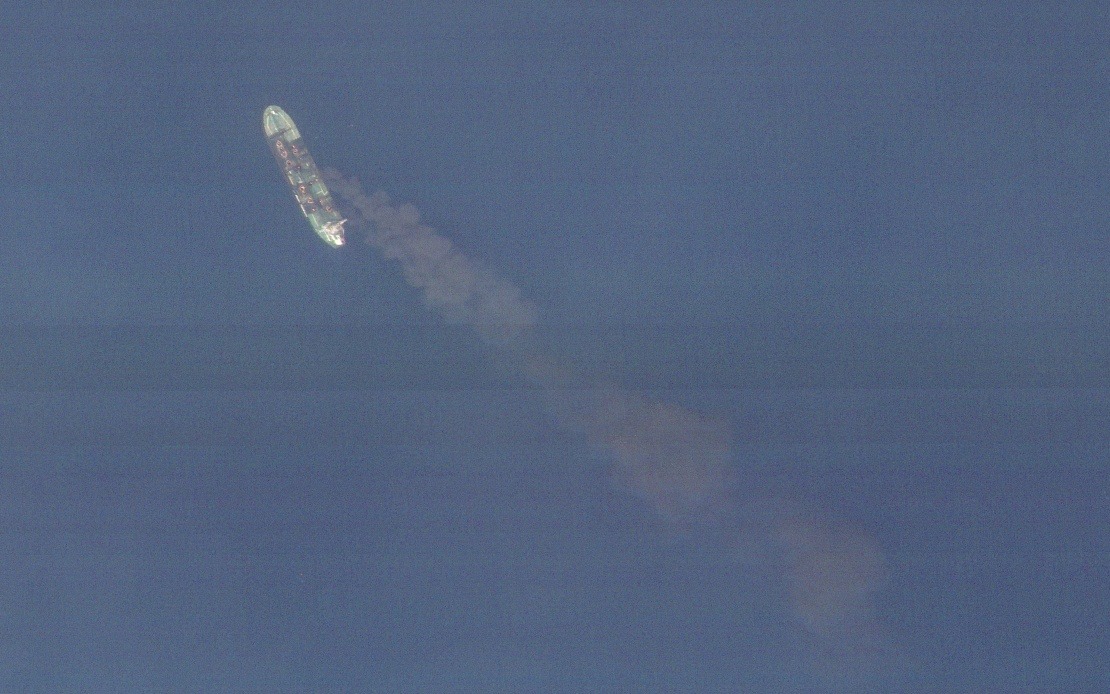
The Saudi-led military coalition operating in Yemen has declared its determination to shield commercial shipping in one of the world's most critical maritime chokepoints, the Bab al-Mandab Strait, in direct response to the Houthi movement's declaration of a shipping ban targeting Saudi vessels. Coalition spokesperson Turki Al-Malki issued the commitment via social media, emphasizing that the Joint Forces Command would deploy all requisite operational measures consistent with international maritime law to ensure safe passage for coalition-affiliated vessels transiting the strategically vital waterway.
The escalating tension centres on competing claims regarding port access and maritime freedom in the Red Sea, a transit route through which approximately 12 percent of global trade flows. The Houthis framed their maritime prohibition as proportional retaliation against what they characterised as a prolonged Saudi blockade of Yemen, invoking a "blockade for blockade" principle. This framing reflects the group's interpretation of the nearly twelve-year Saudi-led military intervention as imposing economic strangulation on Yemen's civilian population, a perspective echoing grievances voiced by humanitarian organisations monitoring the conflict.
Al-Malki's statement dismissing the Houthi ban as "fallacies and escalation" included statistical claims aimed at undermining Houthi assertions of a genuine blockade. According to the coalition spokesperson, over three hundred commercial vessels had accessed ports under Houthi control during the first half of the year, ferrying essential commodities including foodstuffs and petroleum products. This counterfactual presentation suggests the coalition views the maritime prohibition as primarily rhetorical rather than operationally constraining, though the announcement itself signals willingness to escalate counter-measures if the Houthis attempt enforcement.
The Saudi Foreign Ministry issued a parallel diplomatic statement refuting allegations of systematic blockade policies, instead contending that the kingdom has pursued humanitarian mitigation through development initiatives and financial assistance to Yemen. This rhetorical divergence between military and diplomatic responses reflects internal coalition coordination, with security officials emphasising operational readiness while diplomatic representatives attempt to reshape international perception of Saudi Arabia's role in the conflict.
The maritime ban announcement emerged in the immediate aftermath of an escalatory incident wherein Saudi-backed Yemeni government forces conducted a military strike against Sanaa International Airport specifically to intercept an Iranian-operated aircraft transporting a high-ranking Houthi delegation. The Houthis responded to this interference by launching coordinated missile and drone attacks toward Saudi territory, demonstrating the group's capacity to project military force across international borders and indicating the fragility of the existing ceasefire framework.
Yemen's conflict trajectory since late 2014 has fundamentally reshaped regional geopolitics and maritime security calculations throughout the Middle East and Indian Ocean basin. The Houthi seizure of Sanaa and northern Yemeni territories precipitated direct Saudi-led coalition military intervention beginning in 2015, transforming an internal political dispute into a protracted international crisis. The subsequent eight years of warfare have produced one of the world's worst humanitarian emergencies, with millions facing food insecurity, disrupted healthcare systems, and extensive infrastructure destruction.
The UN-brokered ceasefire agreement implemented in 2022 represented a tentative diplomatic breakthrough, yet successive provocations have repeatedly threatened its sustainability. Each side has accused the other of violation, and political disputes regarding port revenues, military force composition, and territorial administration have prevented permanent conflict resolution. The current maritime dispute represents yet another fault line through which broader political grievances manifest in operational military posturing.
For Malaysian and broader Southeast Asian commercial interests, this escalation carries immediate practical implications. Malaysian shipping companies and logistics operators maintaining trade connections with Middle Eastern and East African markets necessarily transit these contested waters, exposing themselves to potential disruption should the Houthis implement enforcement mechanisms or coalition counter-measures intensify. Regional ports including those in Malaysia have previously absorbed traffic diversion when Red Sea conditions deteriorate, creating logistical and financial cascades throughout Southeast Asia's supply chain architecture.
The underlying dynamic demonstrates how unresolved political conflicts become instantiated in maritime claims and counter-claims that ultimately impose costs on global commerce. The Houthis, lacking conventional state capacity, have employed maritime interdiction and drone strikes as asymmetric tools for projecting regional influence and demanding international attention to their political grievances. Meanwhile, the Saudi-led coalition possesses overwhelming conventional military superiority but faces persistent difficulties in translating military dominance into permanent political outcomes.
The fragile status quo that has prevailed since 2022 appears increasingly unstable. Rather than leading toward comprehensive settlement, the ceasefire has effectively frozen the conflict while both parties maintain military readiness and pursue incremental escalation. The maritime ban represents a calculated test of coalition resolve and international appetite for expanded confrontation, potentially signalling Houthi preparedness to abandon diplomatic constraints if political concessions remain unavailable.
These developments underscore the interconnection between Middle Eastern regional politics and global maritime security architecture. Resolution of the Yemen conflict requires political accommodation addressing Houthi political aspirations and legitimate grievances regarding resource distribution and governance participation. Military containment strategies, regardless of their tactical effectiveness, cannot generate durable political settlements absent corresponding diplomatic progress addressing underlying disputes.

