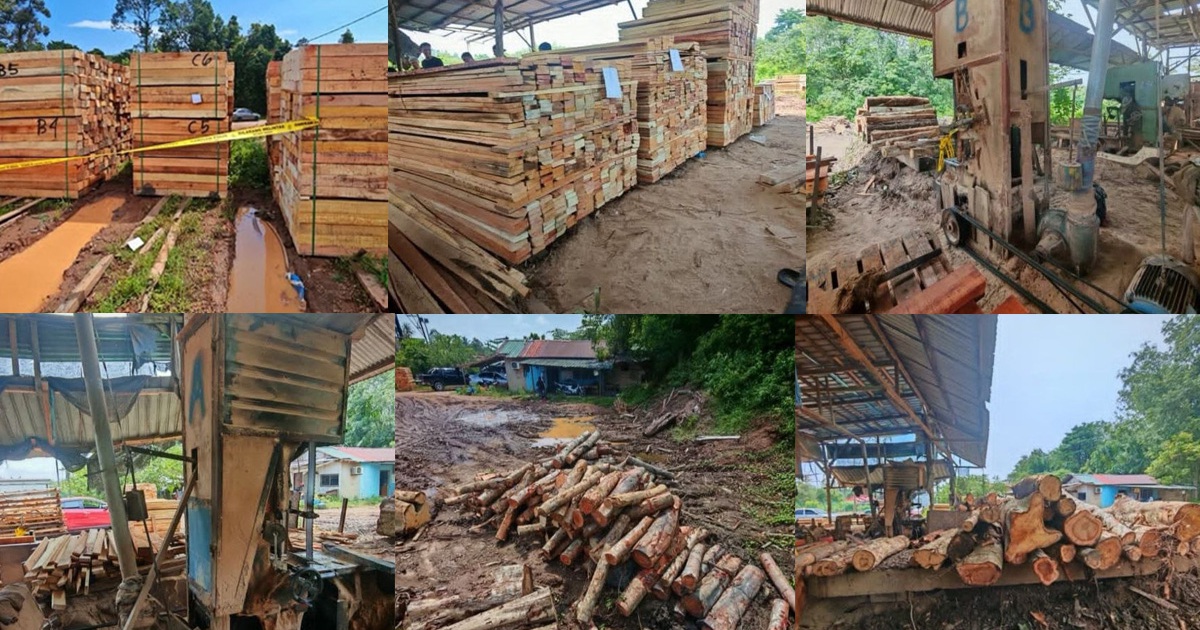
An enforcement operation in Kelantan has resulted in the arrest of four individuals and the seizure of substantial quantities of timber and heavy machinery valued at approximately RM600,000. The raid targeted an unlicensed sawmill operation in the Kampung Bukit Kechik area of Tanah Merah, marking the latest in a series of crackdowns against illegal timber processing in the state. The arrested individuals include the facility's operator alongside three workers allegedly engaged in the unauthorized milling and processing of timber without the requisite licensing from relevant authorities.
The enforcement action reflects intensified scrutiny on the timber industry across Malaysia's northern states, where unlicensed operations continue to undermine regulated suppliers and pose challenges to sustainable forest management objectives. Kelantan has emerged as a focal point for such activities, given the state's significant forest reserves and the commercial incentive for informal operators to circumvent licensing requirements and associated compliance costs. The seizure demonstrates the scale at which illegal timber processing can operate within state boundaries, with the seized equipment and raw materials indicating a substantial ongoing operation rather than small-scale activity.
Authorization to operate a sawmill in Malaysia requires multiple permits and approvals from state forestry departments, the Timber Industry Board, and local municipal authorities. Operators must comply with environmental standards, maintain safety protocols for their workforce, and ensure that all timber sourced comes from legally harvested and documented supplies. The operational burden, while designed to protect forests and workers, creates financial barriers that informal operators seek to bypass. Unlicensed facilities typically operate with minimal overhead, no regulatory oversight, and often source timber through informal channels that may involve illegally felled trees.
The implications of such operations extend beyond administrative violations. Unlicensed sawmills contribute to forest degradation by operating outside sustainable harvesting frameworks that regulate tree species, sizes, and regeneration intervals. They create unfair competition for licensed operators who invest substantially in compliance infrastructure, permits, and sustainable forestry practices. From a workers' perspective, unlicensed facilities typically lack safety mechanisms, proper working conditions, and employment protections that regulated premises must provide, exposing labourers to occupational hazards without recourse or insurance coverage.
Kelantan's forests represent critical ecosystems and economic resources for the state and region. The state holds extensive timber reserves, and legitimate timber processing constitutes a significant component of its economic base. However, the parallel economy of unlicensed operations distorts market prices, undermines the viability of compliant businesses, and creates incentives for further illegal activity. By removing stocks from unlicensed processors, enforcement operations attempt to tip the economic calculation back toward licensed operators and legitimate supply chains.
The value of seized assets provides insight into the scale of operations that enforcement agencies are targeting. RM600,000 in timber and machinery represents substantial capital investment by the operator and indicates the facility was processing considerable volumes. This scale suggests the operation may have been supplying timber to secondary processors, construction companies, or other end-users across Kelantan and potentially neighbouring states. Tracing the supply chain could reveal downstream links to larger operations and identify customers knowingly or unknowingly purchasing from illegal sources.
For Malaysian authorities, addressing unlicensed timber operations requires multi-pronged approaches. Enforcement raids generate headlines and demonstrate regulatory action, but sustained compliance depends on creating conditions where legal operation becomes economically competitive with illegal alternatives. This involves streamlining licensing procedures, reducing permit costs for small operators, and implementing technology-enabled tracking systems that allow authorities to monitor timber movement from forest to end-user. Regional cooperation among Peninsular Malaysian states also strengthens enforcement capability, as timber can be moved across state boundaries to obscure origins.
The international dimension of timber compliance has also grown significant. Malaysia's timber industry faces scrutiny from overseas buyers increasingly concerned about sustainability and legality. European and North American importers increasingly verify supply chain documentation to ensure compliance with their own environmental regulations. Unlicensed operations undermine Malaysia's reputation as a responsible timber producer and create obstacles for legitimate exporters seeking to access premium markets that demand verified legal sourcing. Reducing the prevalence of illegal processing operations therefore supports the broader export competitiveness of the Malaysian timber sector.
The Tanah Merah operation follows enforcement patterns observed throughout Kelantan over recent years. State authorities, working with federal enforcement agencies, have periodically conducted raids on suspected unlicensed facilities. However, the continuing incidence of such operations suggests that enforcement alone, without complementary economic and regulatory reforms, produces episodic disruption rather than systematic elimination of the problem. As long as economic incentives favour illegal operation, and as long as enforcement capacity remains stretched across vast forest areas, unlicensed facilities will continue to emerge.
Looking forward, the circumstances surrounding this case will likely reveal details about the operator's sourcing networks, customer base, and operational methods. Authorities may examine financial records, timber provenance documentation, and communications to determine whether the facility operated in isolation or formed part of a coordinated supply network. Such intelligence can inform subsequent enforcement priorities and identify related operations requiring investigation. For licensed timber operators and government forestry bodies, the raid provides reinforcement that enforcement efforts continue and that illegal competition faces periodic disruption, even if elimination remains elusive.

