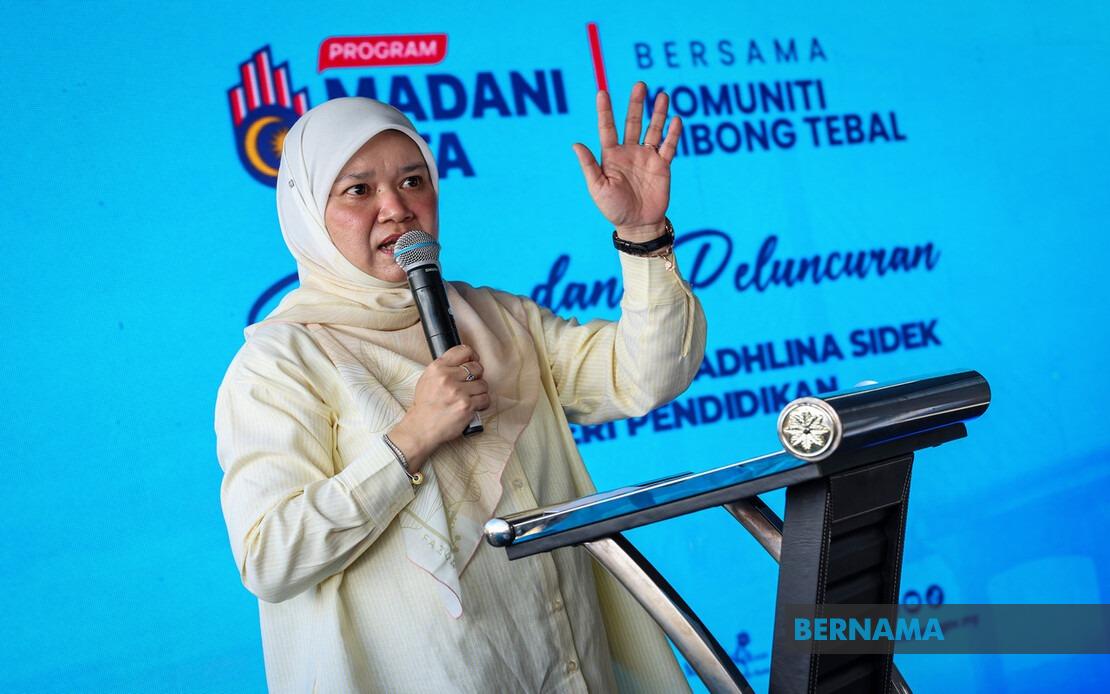
Education Minister Fadhlina Sidek has championed the NADI Mahir school uniform initiative as a practical solution addressing a persistent financial hardship faced by Malaysian families during the school year. The programme, which enables parents to purchase uniforms through flexible instalment payments rather than lump-sum purchases, represents a targeted intervention in one of the most predictable yet burdensome annual expenses for households with school-age children, particularly in lower and middle-income brackets where back-to-school costs create genuine budgeting challenges.
The scheme operates on a dual-benefit model that extends beyond simple affordability. While parents gain breathing room in their household finances through staggered payments, the initiative simultaneously generates sustainable income streams for local entrepreneurs. This approach reflects a broader policy philosophy of using government programmes not merely to distribute assistance but to catalyse grassroots economic activity. By structuring the uniform supply chain around trained local producers rather than centralised manufacturers, the initiative keeps money circulating within communities and builds local capacity.
At the core of this ecosystem are 120 alumni entrepreneurs from the NADI Mahir Jahit skills training programme. These individuals, predominantly women based on traditional sewing demographics, underwent comprehensive vocational training through NADI's Pintar Services platform before establishing themselves as uniform suppliers. Their transition from trainees to business operators demonstrates how skills development programmes can create tangible pathways out of unemployment or underemployment, particularly for segments of the population traditionally sidelined from formal economic participation.
Fadhlina, who represents Nibong Tebal as its Member of Parliament, framed the initiative during remarks made while officiating the MADANI Kita programme in her constituency. Her emphasis on the local relevance of national schemes underscores how federal policies are being operationalised at grassroots level in various communities. The presence of officials from the Ministry of Communications and the Malaysian Communications and Multimedia Commission at the event signals coordination across different government arms, though the connection between communications infrastructure and school uniforms highlights how diverse initiatives fall under broader umbrella programmes.
The NADI ecosystem extends significantly beyond uniform supply. The NADI Tuisyen Rakyat programme has attracted over 42,000 students nationwide, providing affordable supplementary tutoring that addresses educational inequality. In Nibong Tebal specifically, more than 73 students participate in this tutoring scheme, with 65 programme participants achieving excellence in the 2025 Sijil Pelajaran Malaysia examination. This success rate demonstrates that removing financial barriers to educational support can meaningfully improve academic outcomes, a particularly important finding for policymakers evaluating the return on investment in such programmes.
Youth engagement represents another significant dimension of NADI's reach. The NADI E-Sukan initiative leverages esports as an unexpected vehicle for developing soft skills among young people, combining entertainment value with confidence-building and teamwork development. Nibong Tebal's achievements in esports competitions, including winning the national NADI E-Sukan MADANI Mobile Legends title and placing as runners-up at state level, demonstrate that competitive gaming has become a legitimate platform for youth recognition and development in Malaysia's evolving digital economy.
The initiative's breadth encompasses emerging technological competencies crucial for Malaysia's transition toward high-skill employment. The 1 NADI 1 Prompt Engineer initiative, attracting 11 participants in Nibong Tebal alone, targets artificial intelligence and computational literacy from a young age. This forward-looking component recognises that tomorrow's economic opportunities require exposure to contemporary technologies, and positioning such access through community-based programmes rather than expensive private tuition addresses equity concerns.
The interconnectedness of these various NADI streams—from vocational skills training to academic support, from esports engagement to AI literacy—suggests a comprehensive community development philosophy rather than isolated welfare interventions. By clustering diverse programmes under a single institutional umbrella, NADI creates synergies where participants can potentially access multiple benefits and where programme success in one area can generate momentum for participation in others.
For Malaysian policymakers and educators, the school uniform initiative offers a case study in addressing persistent cost barriers that contribute to educational inequality and dropout rates. The affordability question extends beyond uniforms to textbooks, transportation, and other mandatory school expenses, yet uniform costs remain psychologically significant because they mark visible status differences among students. Making uniforms accessible through instalment plans thus addresses both practical financial constraints and the dignity concerns that can influence school attendance.
The entrepreneur empowerment dimension deserves particular attention in Malaysia's post-pandemic economic recovery context. The 120 NADI Mahir Jahit graduates represent instances of successful skills-to-entrepreneurship conversion, a pipeline Malaysia has struggled to establish consistently. Understanding the support structures, market guarantees, and ongoing guidance that enabled these transitions could inform scaling efforts across other vocational training programmes.
Regionally, Malaysia's approach to integrating skills development, entrepreneurship support, and targeted subsidies through unified programmes offers comparative lessons for other Southeast Asian nations grappling with similar challenges of educational access and youth employment. The scheme demonstrates how initial government investment in vocational training can evolve into sustainable supply chains that benefit multiple stakeholders—students, families, entrepreneurs, and the broader economy.
Looking forward, the critical measure of success will be whether the NADI Mahir initiative expands capacity to meet growing demand or remains constrained by the number of trained seamstresses available. Scaling the programme effectively would require continuous vocational training pipelines and potentially mechanisation to increase per-entrepreneur productivity while maintaining the local employment benefits that justify the initiative's existence.

