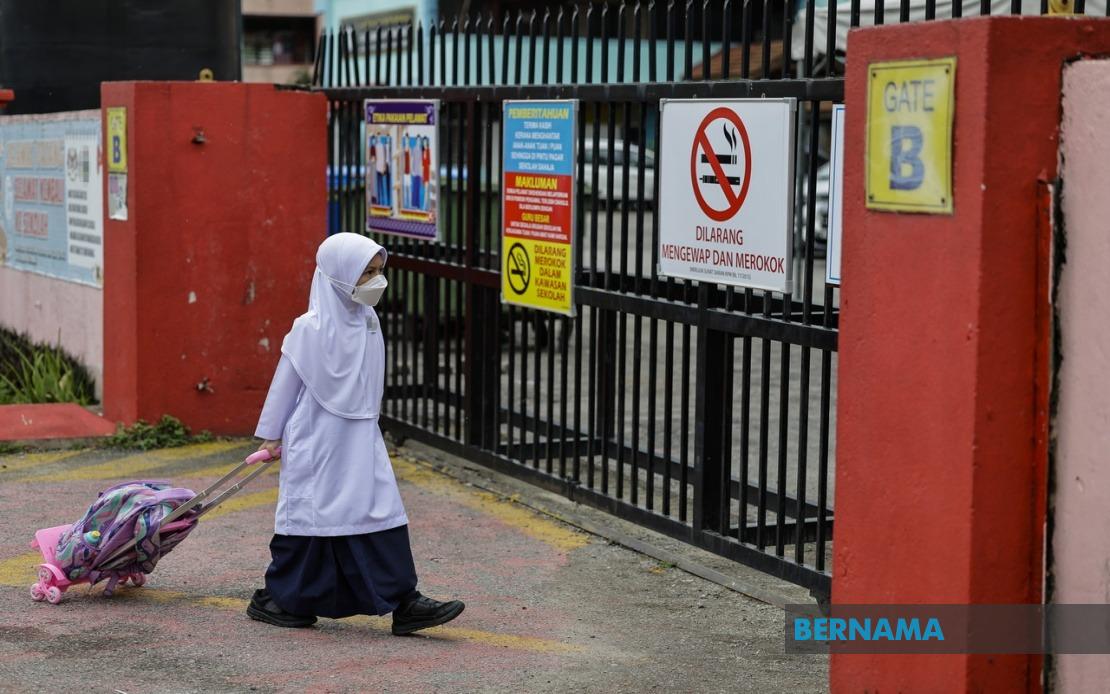
Deputy Education Minister Wong Kah Woh has clarified that Malaysian school leaders possess the authority to shut down their institutions whenever Air Pollutant Index measurements climb above 200, provided they consult with guidance from their respective State Education Departments and District Education Offices. This announcement, made in Taiping following a memorandum signing between Toyo Tyre Malaysia and UniMAP, represents the ministry's effort to establish clear protocols for managing educational operations during periods of severe air quality degradation.
The Ministry of Education has maintained a series of formal circulars addressing haze management protocols spanning several years, with earlier iterations released in 2016, 2019, and most recently in 2023. These documents form the regulatory backbone guiding how schools across the nation should respond to fluctuating air quality conditions. Rather than imposing a rigid one-size-fits-all approach, the framework delegates substantial responsibility to individual school administrators, recognising that local environmental conditions and community circumstances vary considerably across Malaysia's diverse geography.
Wong emphasised that education authorities will engage in continuous surveillance of atmospheric conditions and API readings to ensure timely decision-making. However, the responsibility for determining whether school operations should be modified rests fundamentally with principals and headmasters, who are expected to exercise judgment informed by their understanding of local conditions, the vulnerability profile of their student population, and guidance received from educational officials. This distributed decision-making model reflects acknowledgment that contextual factors matter significantly when determining appropriate responses to air quality crises.
When API readings reach the 100 threshold, schools must implement immediate restrictions on outdoor activities and physical gatherings of any scale. Simultaneously, outdoor sporting competitions and recreational events scheduled to take place during such periods should be postponed rather than conducted in compromised air quality. These intermediate measures serve as graduated responses, allowing institutions to maintain normal operations while mitigating the most significant health exposures. This tiered approach balances the educational imperative to keep schools functioning with the paramount concern for student and staff wellbeing during environmental stress.
The announcement arrives against a backdrop of recent reports indicating that several regions nationwide experienced unhealthy API measurements, prompting heightened attention to the adequacy of existing protocols. The timing underscores a persistent challenge for Malaysian education authorities, as haze events—whether from localised sources or transboundary pollution—occur with increasing frequency, necessitating robust institutional responses. Schools serve not merely as educational institutions but as critical anchors of social continuity, making decisions about closure consequential for families, working parents, and broader community rhythms.
For Malaysian parents and educators, understanding these protocols carries practical significance. The discretionary nature of closure decisions means that consistency may vary between schools and districts, depending on how principals interpret guidance and assess local conditions. This flexibility, while appropriate given geographical variations, also creates a landscape where advocacy and communication between school leadership and parent bodies become essential for transparency and mutual understanding during air quality emergencies.
The health dimensions of this policy cannot be overstated. Sustained exposure to poor air quality during formative years carries documented implications for respiratory development and cognitive function in children. By establishing protocols that permit protective closures, the ministry acknowledges mounting scientific consensus regarding pollution's neurodevelopmental impacts, particularly among younger learners whose physiological defences remain incomplete. The willingness to suspend normal operations represents a significant acknowledgment of environmental health as integral to educational outcomes.
Regionally, Malaysia's approach reflects broader Southeast Asian grappling with transboundary haze and urbanisation-driven air quality degradation. Indonesia, Singapore, and Thailand have each developed distinct institutional responses to similar challenges, and Malaysia's framework sits within this regional conversation about balancing economic activity with environmental protection and public health. The explicit delegation of authority to school principals mirrors approaches adopted elsewhere in the region, acknowledging that centralised bureaucracies cannot respond with the necessary speed and local knowledge that environmental emergencies demand.
Looking forward, the effectiveness of these guidelines will depend substantially on consistent implementation and regular communication. Schools must ensure that staff understand triggers for outdoor activity suspension and closure decisions; parents require clear information about how decisions will be communicated; and district education offices must provide genuine support rather than bureaucratic pressure that discourages protective action. The circulars themselves, while providing regulatory foundation, succeed only when translated into institutional practices and cultural understanding across Malaysia's educational ecosystem.

