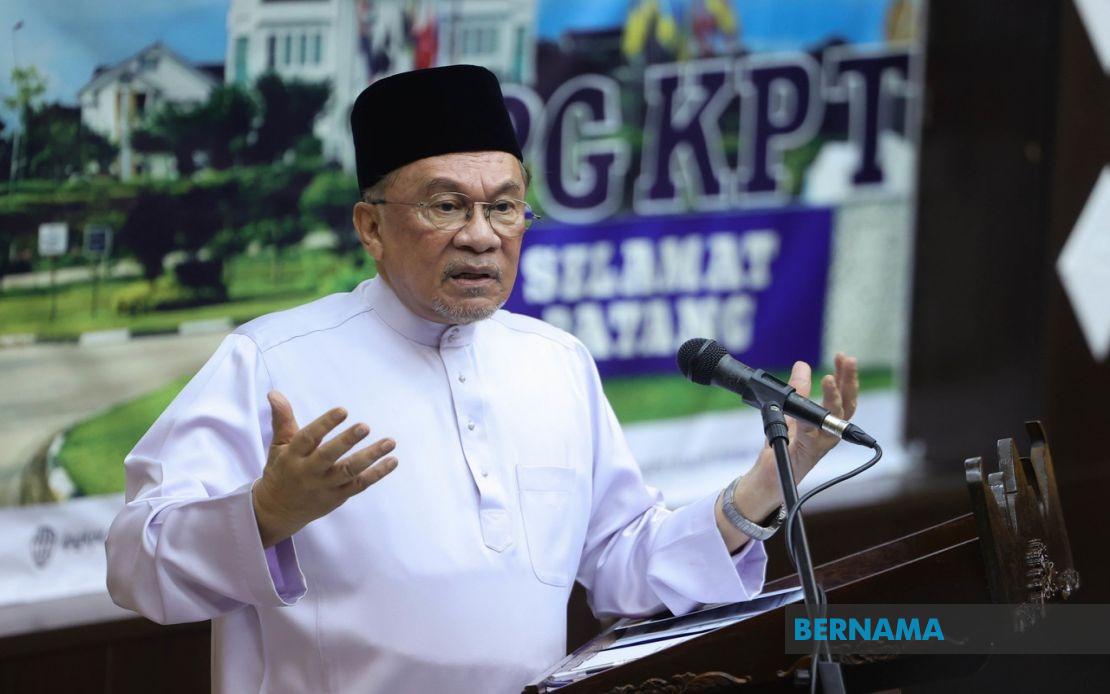
Prime Minister Datuk Seri Anwar Ibrahim has directed a stark warning at Malaysia's educational institutions: the concealment of bullying incidents to preserve school reputation is unacceptable and undermines the safety of vulnerable students. Speaking in Nilai on July 17, the Prime Minister stressed that schools must prioritise transparency and swift action in handling such cases, even if doing so might temporarily damage public perception of the institution.
Anwar's remarks come against a backdrop of persistent concerns about bullying in Malaysian schools, a phenomenon that continues to affect student wellbeing despite increased awareness. The Prime Minister acknowledged that some educational leaders may view bullying as a trivial matter with negligible consequences, yet he emphasised emphatically that the trauma inflicted on victims runs far deeper than such dismissive attitudes suggest. His intervention signals a top-level commitment to reshaping institutional culture around bullying and accountability.
The Prime Minister illustrated his position with a practical example that frames the issue clearly for school administrators. If a school with 1,000 students identifies and reports two bullying cases, Anwar argued, the headteacher or principal should not face criticism for doing so. The act of reporting reflects responsible stewardship and does not constitute failure. However, he continued, the same leader deserves serious scrutiny if bullying cases are discovered yet concealed through institutional silence, as such concealment represents a fundamental breach of duty to student welfare.
Education Minister Fadhlina Sidek's presence at the event underscored the government's alignment on this issue, suggesting that policy frameworks may soon be tightened to enforce greater transparency and accountability. The participation of the education portfolio holder indicates that Anwar's remarks are not merely rhetorical but reflect a coordinated approach across the executive branch. This alignment matters significantly for schools seeking clearer guidance on reporting obligations and protection mechanisms.
Beyond the immediate issue of incident reporting, Anwar widened his analysis to address what he perceives as the root cause of bullying: a failure to adequately instil character and moral values among students. He observed that despite expanded access to religious education compared to previous generations, bullying persists—a paradox that suggests educational content and institutional behaviour are misaligned. This diagnostic approach reframes bullying not merely as an interpersonal problem but as symptomatic of broader shortcomings in values education delivery.
The Prime Minister's critique extends to the fundamental purpose of education itself. He challenged the prevailing emphasis on academic excellence and technical skill development, arguing that these represent an incomplete educational mission. A student may graduate with outstanding grades or advanced qualifications, yet if that graduate lacks understanding of human dignity and fails to demonstrate respect for others, Anwar contends, the entire educational enterprise has failed in its most essential function. This philosophical intervention carries implications for how Malaysian schools structure curricula and assess student development.
Anwar's comments also implicitly critique a prevailing institutional culture in which reputation management sometimes supersedes student safety. The reluctance to report bullying stems partly from the fear that such reports will tarnish a school's standing in competitive educational markets, particularly among fee-paying or aspirational families. By publicly rejecting this logic, Anwar attempts to reorder institutional priorities and create political cover for administrators willing to report problems. This reordering could gradually shift how schools perceive the reputational cost of transparency versus concealment.
The Prime Minister acknowledged that Malaysia's teaching profession operates at a notably high standard and expressed confidence that performance will continue improving. This recognition serves a dual purpose: it affirms the contributions of educators while establishing that excellence in teaching extends beyond examination results to encompass character formation and safeguarding responsibilities. The statement suggests that raising teaching quality further requires integrating values education and student protection more thoroughly into professional standards and training.
For Malaysian parents and students, Anwar's intervention carries important reassurance that bullying cases will increasingly be handled through transparent reporting channels rather than buried within institutional hierarchies. However, the effectiveness of his directives ultimately depends on translating rhetorical commitment into enforceable policy, robust reporting mechanisms, and meaningful consequences for schools that continue to conceal incidents. The coming months will reveal whether this top-level statement catalyses meaningful institutional reform or remains largely symbolic.
The broader Southeast Asian context matters here as well. Bullying in schools represents a regional challenge affecting students from Indonesia to Thailand to Singapore, often exacerbated by hierarchical institutional cultures resistant to transparency. Malaysia's apparent willingness to confront this problem at the highest political level could influence educational approaches across the region, particularly if coupled with concrete policy implementation and monitoring frameworks that demonstrably reduce harmful incidents.

