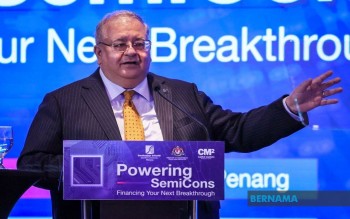
The Securities Commission Malaysia (SC) has signalled its preparedness to assume regulatory oversight of Lembaga Tabung Haji's (TH) fund management and investment operations, provided the government formally instructs the regulator to do so. SC chairman Datuk Mohammad Faiz Azmi made the statement in George Town on August 19, emphasising that any expansion of the commission's mandate remains subject to government approval rather than the regulator's independent decision.
The proposal to grant the SC supervisory authority over TH's investment portfolio emerged from recommendations contained in the Royal Commission of Inquiry report examining the pilgrimage fund's governance and operations. The RCI's investigation was undertaken amid concerns about how TH managed its substantial financial resources and the need to strengthen institutional oversight mechanisms to prevent future problems.
Currently, a multi-agency task force comprising the SC, Bank Negara Malaysia (BNM), and TH itself is reviewing the various proposals advanced by the RCI. This collaborative arrangement reflects the complexity of the regulatory landscape surrounding TH, which straddles both financial and religious administrative domains in Malaysia. The task force's role involves assessing which recommendations are operationally feasible and would genuinely enhance TH's governance framework.
Mohammad Faiz Azmi clarified that the SC's position is fundamentally consultative at this stage. The commission stands ready to implement any recommendations that the government deems appropriate and that emerge from the ongoing task force discussions as reasonable and necessary. However, he stressed that the ultimate authority to expand the SC's regulatory remit belongs exclusively to the government, not to the securities regulator itself.
The proposal carries particular significance given the sheer magnitude of TH's investment portfolio, which spans diverse asset classes and geographical markets. An institution of TH's size and importance to Malaysian Muslims warrants robust regulatory oversight to safeguard the accumulated savings of hundreds of thousands of pilgrims. The SC's potential role would introduce institutional expertise in capital markets supervision and investor protection protocols that could complement existing governance arrangements.
TH has been under intensified scrutiny in recent years following revelations about losses in its investment operations and questions about management practices. The pilgrimage fund's troubles prompted the establishment of the RCI and broader discussions about how Malaysia's regulatory architecture could be strengthened to protect the interests of TH account holders. These individuals represent a vulnerable constituency placing their trust in an institution responsible for accumulating savings intended for their religious pilgrimage to Mecca.
Minister in the Prime Minister's Department (Religious Affairs) Dr Zulkifli Hasan had previously indicated that integrating SC oversight into TH's regulatory framework formed part of the government's broader strategy to fortify institutional checks and balances. This represents a notable development in how Malaysia approaches regulating religiously significant financial institutions, recognising that robust governance mechanisms benefit both account holders and the institution's long-term sustainability.
The involvement of Bank Negara Malaysia in the task force reflects another dimension of this regulatory puzzle. As Malaysia's financial system regulator, BNM has complementary expertise and interests in ensuring that large financial intermediaries operate with appropriate controls and risk management. The tri-agency collaboration signals a whole-of-system approach to addressing the RCI's findings.
For Malaysian investors and pilgrims who depend on TH, the potential expansion of SC oversight represents a mechanism to inject independent professional scrutiny into the fund's operations. The SC brings specialised knowledge of capital markets, investment products, and fiduciary standards that could enhance transparency and accountability. This regulatory enhancement could provide greater confidence to TH's account holders that their savings are being managed according to internationally recognised standards of investor protection.
The timeline for government decision-making on whether to formally assign regulatory responsibilities to the SC remains unclear. However, the fact that deliberations are actively proceeding within the task force suggests that a resolution may emerge within a reasonable timeframe. The government's ultimate decision will shape how TH operates going forward and may influence how other religiously affiliated financial institutions in Malaysia structure their governance frameworks.
From a regional perspective, Malaysia's approach to regulating a large Islamic financial institution operated for religious purposes carries implications for other Southeast Asian countries managing similar institutions. The integration of securities regulation with religious finance represents an evolving frontier in how contemporary regulatory systems accommodate institutions serving communities with religious and cultural significance alongside conventional financial objectives.
The SC's readiness to accept expanded responsibilities underscores confidence in the regulator's institutional capacity and adaptability. The commission has demonstrated sophistication in addressing complex regulatory challenges and maintaining international standards of financial oversight. Its potential involvement with TH would represent an extension of this expertise into an institution with unique characteristics blending financial, religious, and social dimensions that require sensitive and knowledgeable regulatory engagement.

