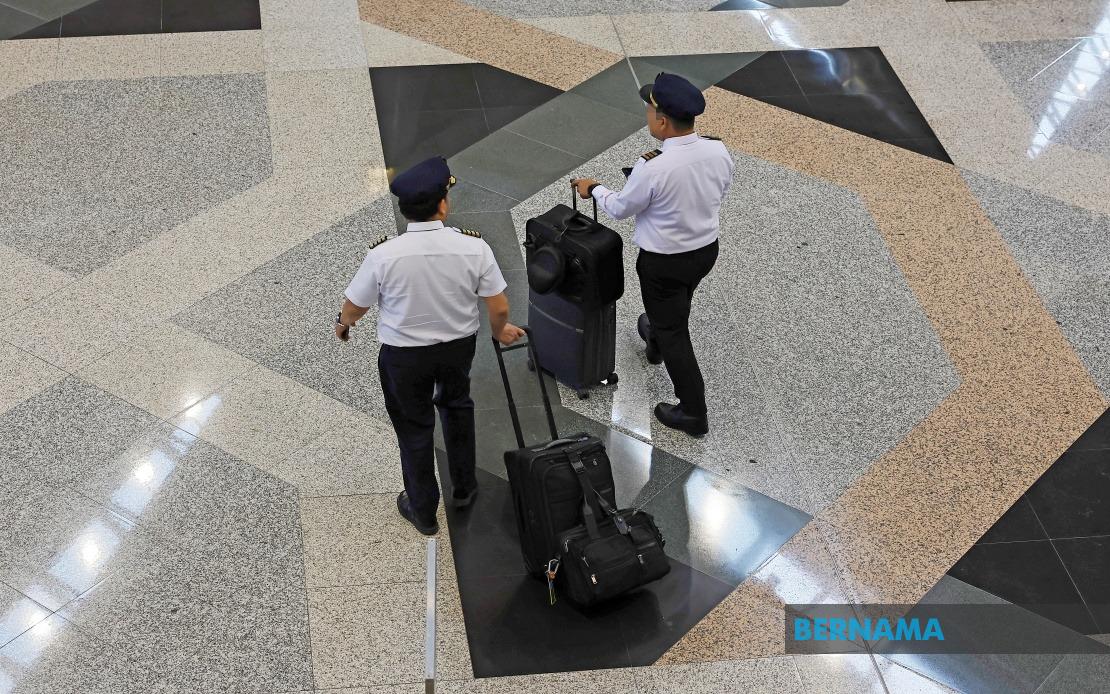
Concerns about Malaysia's aviation security have surfaced following the detention of a 39-year-old Malaysian pilot at Jakarta's Soekarno-Hatta International Airport, where authorities say he attempted to smuggle 25 kilogrammes of drugs through Terminal 3. The incident has prompted Tan Sri Lee Lam Thye, chairman of the Alliance For A Safe Community, to call for an urgent and thorough examination of how security procedures operate at Kuala Lumpur International Airport, particularly regarding the detection capabilities and enforcement mechanisms currently in place.
While acknowledging that the arrested pilot remains presumed innocent pending legal proceedings, Lee has highlighted a troubling gap in Malaysia's airport security framework. The central question driving his intervention is straightforward yet uncomfortable: if a pilot successfully evaded detection of such a substantial quantity of narcotics at KLIA before boarding, what does this reveal about the effectiveness of the screening systems meant to protect the travelling public and the integrity of Malaysian aviation? This query goes beyond a single incident to address systemic vulnerabilities that could have broader implications for the country's standing as a safe travel destination.
The timing of this incident carries particular weight for Malaysia's aviation sector. KLIA serves as a critical hub for regional and international passenger traffic, with its reputation for security directly affecting airline operations, passenger confidence, and the country's competitive standing against other Southeast Asian aviation hubs. Any perception that drugs or contraband can pass through the airport's security checks without detection poses a reputational risk that extends well beyond the immediate criminal case. Airlines, freight operators, and passengers make routing decisions based partly on their assessment of an airport's security effectiveness.
Lee's specific recommendations target multiple stakeholders within Malaysia's security infrastructure. He has explicitly called upon enforcement agencies, airport security operators, the Civil Aviation Authority, and the Royal Malaysia Police to work collaboratively in reviewing existing protocols. Importantly, he has singled out the screening procedures applicable to airport personnel and flight crew—a category that often benefits from expedited or less stringent security checks due to their professional status. His insistence that no one should be exempt from rigorous screening represents a fundamental principle that security systems must remain impartial and comprehensive regardless of an individual's occupation or clearance level.
The question of screening consistency is particularly relevant in Malaysian airports where high passenger volumes and competing pressures to maintain efficient operations can sometimes create tensions with security thoroughness. Modern airport security depends on the proper functioning of both technological systems—such as X-ray machines, explosive detection equipment, and advanced scanning devices—and the training, attentiveness, and protocols followed by security personnel. A breach at either level can compromise the entire system's effectiveness. Lee's intervention suggests that a comprehensive review should examine not only equipment capability but also standard operating procedures, training adequacy, and enforcement consistency across different shifts and terminals.
The incident also raises questions about inter-agency coordination within Malaysia's aviation security apparatus. KLIA operates under multiple regulatory frameworks involving customs, immigration, narcotics enforcement, and civil aviation authorities. Gaps in communication or coordination between these bodies could create opportunities for individuals with prohibited materials to slip through undetected. Lee's call for a review implicitly acknowledges that security is only as strong as its weakest link, and that coordination failures can be as dangerous as equipment failures.
From a regional perspective, this incident occurs within a broader context of drug trafficking challenges across Southeast Asia. The International Narcotics Control Board and various regional law enforcement bodies have documented increased attempts by traffickers to use air routes and airport personnel as conduits for moving drugs throughout the region. Malaysia, as a significant aviation hub connecting East Asia, South Asia, and the Middle East, faces particular vulnerability to these trafficking networks. If screening gaps exist at KLIA, they could be systematically exploited by organised criminal groups operating across multiple countries.
The issue of aviation personnel involvement in smuggling also warrants careful examination. Pilots, cabin crew, ground handlers, and other airport workers possess inherent advantages in evading detection due to their familiarity with airport operations, their access to restricted areas, and sometimes their relatively privileged treatment by security staff. International aviation authorities have increasingly flagged insider threats as a major vulnerability in airport security systems. Malaysia would benefit from reviewing its personnel vetting procedures, ongoing monitoring systems for airport workers, and mechanisms for reporting suspicious behaviour without fear of retaliation.
Lee's emphasis on maintaining public confidence in Malaysia's aviation security system strikes at the heart of why this issue matters beyond the narrow confines of criminal justice. Travellers, particularly international passengers and business people, make conscious choices about which airports and airlines to use based partly on their perception of safety and security. Negative headlines about drug smuggling through KLIA could influence routing decisions, particularly for connecting passengers who have alternatives. For Malaysia's aspirations to remain a preferred regional aviation hub, maintaining and demonstrating robust security is not optional.
The broader implication of this case is that Malaysia's security agencies must move from a reactive posture—responding to incidents after they occur—to a more proactive approach involving regular auditing, system vulnerability assessments, and continuous improvement protocols. Best practices in international aviation security increasingly emphasise transparency about security reviews and a willingness to acknowledge and address weaknesses when identified. Countries that demonstrate this approach to security governance tend to maintain higher levels of public and industry confidence than those that treat security failures as isolated incidents requiring minimal institutional response.
As the relevant authorities consider their response to Lee's call for review, they will need to balance operational efficiency with security rigour. The review should examine whether current screening technology is adequate and properly maintained, whether staffing levels allow for thorough rather than cursory checks, and whether the procedural framework encourages security personnel to apply uniform standards rather than making ad hoc exceptions. Such a comprehensive examination could ultimately strengthen Malaysia's position as a secure aviation destination and prevent future incidents from compromising the country's international standing.

