The Sejahtera MADANI welfare initiative has reached a significant milestone in Perak, having channelled RM2.3 million in assistance to approximately 2,000 residents since its launch. The programme's success has prompted government officials to commit an additional RM3 million for expanded implementation, signalling growing confidence in the initiative's ability to deliver tangible benefits to vulnerable communities across the state.
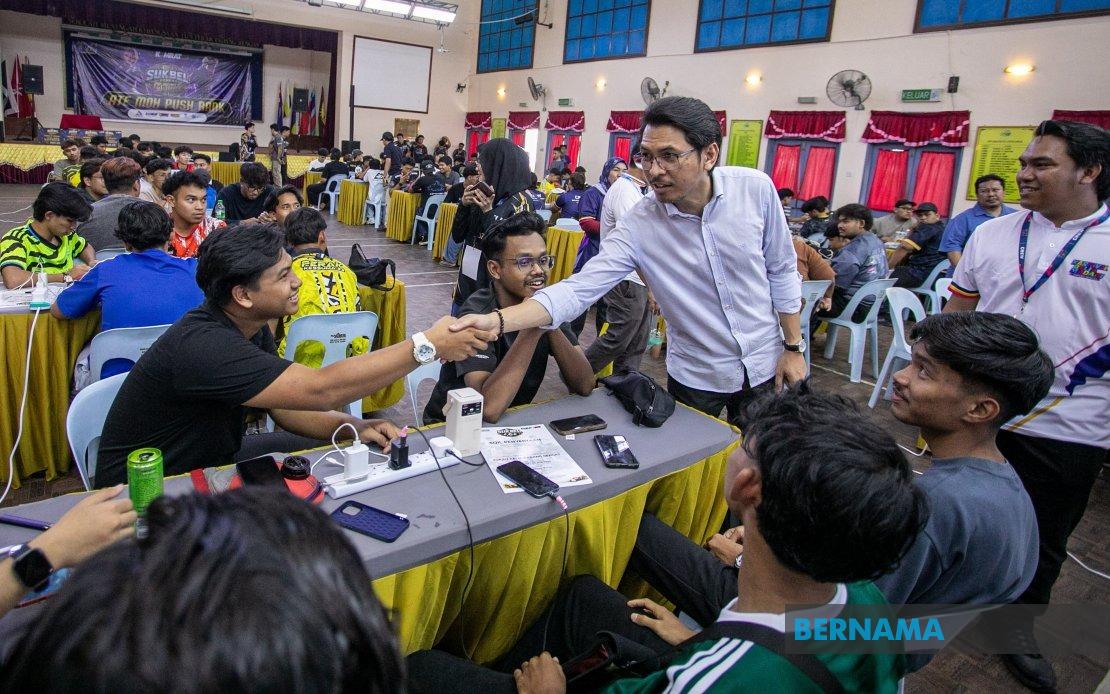
Muhammad Kamil Abdul Munim, political secretary to the Finance Minister, announced the additional funding during a roadshow event in Padang Rengas constituency, held at Millennium Hall in Lubok Merbau. The allocation marks the government's determination to broaden the initiative's reach beyond its initial targets, particularly focusing on segments of society that have historically struggled with economic mobility and educational advancement. The expansion represents a practical demonstration of the MADANI Government's stated commitment to ensuring welfare programmes generate meaningful, measurable improvements in living standards rather than serving merely as temporary relief measures.
The programme's scope extends well beyond simple cash transfers. Beneficiaries receive tailored support designed to address their specific circumstances and long-term prospects. Micro-entrepreneurs are provided with business equipment and tools calibrated to enhance operational efficiency and productivity, moving beyond subsistence-level activities toward genuine income generation. Students demonstrating exceptional academic performance in their Sijil Pelajaran Malaysia examinations receive laptops, removing technological barriers to their continued education and digital literacy development. This multi-layered approach acknowledges that sustainable poverty alleviation requires interventions targeting both immediate needs and future opportunity creation.
At the Padang Rengas roadshow, the initiative's practical impact became visible when thirteen high-achieving SPM students received laptops to support their tertiary education pursuits, while five small-scale entrepreneurs were equipped with business tools intended to accelerate their commercial ventures. These tangible distributions underscore the programme's shift from bureaucratic processes toward direct community engagement, where beneficiaries can immediately perceive government support's concrete manifestation in their circumstances.
Yet the government has acknowledged significant implementation challenges that threatened the initiative's credibility and effectiveness. Muhammad Kamil candidly addressed concerns about project failures and mismanagement, recognising that the original framework's emphasis on community autonomy—allowing local populations to determine project priorities—had produced uneven results and oversight gaps. This candour represents a noteworthy departure from typical government communications, which often minimise programme difficulties or attribute failures to external factors beyond institutional control.
The response involves substantially tightening supervisory mechanisms across all implementation stages. The government has committed to intensified monitoring protocols designed to detect irregularities, prevent fraudulent claims, and eliminate resource leakages that characterise poorly managed welfare schemes. This supervisory pivot acknowledges a fundamental challenge facing decentralised aid distribution: the tension between empowering communities to pursue self-identified priorities and maintaining accountability standards that satisfy public expectations regarding fund stewardship. Malaysian policymakers have historically struggled with this equilibrium, and the Sejahtera MADANI adjustment suggests a recalibration toward closer oversight, though officials maintain this will occur without dismantling community participation mechanisms.
For Malaysian readers, the initiative's trajectory carries broader implications regarding government capacity for adaptive management. The willingness to acknowledge implementation weaknesses and implement corrective measures—rather than defending original approaches through bureaucratic inertia—indicates institutional learning that could extend to other federal programmes. This pattern becomes particularly significant given Malaysia's diverse geographic and demographic conditions, where uniform policy implementation frequently encounters local friction and requires iterative refinement.
The Perak programme's expansion also reflects political calculations regarding state-level engagement. Perak, positioned geographically between Malaysia's economically dynamic northern corridor and the central federal territory, contains constituencies where government support programmes exercise measurable electoral influence. The Padang Rengas roadshow's timing and visibility suggest the initiative functions simultaneously as welfare delivery mechanism and political communication vehicle, though these purposes need not be mutually exclusive if programme design prioritises genuine beneficiary benefit.
For Southeast Asian observers tracking Malaysia's social policy development, Sejahtera MADANI represents a middle-income democracy's attempt to construct welfare architecture that balances fiscal sustainability with poverty reduction objectives. The RM3 million additional allocation maintains relatively modest overall expenditure levels compared to other regional economies' social spending, yet the programme's emphasis on targeted delivery and productivity enhancement reflects efficiency-conscious thinking increasingly prevalent across the region as governments navigate constrained fiscal spaces and demographic transitions toward aging populations.
The programme's trajectory will merit continued monitoring, particularly regarding whether enhanced supervision mechanisms successfully eliminate implementation failures without creating bureaucratic bottlenecks that discourage beneficiary participation or delay assistance delivery. Malaysian experiences with other community-based programmes suggest that overly rigid oversight structures can paradoxically reduce programme effectiveness by introducing compliance costs that overwhelm anticipated benefits for marginal beneficiaries. Balancing these competing pressures represents the genuine test of whether Sejahtera MADANI's expansion becomes a model worthy of replication or another cautionary example of promising initiatives compromised through implementation challenges.

