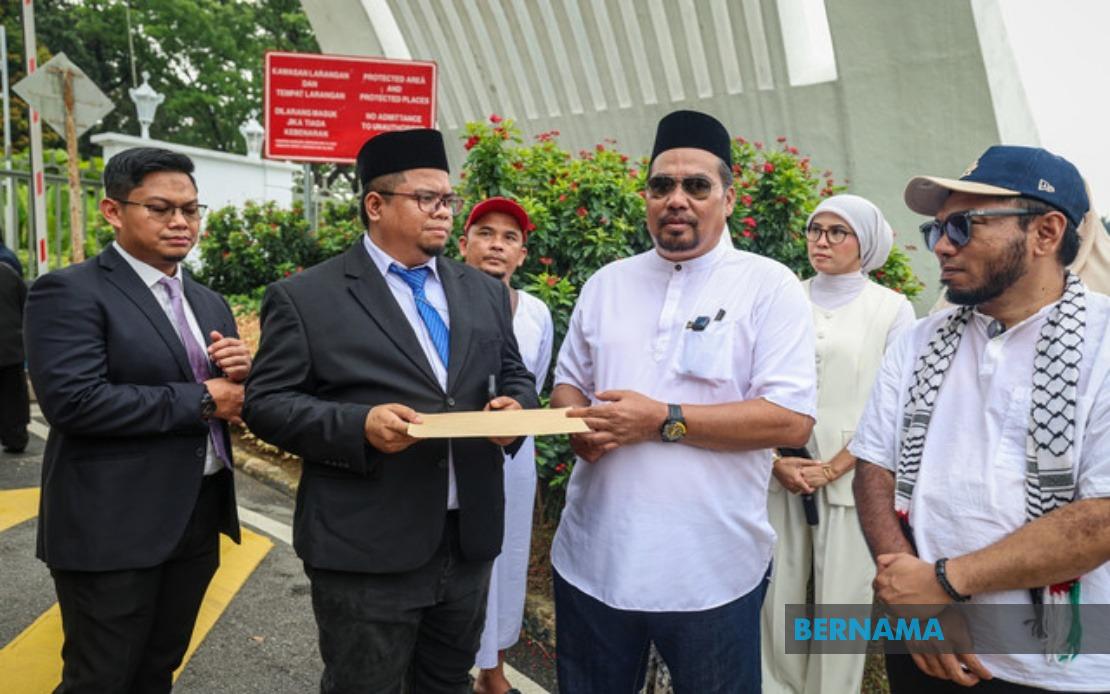
A prominent Malaysian social media activist group has intensified pressure on the government to pursue criminal action against officials implicated in mismanagement at Lembaga Tabung Haji (TH), Malaysia's pilgrim fund. Sekretariat Gerak Gempur Media Sosial Rakyat Malaysia (SEKPUR) delivered a formal memorandum to Parliament on August 11, demanding that authorities hold wrongdoers accountable following the public release of a comprehensive Royal Commission of Inquiry report on the institution's troubled operations.
The memorandum was received by Zairudin Hashim, press secretary to the Minister in the Prime Minister's Department (Religious Affairs), who committed to forwarding the document to Minister Senator Dr Zulkifli Hasan. SEKPUR's intervention comes as lawmakers gathered for a special sitting of the Dewan Rakyat to receive the government's response to findings that exposed systemic weaknesses in TH's governance spanning the 2014 to 2020 period. The group organised a peaceful demonstration at Parliament's main entrance, underscoring the level of public concern surrounding the institution that manages savings for millions of Muslim Malaysians preparing for the Hajj pilgrimage.
SEKPUR secretary Mohd Yani Alias articulated the group's position unambiguously during the submission, stating that party affiliation or political connections should provide no shield against prosecution. The group's stance reflects growing sentiment among civil society that accountability must transcend factional interests, a position reinforced by the Yang di-Pertuan Agong's directive that those culpable for TH's difficulties face justice without compromise. Alias emphasised that TH is a sacred trust belonging to the broader Muslim and Malay community, not a vehicle for political patronage or personal enrichment, implying that any deviation from this principle demands the most rigorous legal consequences.
The 211-page RCI report, released publicly on July 29, documented extensive governance failures and operational deficiencies within TH's management structure. The investigation identified 25 separate areas requiring reform, with the institution reportedly implementing approximately 75 per cent of the commission's recommendations as of late July. However, SEKPUR's intervention suggests that implementation of technical recommendations may be insufficient to address broader concerns about accountability and deterrence for those whose decisions precipitated the financial and reputational crisis.
Beyond calls for prosecutions, SEKPUR raised substantive concerns about TH's long-term viability that resonate with depositors across Malaysia. The group highlighted anxiety surrounding the competitiveness of hibah distributions—the discretionary returns paid to depositors—arguing that TH must maintain attractive yields to retain public confidence and prevent withdrawals. This financial sustainability question is particularly acute in an environment of rising interest rates globally and heightened competition from alternative investment vehicles, meaning TH cannot simply rebuild its reputation through symbolic prosecutions alone.
The memorandum further addressed the escalating financial burden that Hajj performance imposes on Malaysian pilgrims. Ticket costs, accommodation, and ancillary expenses have risen substantially, and SEKPUR contends that TH's management failures have exacerbated this burden by depleting the fund's resources that might otherwise subsidise these essential costs for lower-income adherents. This concern intersects with equity issues, as the rising cost of Hajj may increasingly exclude ordinary Malaysians of modest means, transforming what should be an accessible religious obligation into a privilege of the relatively affluent.
Transparency in the allocation and management of Hajj quotas emerged as another focal point in SEKPUR's submission. Malaysia's allocation of pilgrimage slots is finite, and the group's emphasis on greater openness in quota distribution mechanisms suggests suspicions that opaque processes may have benefited certain interests at the expense of equitable access. This dimension of the scandal intersects with governance more broadly, touching on how state-controlled institutions allocate limited public resources and whether such decisions are made through merit-based processes or through patronage networks.
The timing of SEKPUR's parliamentary intervention is significant given that Malaysia's political landscape remains fluid, with various coalitions competing for influence. The group's insistence that accountability transcend political boundaries may be intended to forestall attempts by any faction to use selective prosecution as a political weapon. Conversely, it could be interpreted as pressure on the current government to demonstrate that it will not shield allies from consequences, a test of institutional credibility that extends beyond TH itself.
For Malaysia's broader governance framework, the TH crisis and SEKPUR's response reflect deepening expectations that state institutions operate with professional integrity and that public officials remain subordinate to law. The Tabung Haji institution, managing savings accumulated over decades by millions of Malaysians, represents a high-visibility case where governance failures become deeply personal for those affected. SEKPUR's mobilisation signals that civil society will not permit TH's misadventure to fade from public memory once new leadership assumes control.
The intersection of financial stability, religious obligation, equity, and accountability that characterises the TH situation offers lessons extending beyond this single institution. Malaysia's numerous state-owned enterprises and government-linked companies operate in an environment where public expectations for transparency and accountability continue rising. SEKPUR's memorandum, therefore, functions partly as a template for civil society engagement with governance failures—combining public pressure, formal institutional channels, and demands for justice rather than mere administrative reform.
Moving forward, the litmus test for government sincerity will be whether recommendations contained in the RCI report translate into convictions and sanctions proportionate to the damage inflicted. SEKPUR's intervention serves as a reminder that Malaysian civil society increasingly reserves the right to scrutinise governmental responses to institutional failures and will continue mobilising pressure if accountability appears compromised by political considerations. For TH depositors and potential Hajj pilgrims watching developments, the outcome will significantly influence confidence in Malaysia's ability to steward large, complex, and sensitive institutions serving religious and financial objectives simultaneously.

