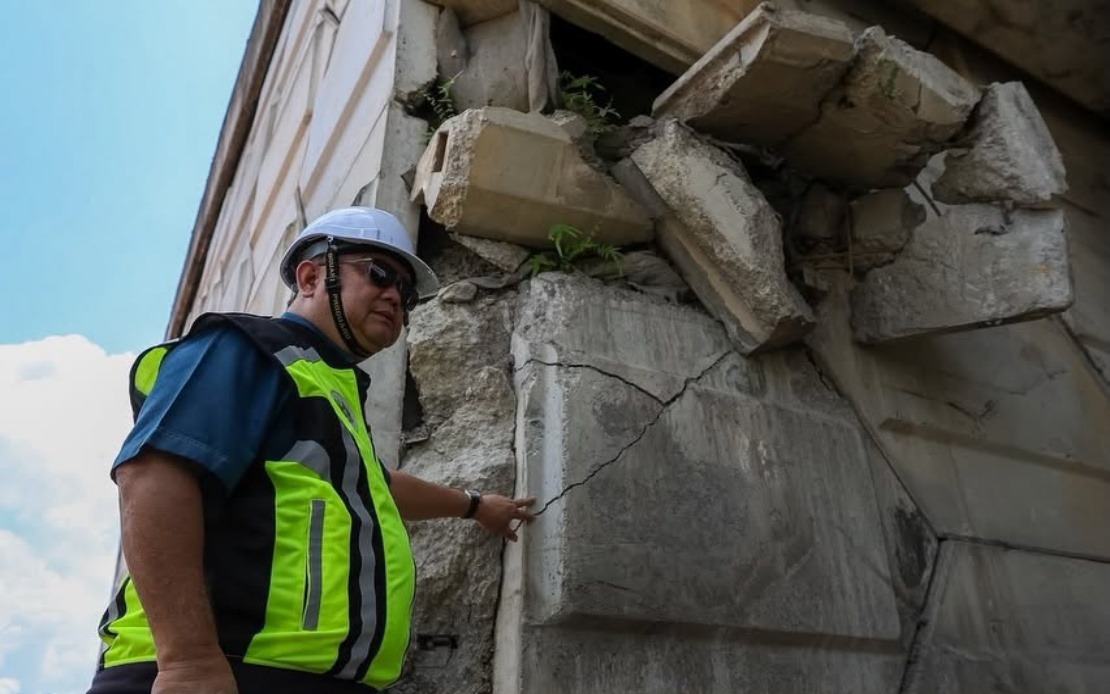
Works Minister Datuk Seri Alexander Nanta Linggi has committed to a carefully staged reopening of the Selangau-Mukah Interchange Flyover on the Pan Borneo Highway, contingent upon rigorous safety assessments and the completion of necessary structural repairs. The closure of Ramp 1 was enforced after the vital crossing was struck by a palm oil tanker, compromising the structural integrity of the facility and raising immediate concerns about the safety of road users traversing one of Borneo's most critical transport corridors.
Following an on-site technical evaluation, engineers determined that the collision had inflicted significant damage to part of the retaining wall structure supporting the interchange. This assessment triggered the precautionary closure, reflecting the authorities' prioritisation of public safety over the convenience of maintaining continuous traffic flow. The incident has underscored the vulnerability of major infrastructure on the Pan Borneo Highway to industrial accidents, particularly given the region's reliance on palm oil transport logistics.
Nanta stressed that controlled and methodical structural repairs will be executed to restore the stability of the compromised section. Rather than reopening the entire interchange simultaneously, the minister outlined a phased approach whereby unaffected routes will be progressively restored to service as individual sections clear safety inspections. Sections that remain structurally questionable or at risk will remain sealed off until repair works are fully concluded, ensuring no shortcuts are taken in the interests of expediency.
The closure has generated considerable public concern and inconvenience, particularly among residents and regular commuters on the Bintulu-Mukah-Sibu corridor, who have been forced to navigate alternative routes or endure significant travel delays. Nanta acknowledged this disruption but maintained that prioritising safety over traffic convenience represents the only responsible course of action. His statement reflected an awareness that public frustration with the closure could mount if communication and repair timelines prove inadequate.
Recognising that contemporary concerns are amplified through both traditional media channels and social media platforms, Nanta emphasised that community feedback regarding road safety must be treated with utmost seriousness. This acknowledgment suggests an understanding that in the digital age, infrastructure incidents can rapidly escalate into broader public confidence issues if authorities appear dismissive of legitimate safety concerns or fail to communicate transparently about remedial actions.
The minister identified three critical priorities guiding the response to the incident. First, maintaining absolutely uncompromising safety standards for all road users navigates through the site. Second, rigorous oversight of the repair schedule to prevent avoidable delays and extended closures that would compound commuter inconvenience. Third, ensuring that the public receives timely, detailed information regarding current closures, alternative routes, and the progress of reconstruction work.
The Selangau-Mukah Interchange represents a significant bottleneck on the Pan Borneo Highway, a major infrastructure project designed to improve connectivity across Sarawak. The closure therefore carries implications extending beyond the immediate inconvenience to local commuters, potentially affecting regional commerce and logistics networks that depend upon reliable transit through this corridor. Industrial and agricultural sectors relying on the Pan Borneo Highway for product distribution have faced additional operational costs as freight must navigate longer routes.
Nanta's commitment to maintain close personal oversight of the reconstruction signals recognition of the political sensitivity surrounding the incident and the necessity for high-level accountability in managing the response. By pledging to monitor progress personally, the minister has positioned himself as taking direct responsibility for both the quality of repairs and the timeliness of reopening, thereby elevating the stakes should delays or further complications emerge.
The incident raises broader questions about preventive measures to protect major infrastructure from vehicular collisions, particularly given the heavy industrial traffic operating on Borneo's highways. The palm oil industry, while economically crucial to the region, generates substantial tanker movements that present ongoing collision risks to fixed structures. Authorities may need to evaluate whether additional protective barriers, warning systems, or routing protocols could mitigate similar incidents in future.
For Malaysian commuters and regional observers, the handling of this incident carries implications for how federal authorities manage infrastructure crises and balance competing pressures between rapid restoration and thorough safety assurance. The phased reopening approach, if executed transparently and credibly, could serve as a model for managing similar infrastructure disruptions elsewhere in the country. However, any perception that safety protocols are being compromised to accelerate reopening could undermine public confidence in the structural integrity of the Pan Borneo Highway and other major infrastructure projects.
The minister's repeated emphasis on safety-first priorities, though politically prudent, also reflects genuine engineering and legal imperatives. Any premature reopening resulting in further structural failure or traffic accidents would expose the government to substantial liability claims and severe reputational damage. Thus, the cautious approach serves both public protection and the government's institutional interests.

