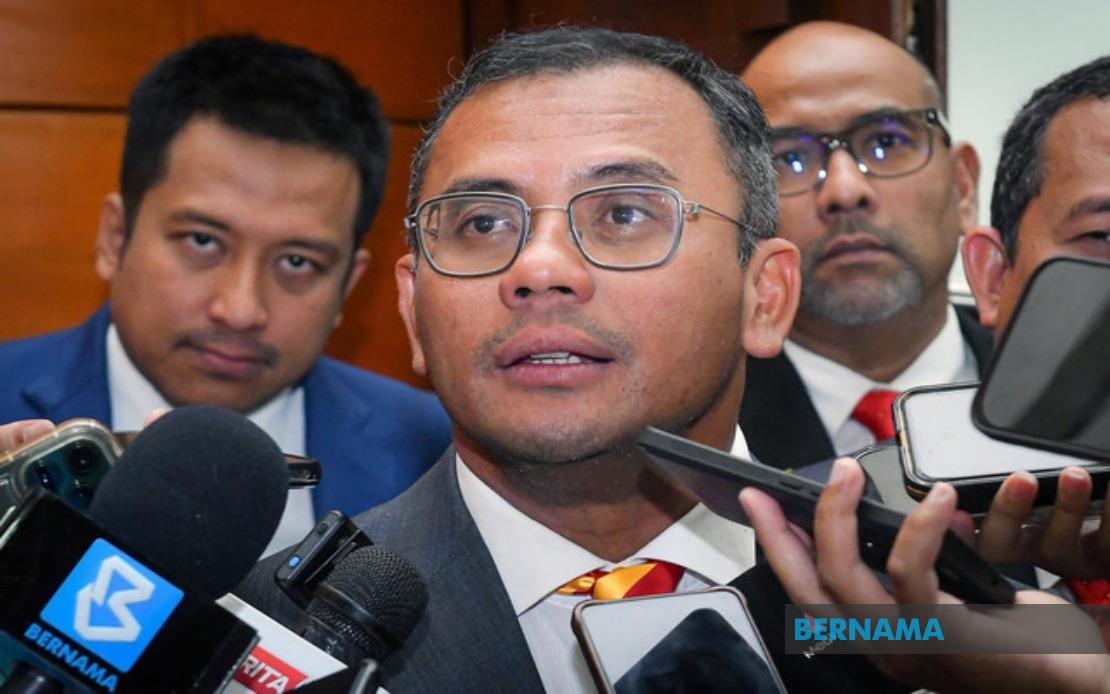
Selangor's state government has committed RM3.5 million towards a new research funding scheme intended to catalyse innovation and inform policymaking within the framework of its ambitious Second Selangor Plan (RS-2). The initiative, formally launched following a grant handover ceremony at Bangunan Sultan Salahuddin Abdul Aziz Shah, represents an evolution from the previous Selangor Research Grant and aims to bridge academic research with government strategic priorities across multiple sectors and districts.
Menteri Besar Datuk Seri Amirudin Shari outlined the structure of the Selangor Development Grant (SELidik) 2026, emphasising that the programme is fundamentally tied to the state's development agenda. The research priorities have been narrowly defined to ensure relevance; all studies must connect directly to one of six overarching missions embedded within the RS-2 framework and align with departmental requirements. This deliberate alignment distinguishes SELidik from broader academic funding mechanisms, positioning it as a policy-support instrument rather than a general research grant.
The initial allocation of RM2.5 million has been directed to Universiti Islam Selangor (UIS) and Universiti Selangor (UNISEL), the two state-owned higher education institutions. In the first execution phase, these universities are expected to produce tangible research outputs spanning modules, practical applications, and working prototypes. The focus on applied rather than purely theoretical outcomes reflects the state government's preference for research with immediate implementational value, potentially accelerating the translation of academic findings into government programmes and policy reforms.
The programme's geographic scope is designed to expand methodically. Following the initial concentration on UIS and UNISEL, the second phase will broaden participation to encompass other public institutions throughout Malaysia. An additional RM1 million has been earmarked for universities elsewhere in Selangor, creating a tiered funding architecture that prioritises state-owned institutions whilst gradually incorporating other tertiary centres. This sequencing suggests deliberate capacity-building within the state's own higher education ecosystem.
Management of SELidik falls to Yayasan Selangor, a state-affiliated foundation, ensuring that the initiative operates within the state governance structure. The foundation model provides institutional continuity and allows for flexible adaptation as the programme matures. Amirudin indicated that research findings emerging from funded projects will be systematically channelled to relevant state standing committees, establishing a formal conduit between academic inquiry and executive decision-making. This institutional pathway aims to ensure that taxpayer-funded research directly informs the calibre and design of government interventions.
The RS-2 backdrop lends considerable weight to this research initiative. Announced on August 7, the five-year economic strategy envisions RM600 billion in cumulative economic value by 2030 and encompasses six strategic missions spanning 25 distinct development areas. These missions range from consolidating Selangor's economic competitiveness and ensuring equitable development across districts, to building human capital capacity and advancing environmental sustainability. By anchoring research funding to this framework, the state government ensures that academic work contributes systematically to long-term strategic objectives rather than dispersing effort across fragmented priorities.
The thematic boundaries for SELidik research reflect the breadth of RS-2's ambitions. Previous grant recipients have explored domains including agricultural advancement, innovation ecosystems, and technological development, and these precedents indicate the expected research terrain. The linking of past studies to emerging state policies suggests a feedback mechanism whereby academic insights from one funding cycle inform programme design in subsequent periods. This iterative approach could potentially enhance policy quality by incorporating rigorous evidence earlier in the implementation cycle.
Eligibility criteria emphasise local researchers, indicating a preference for domestically-based talent and institutional capacity development. The requirement that studies directly address RS-2 priorities and engage relevant government departments imposes structure on the application process but also clarifies expectations. This specificity may reduce the volume of applications relative to open-ended grant schemes but could improve strategic alignment and increase the likelihood that funded research translates into implemented reforms.
Amirudin signalled openness to international academic participation should budgetary capacity permit. This contingency suggests the state government recognises potential benefits from global research networks and expertise, though current resource constraints limit expansion beyond Malaysia's institutional base. International partnerships could eventually enhance research quality and provide exposure for Selangor's development challenges to comparative and global perspectives, particularly valuable for specialised technical domains.
The emphasis on returns on investment through economic development, academic excellence, and human capital empowerment reveals the state's understanding of research as a strategic asset class rather than a pure public good. This framing resonates with global trends towards research productivity metrics and evidence-based governance, though it potentially creates tension between academic freedom and instrumentalised knowledge production. Universities and researchers may experience competing pressures to generate immediate policy-applicable outputs whilst pursuing exploratory inquiry and foundational scholarship.
For Malaysia's broader higher education and research landscape, Selangor's SELidik represents a significant state-level commitment to the convergence of academic research and governance. As the nation's wealthiest and most industrialised state, Selangor's research priorities may establish benchmarks for policy engagement that other states observe or replicate. The programme also demonstrates how subnational governments can mobilise existing institutional capacity to advance development strategies, a relevant model for other Malaysian states operating within their respective jurisdictions.
The programme's success will hinge on several operational factors: the quality of researcher recruitment and proposal evaluation, the timeliness of fund disbursement and milestone tracking, the genuine receptivity of policymakers to research findings that challenge incumbent assumptions, and the translation of academic outputs into legislative or administrative action. Early momentum and demonstrable policy impact will be crucial for building credibility and sustaining researcher engagement beyond the initial funding cycle.

